
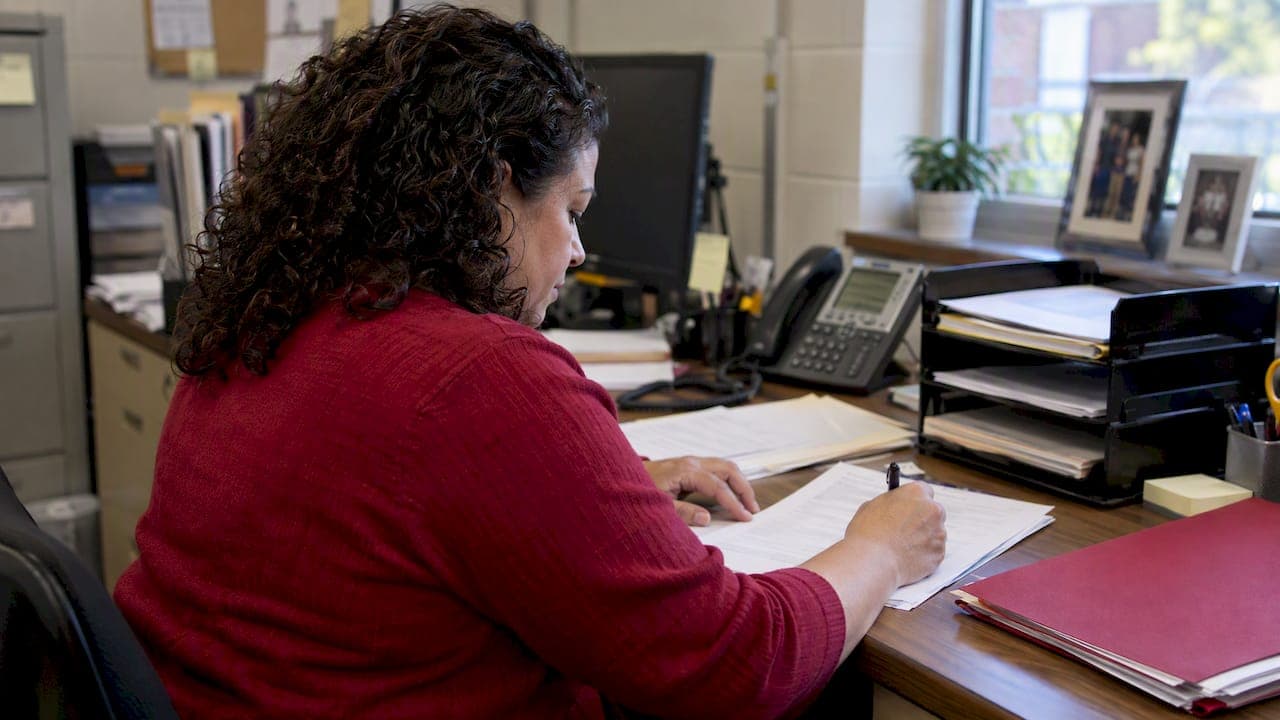
A yearbook purchase order is the document your district or school business office issues to commit funds to a printer. It is not the printer's checkout, and it is not a quote. To get one, you submit a requisition with the full scope of the yearbook, wait for budget verification and administrator approval, receive a PO number, and only then place the order. This guide walks through each step, lists what the PO should say, and gives you email templates you can adapt.
TL;DR
- A quote, a requisition and a PO are three different documents. Order only after the PO number exists.
- Write the scope into the PO: quantity, trim, page count, paper, binding, cover options, proofs, shipping, delivery timing, design tools and reprint terms.
- Agree on the approval chain, budget code, receiving contact and record-keeping before you start, not when the invoice arrives.
- List optional finishing and extras as separate lines so the approved amount matches what you actually buy.
- Use the email templates below to request a quote, request approval and confirm receiving.
Table of Contents
- Quote, requisition, PO: three documents, three jobs
- Before you write anything: settle the logistics
- What a yearbook PO should specify
- Worked example: pricing options as separate lines
- Step by step: from quote to paid invoice
- Email templates for the process
- Common mistakes on a yearbook PO
- Our perspective: treat the PO as part of the yearbook, not a hurdle
- Where TrailMark fits
- FAQ
- Sources
Quote, requisition, PO: three documents, three jobs
Most delays start with people treating these as the same thing. They are not.
| Document | Who writes it | What it does |
|---|---|---|
| Quote | The vendor | States what the vendor will deliver and at what price |
| Requisition | You, the adviser or staff requester | Asks the school or district to buy something, with the justification and budget code |
| Purchase order | The business office | Obligates the district to the vendor, with a number |
Districts are usually strict about this. The Colusa Unified School District's purchasing protocols say a properly numbered, authorized and signed purchase order is the only document by which the district obligates itself to a vendor, and that only the business office can issue one. That policy cites California Education Code section 42632, which requires district approval before goods or services are received. Your state and district will have their own rules, so treat that as an example, not a universal law.
Another school procedure we reviewed, from a district manual dated September 2023, follows the same sequence: a detailed requisition, fund verification, principal approval, a PO number, and then the order. It says nothing should be ordered until the PO number is received. It also treats the PO as complete only after invoices are verified and paid. Ordering early can leave the requester personally responsible for the bill, so don't click "buy" on a vendor site first.
Before you write anything: settle the logistics
A yearbook is a small procurement project, and the adviser rarely owns every part of it. Montgomery County Public Schools publishes a summer ordering checklist for school staff. It calls for communicating the ordering process, purchase approval, receiving, fiduciary responsibilities, financial monitoring and records. That is a good frame for any school. Before you request a PO, get answers to these:
- Who approves? Principal only, or principal plus a district purchasing agent? Is there a dollar threshold that triggers a bid or RFP?
- Which budget code pays? Yearbook funds may sit in an activity fund, a student body account or a general fund. Each may have its own approval route.
- When does the business office need requisitions? Many offices have cutoffs or batch their POs. Ask for the calendar.
- Who receives the books? A named person, with a delivery address that can accept freight. One vendor FAQ we found notes that its books ship by FedEx and cannot go to PO boxes, so use a street address.
- Where will records live? Quote, requisition, PO, packing list, invoice and receiving sign-off should sit in one folder.
If you want a fuller picture of budget lines and funding sources, our yearbook budget planning guide covers the planning side. For the role itself, see yearbook adviser responsibilities.
What a yearbook PO should specify
A vague PO causes trouble later. If the PO says "yearbooks, $9,000," there is nothing to check the delivery against. Public bids show how much detail a district expects. The J.O. Combs Unified School District's RFP 26-02-31 for yearbook printing and preparation refers to vendor software and online web-based applications as part of the service, not just ink on paper. So your PO or quote should break out the following.
Product specifications
- Quantity. The number of books, and whether you expect reorders. If you are unsure how many to order, use our quantity ordering checklist and read about order minimums.
- Trim size and page count. Both drive the price.
- Paper stock and color. Name the stock and whether pages are full color or a mix.
- Binding. Soft cover, hard cover, sewn or another style.
- Cover treatment. Foil, spot UV, printed endsheets, personalized covers.
- Proofs. Whether you need printed proof books before the run, and how many.
Delivery and service
- Shipping destination and receiving contact. Include a street address and a phone number.
- Delivery timing. A date range, not "as soon as possible."
- Design tools. The software or web application your students will use, and whether design help is included.
- Support. Who your contact is, and how you reach them.
- Reprint or on-demand terms. What happens if a parent calls in June wanting a copy. Our reorder process and reorder availability guides explain what to ask.
Price lines
Ask the vendor to separate base production, optional finishing, shipping and any per-item extras. When the quote is itemized, the PO can match it line by line, and the person approving can see what each choice adds.
Worked example: pricing options as separate lines
Here is how itemized options look using TrailMark's published add-on prices from our printing page. These are per-book fees for specific options, and your total depends on the book you build, so use them to see how lines add up, not as a full quote.
| Option | Published price |
|---|---|
| Perfect bound soft cover | $1.60 per book |
| 150 point board (hard cover) | $1.50 per book |
| Smyth sewn | $2.00 per book |
| Printed endsheets (hard cover) | $2.75 per book |
| Inside cover (duplex) printing (soft cover / saddle-stitched) | $0.40 per book |
| Flat foil stamp or spot UV | $4.25 per book |
| Personalized covers | $3.00 to $6.00 per book |
| Freight to the school | $1.00 per book |
| Split binding | $100 |
| Printed proof books, litho only, 2 copies, shipping included | $100 |
| Recognition ads | $5 per ad |
| Lovelines | $1 each |
Say a school wants a hard cover with printed endsheets and a foil stamp. On the published fees alone, those three options add $1.50, $2.75 and $4.25 per book: $8.50 per book before the base book price. For 300 books that is $2,550 in option fees. If the PO lists each option separately, the business office sees exactly where that money goes. If you drop foil to save money, the line comes out cleanly and the PO total changes by a known amount.
The same logic applies to revenue-side items. Recognition ads at $5 each and lovelines at $1 each are things your students sell to families, so the costs you approve on the PO and the income you collect belong in your yearbook account records. Our inventory guide covers how to track leftover books and what to watch for on the tax side.
Step by step: from quote to paid invoice
- Get an all-inclusive quote. Ask the vendor for written pricing that includes shipping and every option you plan to use. Save the PDF.
- Check the quote against your spec list. Every item in the section above should show up, or be marked "not included."
- Complete the requisition. Include the vendor name, a description, quantity, unit price, extended total, budget code and a short justification. Attach the quote.
- Route for approval. The principal signs; the business office verifies funds. Follow up politely after a few days.
- Wait for the PO number. Do not place the order until you have it.
- Send the PO to the vendor. Put the PO number on every follow-up email, proof approval and invoice.
- Approve proofs. Keep the approval email with your records.
- Receive and count. Check the delivery against the packing list, note any damage or shortage, and sign off.
- Forward the invoice and packing list. The business office pays only after matching the PO, the invoice and the receipt.
- File everything. One folder, one copy, for the audit and for next year's adviser.
Timing matters at step 4. Many offices take days or weeks, and some have year-end cutoffs. If your vendor needs a firm production window, build the approval time in before you promise families a delivery date. Our post on four mistakes that delay yearbook ordering lists the common traps.
Email templates for the process
These are starting points. Replace the bracketed text and keep each message short.
Request a quote from a vendor
Subject: Yearbook quote request, [School name], [school year]
Hello [Name],
We are planning our [year] yearbook and need a written quote for a purchase order. Please include: [quantity] books, [trim size], [page count] pages, [binding], [cover options], printed proofs [yes/no], shipping to [street address], and delivery by [date range]. Please list production, finishing, shipping and any design or software support as separate lines.
Please also tell us your reprint terms and your typical turnaround after final files are approved.
Thank you, [Name, title, phone]
Request approval from your principal
Subject: Approval needed: yearbook requisition, [amount]
Hi [Name],
I've attached the vendor quote and requisition for the [year] yearbook: [quantity] books, total [amount], charged to [budget code]. The business office needs your approval before issuing a PO number, and we cannot place the order until then. Could you sign by [date]? Our delivery target is [date], and approval by then keeps us on schedule.
Thank you, [Name]
Send the PO to the vendor
Subject: PO [number] for [School name] yearbook
Hello [Name],
Attached is purchase order [number] for the quote dated [date]. Please confirm that the quantity, options and price match, and tell us the expected delivery window. Please put the PO number on all invoices. Our receiving contact is [name, phone] at [street address].
Thank you, [Name]
Confirm receiving to the business office
Subject: Received: PO [number], yearbooks
Hello [Name],
The yearbooks for PO [number] arrived on [date]. We counted [number] books against the packing list [matches / shows a difference of X]. The packing list and our signed receiving note are attached. Please let me know if you need the vendor invoice from our side.
Thank you, [Name]
Common mistakes on a yearbook PO
- Ordering before the PO exists. This is the one that can land the bill on you personally, according to the district procedures above.
- Approving a quote as if it were the PO. A quote shows what a vendor offers. Only the PO commits funds.
- Leaving out software or support. If your students need a design tool or help from the vendor, say so in the scope.
- Lumping options into one price. When the principal has to cut costs, a single line gives nothing to cut.
- A delivery address that cannot receive freight. Use a street address with a named person.
- Losing the paper trail. Without the packing list and receiving confirmation, the invoice may sit unpaid.
Our perspective: treat the PO as part of the yearbook, not a hurdle
We work with advisers and administrators, and we see the same pattern each year. The creative work gets attention, and the paperwork gets left until the week the files are ready. Then a PO that takes two weeks to clear lands on top of a deadline that was never real to begin with.

That is why we built our process around clarity. Schools can see all-inclusive pricing online with no signup and no sales pitch, shipping included. There are no order deadlines and no order minimums, and turnaround is 2 to 3 weeks. For a business office, a price that is already complete is easier to turn into a requisition, because there are fewer surprises between the quote and the invoice. For an adviser, a flexible schedule means a slow approval does not break the book.
Our advice is simple. Get the quote first and itemize it. Put the approval chain on paper before you need it. Then put the PO number on everything. Our staff has more than 50 years of combined experience, and most of the problems we see are paperwork problems that a checklist would have caught.
— Jace
Where TrailMark fits
If your school is collecting quotes for a PO, we can give you complete school-specific pricing online, without creating an account. You can use our own online creator, Canva or InDesign for design, and we offer optional full-service design if your team is short on time. See our printing options and published add-on prices, look at elementary and middle school options, or request a sample to show your administrator what the book will look like. For a guide to the kinds of help a vendor can provide, read types of yearbook support services and our 2 to 3 week turnaround playbook.

FAQ
Do I need a purchase order to buy yearbooks for my school?
Usually yes, if the school or district pays with public or student-activity funds. Many districts allow only a business-office-issued PO to obligate the district, as in the Colusa example above. Ask your business office, because rules differ by state and district.
What is the difference between a requisition and a purchase order?
A requisition is your internal request to buy something, with a justification and a budget code. A purchase order is the numbered document the business office issues to the vendor after approving funds. You send the requisition. The school or district sends the PO.
Can I order first and get the PO afterward?
Don't. Written district procedures say nothing should be ordered until the PO number is received, and ordering early can make the requester personally responsible. If you are under time pressure, ask the business office whether an expedited route exists.
What should I attach to the requisition?
Attach the vendor's written quote, itemized by production, finishing, shipping and extras. Add the budget code, the delivery address, the receiving contact and your target delivery dates. The more complete the attachment, the fewer questions come back.
Who keeps the records after the books arrive?
The business office keeps the official file, but you should keep your own copy of the quote, requisition, PO, proof approvals, packing list and receiving confirmation. Montgomery County's checklist treats records as part of the ordering process, not an afterthought.
Sources
- Colusa Unified School District purchasing protocols
- School district manual, September 2023
- J.O. Combs USD RFP 26-02-31, Yearbook Printing and Preparation
- Montgomery County Public Schools summer ordering checklist