
Yearbook order minimum quantities (MOQs) define the smallest number of copies a printer will accept for a single yearbook production run, and that number directly shapes your budget, timeline, and planning decisions. Most advisers discover this constraint only after they have already committed to a design format, which creates unnecessary pressure. MOQs in 2026 range from zero copies with print-on-demand providers to 100 or more copies with commercial offset printers. Knowing where your school falls on that spectrum before you finalize anything saves money and prevents scheduling problems. This guide gives you the framework to calculate the right quantity, avoid common mistakes, and order with confidence.
What are typical yearbook order minimum quantities in 2026?
The minimum order quantity for yearbooks is not a fixed industry standard. It varies by printing technology, binding type, and provider category. MOQs range widely across the market: some print-on-demand services accept a single copy, while commercial printers typically require 25–100 copies to justify setup costs.
Print-on-demand services carry no minimum. They print each book individually using digital presses, which makes them practical for very small schools or pilot programs. The trade-off is cost. Softcover books of roughly 60 pages can run $7–$20 per unit depending on quantity and provider, with per-unit prices dropping sharply as volume increases. A school ordering 25 copies pays significantly more per book than a school ordering 150.
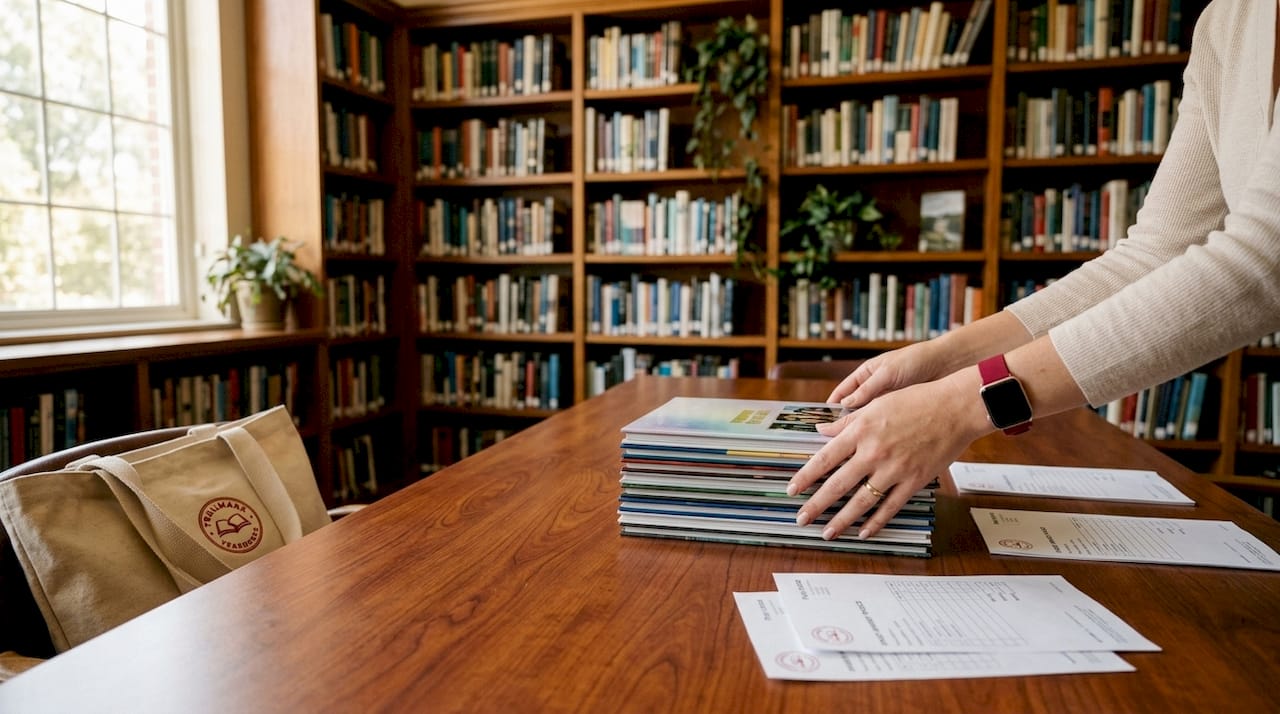
Hardcover yearbooks carry higher MOQ thresholds than softcover editions. The binding process for hardcover books requires more setup time and materials, so printers offset that fixed cost across a larger print run. Most hardcover providers set their floor at 50–100 copies. Softcover providers tend to be more flexible, with some accepting orders as low as 25 copies.
| Provider type | Typical MOQ | Binding options | Best fit |
|---|---|---|---|
| Print-on-demand | 0–1 copies | Softcover | Very small schools |
| Entry-level digital printers | 25 copies | Softcover, basic hardcover | Small schools |
| Mid-tier commercial printers | 50–100 copies | Softcover, hardcover | Mid-size schools |
| Full offset printers | 100+ copies | Hardcover, premium softcover | Large schools |
School size is the most reliable starting point for choosing a provider tier. A school with 80 students will rarely need more than 60–70 yearbooks. A school with 600 students may need 300 or more. Matching your enrollment estimate to the right provider tier prevents you from paying for setup costs that do not benefit your order.
Pro Tip: Check whether a provider's MOQ applies to the total order or to each binding style separately. Some printers count hardcover and softcover as separate SKUs, which can double your effective minimum.
How to calculate your school's optimal yearbook print quantity
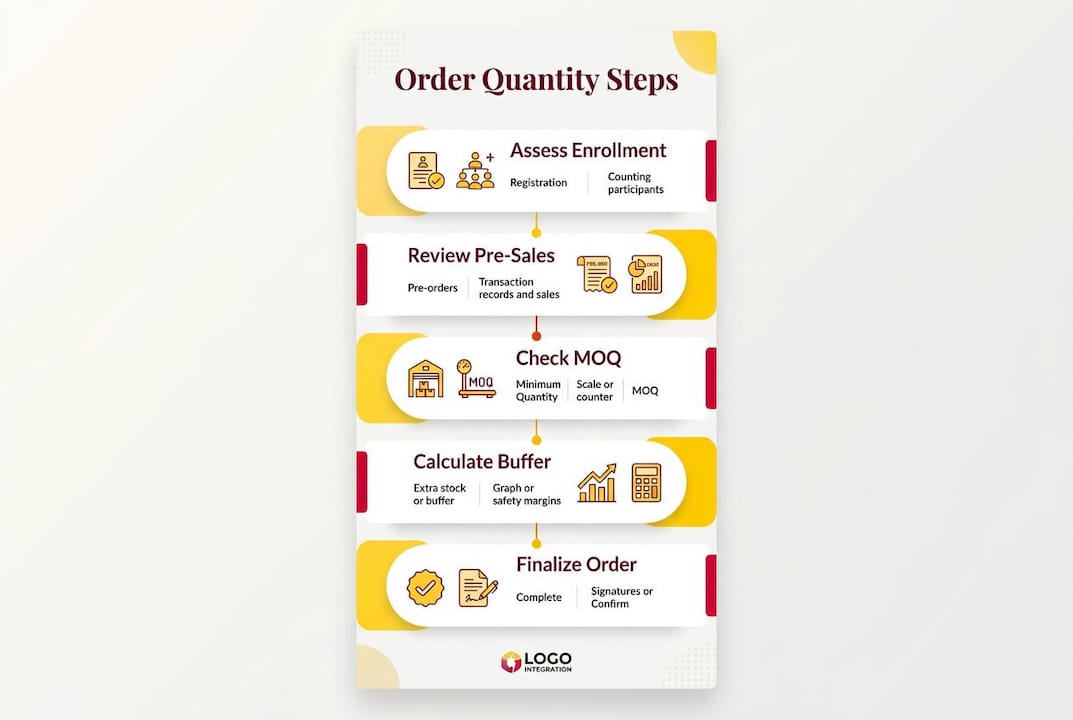
Calculating the right number of yearbooks to order requires more than dividing enrollment by two. The goal is to find the quantity that satisfies the printer's minimum, fits your budget, and leaves you with minimal unsold copies.
Start with these four steps:
- Estimate demand. Survey students and families before finalizing your order. A pre-sale campaign gives you a firm baseline. Add 10–15% above confirmed pre-sales to cover late buyers and staff copies.
- Identify the printer's MOQ. Confirm the floor quantity for your chosen binding type. If your demand estimate falls below that floor, you either need a different provider or a plan to sell the gap.
- Request quotes at multiple quantity levels. Get pricing at your MOQ, at 10% above MOQ, and at your estimated demand ceiling. Adding roughly 10% more copies beyond the minimum often results in negligible total cost change but improves your cost per unit meaningfully.
- Factor in page count. Printers use signature sheets that hold fixed page counts, typically 4 or 8 pages per sheet. Adding just one or two pages can trigger an extra signature and raise your total cost disproportionately. Plan your page count in multiples of 4 or 8 to stay cost-efficient.
Tiered pricing is the mechanism that makes bulk ordering worthwhile. Bulk orders create significant price advantages because fixed setup costs spread across more units. A school ordering 100 copies instead of 50 may pay only 20–30% more in total while cutting the per-unit cost nearly in half. That math matters when you are presenting a budget to a principal or PTA.
School size also affects which pricing tier you can realistically reach. A detailed breakdown of how enrollment affects yearbook pricing helps advisers at smaller schools understand when it makes sense to combine orders across grade levels to hit a better tier.
Pro Tip: Use your pre-sale numbers as the floor, not the ceiling. Students who miss the pre-sale window often want a book after distribution. Ordering 10–15% above confirmed sales prevents the awkward situation of turning away buyers.
What production timelines are tied to your order quantity?
Order quantity affects more than price. It directly influences how long your yearbooks take to produce and ship. Larger orders require more press time, more binding work, and more quality checks.
Hardcover yearbooks typically require 3–5 weeks of production time after proof approval, not counting shipping. Softcover books generally move faster through production, but the gap narrows as order size grows. A softcover order of 300 copies may take as long as a hardcover order of 100 copies at some facilities.
| Binding type | Order size | Estimated production | Shipping buffer |
|---|---|---|---|
| Softcover | Under 50 copies | 1–2 weeks | 3–5 business days |
| Softcover | 50–150 copies | 2–3 weeks | 5–7 business days |
| Hardcover | 50–100 copies | 3–4 weeks | 5–7 business days |
| Hardcover | 100+ copies | 4–5 weeks | 7–10 business days |
Shipping adds time that advisers consistently underestimate. A production run that finishes on schedule can still arrive late if the shipping window was not built into the original calendar. The yearbook production calendar for your school should include proof approval, production, shipping, and a buffer for corrections.
Common yearbook timeline delays often trace back to late quantity finalization. Printers cannot begin production until they have a confirmed order quantity and an approved proof. Every day of delay at that stage pushes your delivery date back by at least one day, and often more if the printer's schedule fills up.
Pro Tip: Finalize your order quantity at least two weeks before your proof approval deadline. Changing quantities after proof approval can reset your production slot and add weeks to your delivery date.
What are the most common pitfalls with yearbook quantity requirements?
The biggest mistake advisers make is treating the MOQ as the target quantity rather than the floor. The minimum order quantity is the lowest number a printer will accept. It is rarely the number that gives you the best value or the most coverage for your school.
Ordering exactly at MOQ when your demand is higher creates a shortage problem. Reordering after the initial run is expensive. Offset printing becomes cost-effective mainly above 500 copies, so small reorders at digital rates cost far more per unit than the original run. Running short of books after distribution is one of the most avoidable problems in yearbook planning.
A second common error is ignoring binding quality when choosing a low-MOQ provider. Offset printing with Smyth-sewn signatures is the gold standard for yearbook durability. Digital printing methods vary in binding consistency, and some low-MOQ providers use adhesive binding that degrades over time. A yearbook that falls apart within a few years defeats its purpose as a lasting memory.
Best practices for managing yearbook quantity requirements:
- Run a pre-sale campaign at least 8 weeks before your order deadline.
- Request itemized quotes at three quantity levels: MOQ, 10% above MOQ, and your demand estimate.
- Confirm the binding method and quality assurance process before committing to a provider.
- Build a 10–15% buffer above confirmed pre-sales into your final order.
- Lock in your quantity before proof approval to protect your production slot.
- Use standard sizes and consolidated layouts to reach better pricing tiers without increasing page count.
A useful analogy: ordering school lockers in bulk follows the same logic as ordering yearbooks. Just as bulk school locker pricing drops per unit when schools commit to larger quantities, yearbook per-unit costs fall as your order size grows. The fixed costs of setup and delivery spread across more units either way.
Pro Tip: Ask your printer for a price-break schedule before you finalize your design. Knowing exactly where the next pricing tier kicks in lets you decide whether ordering a few extra copies makes financial sense.
The real cost of getting your MOQ wrong
The yearbook ordering process rewards advisers who plan quantities early and penalizes those who treat it as an afterthought. After working with schools on yearbook projects for years, I have seen the same pattern repeat: advisers focus on design and content, then scramble on quantity decisions in the final weeks.
The schools that handle this best do one thing differently. They treat the quantity decision as a budget constraint, not a production detail. They run pre-sales early, get quotes at multiple quantity levels, and lock in their number before the design is even finished. That sequence protects both the budget and the timeline.
The most underrated piece of advice I can offer is this: request a sample before you commit to a provider. Seeing the actual binding quality and paper stock at your expected quantity level tells you more than any spec sheet. A provider that looks affordable on paper may deliver a product that disappoints families on distribution day.
Printer relationships also matter more than advisers expect. A printer who communicates clearly about production slots, proof turnaround, and quantity change policies is worth more than a slightly lower per-unit price. The yearbook ordering checklist I recommend to advisers includes a section specifically for evaluating printer communication before signing anything.
MOQ decisions are not just logistical. They reflect how well you know your school community and how confidently you can advocate for a budget. Get the quantity right, and everything else in the production process gets easier.
— Jace
Trailmarkyearbooks: flexible yearbook quantities for every school
Trailmarkyearbooks works with elementary, middle, and high schools nationwide and offers transparent, all-inclusive pricing with no hidden fees and shipping included. For advisers who need flexibility on order quantities, Trailmarkyearbooks provides clear pricing at multiple quantity levels so you can find the right fit for your school's size and budget.
Production turnaround runs 2–3 weeks, which gives advisers more room in their scheduling calendar than most providers. Free design assistance is available whether you use Canva, InDesign, or the Trailmarkyearbooks online creator. If you want to evaluate quality before committing to a full order, you can request a physical sample to check paper stock, binding, and print quality firsthand. For a full look at available products and pricing, the yearbook production services page shows all options with no signup required.
FAQ
What is the minimum order quantity for school yearbooks?
Yearbook minimum order quantities range from zero copies with print-on-demand providers to 100 or more copies with commercial offset printers. The right floor depends on your school's size, binding preference, and budget.
Does ordering more yearbooks lower the cost per book?
Ordering above the MOQ threshold consistently lowers the per-unit cost because fixed setup costs spread across more copies. Adding roughly 10% more copies beyond the minimum often improves cost efficiency with minimal impact on total spend.
How long does yearbook production take after I finalize my order quantity?
Hardcover yearbooks require 3–5 weeks of production after proof approval, plus shipping time. Softcover books typically move faster, but larger order sizes extend production for both binding types.
Can I change my yearbook order quantity after proof approval?
Changing quantities after proof approval can reset your production slot and delay delivery by weeks. Finalize your quantity at least two weeks before proof approval to protect your timeline.
What is the difference between MOQ and optimal order quantity?
The MOQ is the minimum a printer will accept. The optimal order quantity is the number that best balances cost per unit, demand coverage, and budget. Request quotes at multiple quantity levels to find the point where price efficiency and coverage align for your school.
Key takeaways
Yearbook order minimum quantities set the floor for your print run, but the optimal quantity almost always sits above that floor where per-unit costs drop and coverage improves.
| Point | Details |
|---|---|
| MOQ varies by provider | Print-on-demand starts at zero; commercial printers typically require 25–100 copies minimum. |
| Bulk ordering cuts per-unit cost | Ordering 10% above MOQ often improves cost efficiency with little change to total spend. |
| Hardcover needs more lead time | Hardcover production runs 3–5 weeks after proof approval, plus shipping buffer. |
| Pre-sales set your quantity floor | Run pre-sales 8 weeks out and add 10–15% above confirmed orders to cover late buyers. |
| Binding quality matters as much as price | Smyth-sewn offset binding outlasts adhesive digital binding; verify quality before committing. |