
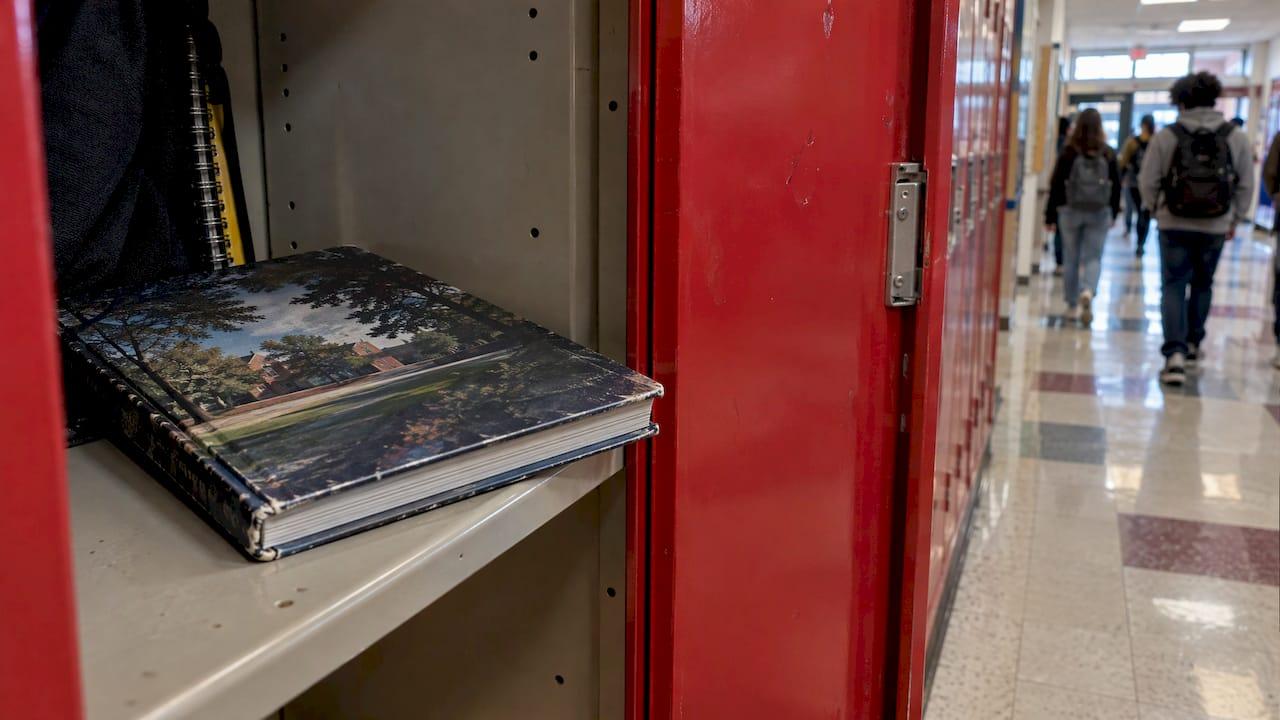
A yearbook cover lasts when three things work together: a rigid board, a binding that holds the pages to it, and a surface finish that takes scuffs without showing them. Pick a hardcover on a heavy board, add Smyth sewn binding for the spine, and choose a finish to match how the book will be handled. That combination protects the book on a backpack ride, in a classroom and on a shelf 20 years later. At TrailMark Yearbooks, hardcover on 150 point board is $1.50 per book and Smyth sewn binding is $2.00 per book, so the durable build is a line item you can see, not a mystery upgrade.
TL;DR
- Durability comes from the whole cover build: board thickness, binding method, cover material and finish. No single feature does it alone.
- Hardcovers on rigid board keep their shape far longer than flexible softcovers. Smyth sewn binding keeps the pages attached to that cover.
- Finish choices (matte, gloss, foil, spot UV) change how scuffs and fingerprints show more than how long the cover lasts.
- Storage matters as much as manufacturing: keep books upright with support, dry, and away from exterior walls, basements and attics.
- Ask your printer to state board weight, binding type and finish in writing before you approve a quote.
Table of Contents
- What "durable" means for a school yearbook
- Board and cover structure: where hardcover earns its keep
- Binding: what keeps the pages in the cover
- Cover material and finish: what faces the hallway
- The paper inside also decides how long the book lasts
- Storage: protecting the cover after distribution day
- Trim size and cover fit
- A durable cover checklist for your quote
- Where TrailMark fits
- Our view on cover durability
- FAQ
- Sources
What "durable" means for a school yearbook
A yearbook cover has two jobs. In the first month it has to survive being carried, signed, dropped and stuffed into lockers. For the next several decades it has to be a keepsake that still opens, still looks right and still holds its pages. Those two jobs stress the cover differently, so a durable cover is one that handles both.
Softcover books flex every time they are opened. Over time the cover bends, creases and cracks along the spine, and corners soften. A rigid board cover does not flex that way: the book is cased into a stiff board that holds its shape and shields the pages. That is why most schools that expect alumni to keep the book for life choose hardcover, and why schools with tight budgets or thin books often choose softcover for a single-year, high-volume run.
For advisers and administrators, it helps to split durability into four questions:
- Structure: how thick and rigid is the board, if the cover has one?
- Binding: how are the pages attached to the cover?
- Surface: what material or coating faces the world, and how does it handle scuffs, moisture and light?
- Handling: where will the book live after distribution day?
The rest of this guide takes them in order.
Board and cover structure: where hardcover earns its keep
The board is the skeleton. Hardcover yearbooks are built on binding board, which is measured by thickness in points or by weight. Public purchasing documents show how specific schools describe it. A Fauquier County, Virginia procurement contract for yearbook services specifies 9" x 12" high school hardcovers with 160 lb. binding board and Smyth sewn binding, and 8-1/2" x 11" middle school hardcovers with 120 lb. binding board. The takeaway: districts that write specifications put board weight and binding method in writing, and you can do the same.
There is also an industry yardstick. The Book Manufacturers' Institute's Manufacturing Standards and Specifications for Textbooks (2024 edition) says school book covers must have quality and weight to withstand usage, that the binding style must ensure durability for the period of use, and that case-lining material must have a bursting strength of at least 45 points per square inch. The standard is written for textbooks, not yearbooks, but it gives advisers a reasonable benchmark for what "built for school use" means: a cover and binding that match the life you expect from the book.
Our hardcover option is a 150 point board at $1.50 per book. For a school that wants the book to survive decades, that is the structural foundation. If you are weighing it against a softcover, our guide to yearbook hard cover binding walks through what changes in the book and the budget.

When softcover is the right durable choice
Softcover is not a flawed hardcover. A perfect bound softcover (pages glued into a flat spine) is $1.60 per book with us, and it suits elementary and middle school books, shorter page counts and schools that reorder every year. Books around 64 pages are often better served by stitching through the fold, covered in our piece on saddle stitch yearbooks. If you go softcover, the finish and the binding carry more of the durability load, so the next two sections matter even more. Our perfect bound yearbook guide covers spine math and what to expect.
Binding: what keeps the pages in the cover
A strong cover on a weak binding fails at the spine. Three methods cover most school yearbooks:
| Binding | How it works | Best fit | Our price |
|---|---|---|---|
| Saddle stitch | Pages stapled through the fold | Short books, roughly 64 pages | See our printing page |
| Perfect bound | Pages glued to a flat spine | Softcover books of moderate length | $1.60 per book (soft cover) |
| Smyth sewn | Folded groups of pages sewn with thread, then cased into the cover | Hardcover books meant to be kept | $2.00 per book |
Smyth sewn binding threads each group of pages together before the book is attached to its cover, instead of relying only on glue. In a book that will be opened hundreds of times, that matters: thread keeps pages from working loose at the spine, and the book lies flatter when open, which means less strain on the hinge where the cover meets the text block. Many school contracts, including the Fauquier example above, name it outright.
Two other construction details are worth a line in your specification:
- Printed endsheets (the paper pasted inside the front and back cover) are $2.75 per book on our hardcovers. They are a design feature, and they are also the visible joint between cover and pages, so they are worth deciding on deliberately.
- Split binding is $100 for the order. It lets a single order produce books with different structures or content, which is useful when, for example, a school wants a different cover treatment for a subset of copies.
Cover material and finish: what faces the hallway
The surface is what students touch. Two broad approaches exist: printed covers with a protective coating, and covers wrapped in cloth or similar covering material.
Cloth-covered materials are engineered for abuse. For example, Columbia Finishing Mills describes its Arrestox bookcloth as an aqueous-impregnated, 100% natural cotton cloth with excellent stain, mildew and crock resistance (crock means dye rubbing off onto other surfaces), plus good water, UV, scuff and abrasion resistance. It is useful as an illustration of the properties to look for: stain, scuff, light and moisture resistance are separate qualities, and a good cover specification names the ones you care about.
For printed covers, finish decisions come down to look and handling:
- Gloss gives deep color and a reflective surface that shows fingerprints.
- Matte reduces glare and has a quieter look, though dark solid colors can show scuffs.
- Flat foil stamp or spot UV adds a raised or reflective accent to a title or emblem. We offer either at $4.25 per book. Accents are best kept to a small area: they draw the eye and survive handling well when they are not covering the whole cover.
- Inside cover printing on a saddle-stitched or soft cover book is $0.40 per book and turns the inside of the cover into usable space.
If you are deciding between sheens, a side-by-side look at matte versus gloss laminate shows how each reads under real lighting and wear, which is the practical test for a surface that will be handled all year.
A design note that protects durability: artwork that runs to the cover's edge needs proper bleed, or trimming can leave slivers of white that look like wear from day one. Our bleed settings checklist gives the numbers.
Personalized covers
If you want each student's name or a unique element on the cover, personalized covers run $3.00 to $6.00 per book with us. The durability questions are the same: how the personalization is applied, and how it sits on the finish you chose. For ideas on layout and grade-level design, see print ready yearbook cover ideas and our guide to yearbook cover customization.
The paper inside also decides how long the book lasts
A cover can be perfect while the book still fails. The National Education Distribution Center is not the source here: it is the Northeast Document Conservation Center (NEDCC) that explains that glossy coated pages, common in yearbooks, will stick together when wet and then dry, and that this damage generally cannot be reversed. One spilled water bottle in a backpack can ruin a spread.

That is a handling lesson more than a reason to worry. Tell students and parents at distribution to keep the book dry and out of bags with drinks, and consider your paper choice with your team. Our school yearbook paper options guide covers the options for staff.
Storage: protecting the cover after distribution day
Much cover damage happens in storage, not in the hallway. Guidance from archival suppliers is consistent and easy to put into practice:
- Store yearbooks spine-down in clamshell boxes fitted to their size, or upright with support so they do not lean and warp. The same guide recommends keeping them away from exterior walls, basements and attics, and says acid-free document boxes are expected to last 50 to 100 years or more, against 5 to 10 years for regular cardboard.
- Keep the room stable. A school publications preservation guide suggests 65 to 70°F and 30 to 50% relative humidity, with archival boxes that shield from light and dust, and clean hands when handling.
- Use backing boards for long-term shelving. Book storage guidance notes that backing boards prevent spine stress and corner wear, and that boards without an alkaline buffer should be replaced about every seven years.
For the school's own archive set, one extra copy per year kept in a closet shelf is the minimum. If your school is thinking about the long game, our guide on yearbook historical archive value explains why those shelf copies matter.
Trim size and cover fit
Size affects durability indirectly. A bigger trim means a heavier text block pulling on the spine, and the cover template has to match the printer's exact dimensions. The most common trim is 8.5 x 11 inches, with 9 x 12, 7.75 x 10.5 and 6 x 9 also used, according to a yearbook sizing guide that also advises downloading the printer's template before you design, since each printer publishes its own trims and page rules. Our yearbook trim size guide helps you pick, and our page count guide shows how page count interacts with spine width.
A durable cover checklist for your quote
Before you approve a yearbook order, get these in writing:
- Board thickness or weight (for hardcover).
- Binding method: saddle stitch, perfect bound or Smyth sewn.
- Cover material or coating, and whether a foil or spot UV accent is included.
- Trim size and page count, which together set the spine width.
- Endsheet treatment.
- A printed proof, so you see the actual cover before the full run.
On item 6, our printed proof books (two copies, litho only, shipping included) are $100. A physical proof is the surest way to feel board stiffness and see how the finish catches light.
Where TrailMark fits
We publish all-inclusive pricing online with no signup, no sales pitch and no hidden fees, with shipping included. If you want freight to the school added to a specific line, that is $1.00 per book on our printing price list. Turnaround is 2 to 3 weeks, there are no order minimums or submission deadlines, and you can design in Canva, InDesign or our online creator, with free design assistance. For schools that want the durable build, the board, binding and finish options above are all on one printing price page, so you can compare hardcover, Smyth sewn and finish add-ons against your budget in a few minutes.
If your school is ready to price a durable cover, start at TrailMark Yearbooks for instant pricing, or reach out through our rep contact page to talk through board, binding and finish.
Schools with middle school or K-8 books can choose to design their own yearbook or have us create it for them on the K-8 yearbook page.
Our view on cover durability
Most durability problems we see described in school purchasing come from one thing: the cover was chosen last, after the pages and the budget were set. We think it should be decided early, because the cover is the only part of the book every student will see for 20 years.
Our approach is to put the options on the table with real prices: 150 point board at $1.50 per book, Smyth sewn at $2.00, and finishing accents at $4.25. A few dollars per book is a small number against the life of a keepsake, and advisers should be able to see it before they commit to anything.
We also think durability should not depend on rushing. With no submission deadlines and a 2 to 3 week turnaround, advisers can finish their design, order a proof and confirm the cover without pressure. And because reprints are available on demand, a school that wants to replace a damaged copy or print extras later is not stuck.
Jace
FAQ
Are hardcover yearbooks really more durable than softcover?
Yes, for long-term keeping. A rigid board holds its shape and shields the pages, while a flexible cover bends and creases at the spine with repeated handling. Softcover still works well for shorter books and annual reorders.
What binding is best for a yearbook that will be kept for decades?
Smyth sewn, where groups of pages are sewn with thread before the book is cased into its cover. It keeps pages attached at the spine and lets the book open flat. It is $2.00 per book with us.
Does a foil stamp or spot UV make a cover last longer?
They are design accents, not structural upgrades. Use them on a title or emblem for contrast, at $4.25 per book with us, and rely on board, binding and your base finish for durability.
How should we store yearbooks to protect the covers?
Store them upright with support or spine-down in fitted boxes, in a stable room away from exterior walls, basements and attics. Keep them dry: glossy coated pages that get wet and dry can stick together permanently.
Sources
- Manufacturing Standards and Specifications for Textbooks, Book Manufacturers' Institute (2024)
- Yearbook Services contract, Fauquier County
- Arrestox bookcloth, Columbia Finishing Mills
- Frequently Asked Preservation Questions, NEDCC
- Archival Storage Materials for Schools, Touch Archive
- School publications preservation guide, Digital Record Board
- Book Handling and Storage Preparation, Collection Storage
- Yearbook & Photo Book Sizes, Kapa99
- Matte vs Gloss Laminate, CrispSign Blog