
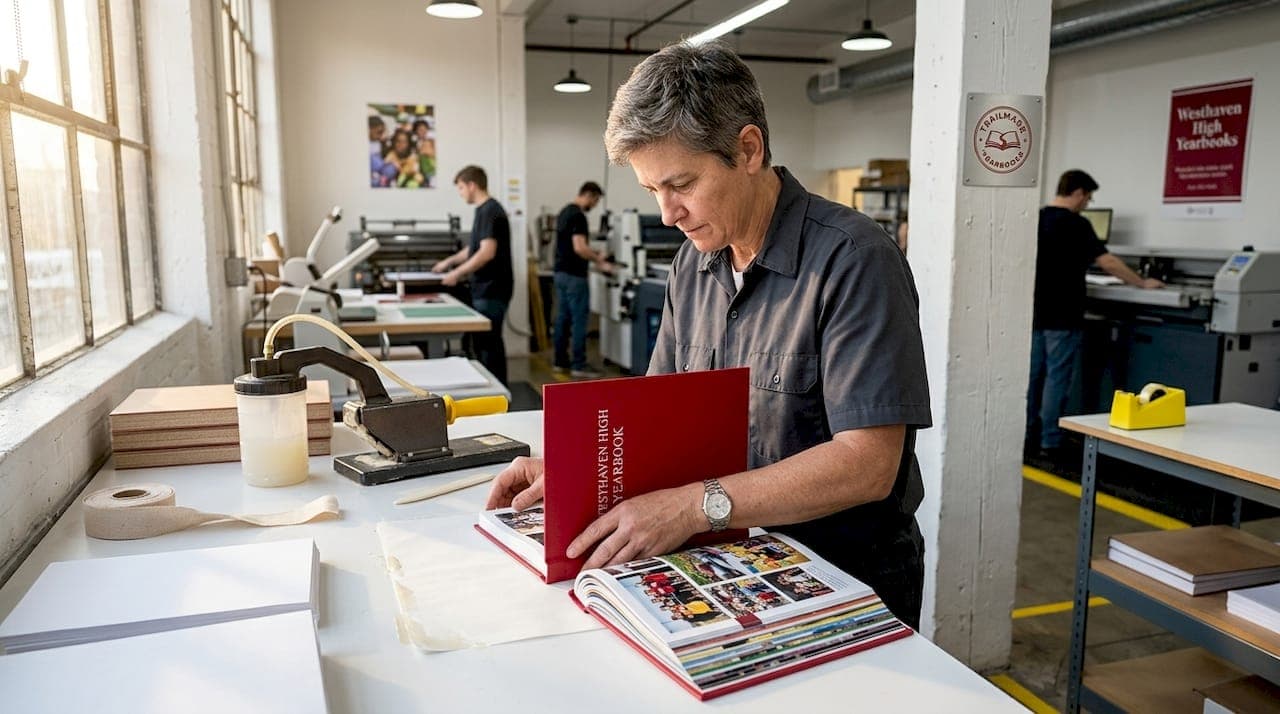
Yearbook hard cover binding is defined as a casebound construction where a rigid board case, built from binder's board, encases a sewn or adhesive-bound text block to produce a durable, professional-quality book. This method is the standard for school yearbooks longer than roughly 50 to 60 pages, where softcover bindings simply cannot hold up to repeated handling over decades. The rigid case protects interior pages from bending, moisture, and general wear, while the cover material options, ranging from printed paper laminate to cloth or leatherette, allow for significant creative customization. Understanding how hardcover binding works helps educators and yearbook staff make smarter decisions about durability, design, and budget before a single page goes to print.
What is yearbook hard cover binding and how is it constructed?
Case binding is the technical industry term for what most people call hardcover binding. The process starts by constructing a rigid outer case from binder's board, two stiff panels connected by a spine piece, then wrapping that structure in a cover material. The book block, meaning the printed interior pages, is produced separately and then attached to the case using endpapers, which are the thick sheets glued to the inside front and back covers.
The book block itself can be assembled in two primary ways: Smyth sewing or PUR adhesive bonding. Smyth sewing stitches groups of pages, called signatures, together with thread before the entire block is glued into the case. PUR adhesive bonding mills the spine of the gathered pages and applies a chemically reactive polyurethane glue. Both methods produce a casebound hardcover, but they differ meaningfully in durability and cost.
Cover material choices directly affect both the look and the longevity of the finished yearbook. Common options include:
- Printed paper laminate: Full-color custom designs printed directly on coated paper, then laminated and wrapped around the board. This is the most popular choice for school yearbooks because it supports photographic imagery and bold graphics.
- Cloth or linen: A traditional option that gives a textured, premium feel. Often used with foil stamping or debossing for a classic look.
- Leatherette or faux leather: Offers a high-end tactile impression at a lower cost than genuine leather. Common for commemorative or special edition volumes.
- Foil stamping and embossing: Finishing techniques applied on top of any cover material to add metallic text, logos, or decorative elements.
Pro Tip: Request physical samples of cover materials from your printer before finalizing your order. A laminated paper cover and a cloth cover look similar in digital proofs but feel completely different in hand, and that tactile difference matters to students and families.
The hardcover production process involves more steps than softcover printing, which adds both cost and production time. Schools should factor in at least a few extra days compared to softcover turnarounds when planning their yearbook calendar.
How do Smyth-sewn and PUR binding compare for yearbooks?
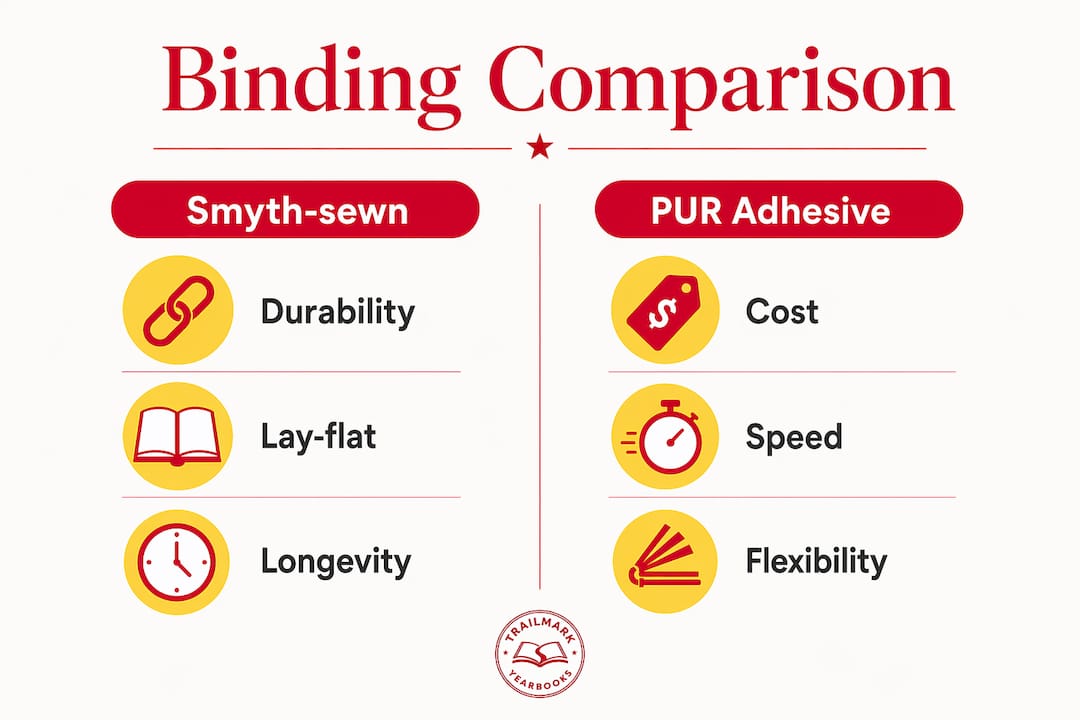
Smyth-sewn binding uses thread to stitch folded signatures together before the book block is cased in. This mechanical stitching gives the binding exceptional structural integrity because the pages are physically held together rather than relying solely on adhesive. Smyth-sewn books also open flat, which is a significant advantage for yearbooks where students want to lay the book open on a desk and read across a full spread without the spine fighting back.
PUR binding, by contrast, mills the spine of the gathered pages and applies polyurethane reactive adhesive. PUR adhesive resists temperature extremes and heavy use better than older EVA hot-melt glues, making it a genuine upgrade over traditional perfect binding. It is also faster and less expensive to produce than Smyth sewing, which makes it attractive for schools working with tighter budgets or shorter timelines.
The table below compares both methods across the factors that matter most to yearbook decision-makers.
| Factor | Smyth-sewn | PUR adhesive |
|---|---|---|
| Durability | Highest. Thread stitching resists repeated flex stress at the spine hinge. | Very high. Chemical bond resists temperature and heavy use. |
| Lay-flat ability | Excellent. Opens flat across full spreads. | Good, but slight resistance at the spine. |
| Production cost | Higher. More labor and materials involved. | Lower. Faster process with less manual work. |
| Best use case | Heirloom volumes, high page counts, archives. | Budget-conscious runs, standard school yearbooks. |
| Production time | Longer. Requires additional sewing step. | Faster. Adhesive curing is the main time factor. |
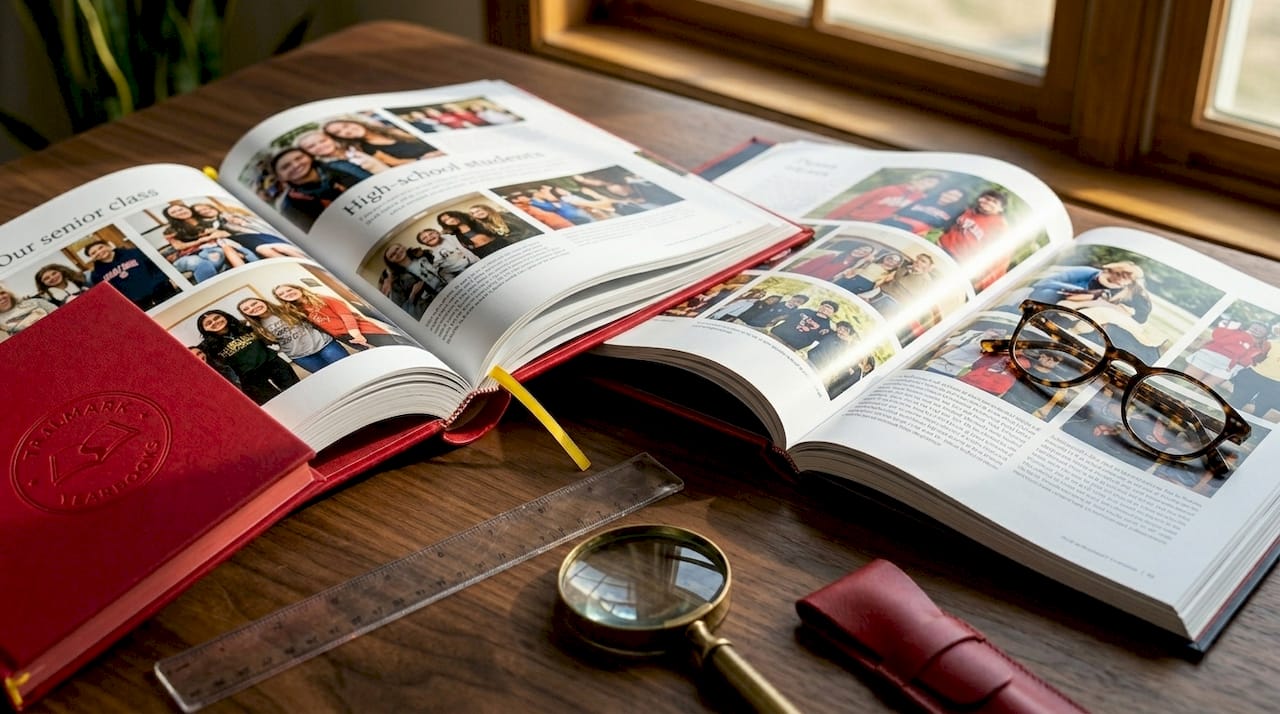
Repeated opening stresses concentrate at the spine hinges. Smyth sewing distributes that stress across thread and adhesive together, while PUR relies entirely on the chemical bond. For a yearbook that will be opened hundreds of times over a student's lifetime, Smyth sewing offers a measurable longevity advantage.
Pro Tip: Ask your printer specifically whether they use Smyth sewing or PUR for their hardcover yearbooks. Many vendors advertise "hardcover" without clarifying the book block method, and that distinction determines how long the binding will actually last.
Choosing between these methods depends on three factors: how often the yearbook will be handled, how long it needs to last, and what the budget allows. For most elementary and middle schools producing standard annual yearbooks, PUR delivers excellent results. For high schools producing senior editions or commemorative volumes intended as lifelong keepsakes, Smyth sewing is worth the additional investment.
What design considerations matter for hard cover yearbooks?
The binding method you choose directly shapes how you must design your interior pages, particularly near the spine. Gutter margins are the inside margins closest to the spine, and they require careful planning because the binding curvature pulls pages inward when the book is open. Content placed too close to the gutter will be partially hidden or distorted, which is a common and frustrating mistake in first-time yearbook production.
PDF Press recommends inside margins of at least 0.5 inch for text-only pages and 0.625 inch where photos appear near the gutter. These are minimum values. For thicker yearbooks with higher page counts, the spine curvature increases, and margins should be widened accordingly. A 200-page yearbook needs more gutter clearance than an 80-page one.
Practical layout rules to follow when designing for hardcover binding:
- Avoid placing faces or critical photo subjects at the center of a spread. The gutter will split the image and the binding curve will obscure detail right at the fold.
- Keep all text at least 0.5 inch from the inside edge. Captions, names, and headlines that drift into the gutter become unreadable once the book is bound.
- Use bleed settings correctly. Images that extend to the page edge need a 0.125 inch bleed beyond the trim line to prevent white borders after cutting.
- Test your layout with a physical mockup. Fold a printed proof in half and check how content sits near the spine before sending files to print.
The yearbook cover customization guide from Trailmarkyearbooks covers how cover design decisions interact with spine width, which changes based on page count and paper stock. Getting the spine width right matters because a cover designed for a 100-page book will not wrap correctly around a 150-page book.
Yearbook layouts must treat the gutter as a no-important-content zone unless the binding method and page thickness are fully understood. This principle applies whether you are designing in Canva, Adobe InDesign, or any other layout tool.
Why hardcover binding is the best choice for durable yearbooks
Hardcover binding is the premier option for school yearbooks with more than 50 to 60 pages, and the reason is structural. The rigid binder's board case supports the pages from the outside, distributing stress across the entire cover rather than concentrating it at the spine adhesive. Softcover bindings rely entirely on the adhesive holding the spine together, which fails faster under repeated use.
The rigid board case also contributes to the weight and tactile impression of the finished yearbook. This is not a superficial point. Students, parents, and alumni perceive a heavier, stiffer book as higher quality, and that perception reflects reality. A hardcover yearbook from 1995 is still readable and intact in ways that a softcover from the same year typically is not.
"Hardcover yearbooks are built to last. The combination of rigid board protection and strong book block binding means these books survive decades of handling, storage, and the occasional drop far better than any softcover alternative." — Printivity
The trade-offs are real and worth acknowledging. Hardcover production involves more materials, more production steps, and longer timelines. The durability of the book block depends on whether Smyth sewing or PUR adhesive is used, not just on the outer rigid cover. A hardcover with a weak book block attachment is still vulnerable to spine failure over time. Cost per unit runs higher than softcover, and for schools with very small page counts, the premium may not be justified.
For schools producing yearbooks above 60 pages with the intention of creating lasting keepsakes, hardcover binding is the right choice. The types of yearbook packages available today make it easier than ever to access hardcover options at transparent, all-inclusive pricing without hidden fees.
Key takeaways
Yearbook hard cover binding delivers superior durability and presentation by combining a rigid binder's board case with either Smyth-sewn or PUR-bound interior pages, making it the standard choice for school yearbooks above 60 pages.
| Point | Details |
|---|---|
| Core construction | A rigid binder's board case wraps a sewn or adhesive-bound text block, creating the hardcover structure. |
| Smyth-sewn vs PUR | Smyth sewing offers superior longevity and lay-flat ability; PUR adhesive is faster and more cost-effective. |
| Design margins | Keep inside gutter margins at minimum 0.5 inch for text and 0.625 inch near photos to prevent content loss. |
| Durability threshold | Hardcover binding is the recommended choice for yearbooks with more than 50 to 60 pages. |
| Cover material choice | Printed paper laminate, cloth, and leatherette each affect aesthetics, cost, and the final tactile impression. |
Why binding method is the decision most yearbook advisers overlook
After working with school yearbook production for years, the single most consistent gap I see is this: advisers spend weeks debating cover colors and photo layouts, then accept whatever binding method the printer defaults to without asking a single question about it. That default is often PUR, which is perfectly fine for most yearbooks. But for a senior class producing what is meant to be a lifelong keepsake, accepting a default without understanding the alternative is a real missed opportunity.
The Smyth-sewn versus PUR conversation is not complicated once you frame it correctly. Ask your printer two questions: How is the book block assembled? And how does that affect lay-flat performance? Those two questions will tell you more about the actual durability of your yearbook than any marketing description on a vendor's website.
I have also seen more design files ruined by gutter margin errors than by any other single mistake. Advisers using Canva or InDesign often set up their templates without accounting for binding curvature, and the result is student names and faces disappearing into the spine. The fix is simple, but it requires knowing the problem exists before you send files to print. The yearbook copy writing guide touches on layout preparation, and it is worth reading alongside any binding decision you make.
The bottom line is that hardcover binding is worth the cost for any school serious about producing a yearbook that lasts. But the outer cover is only half the story. The book block method is where real durability is built or lost.
— Jace
See hardcover yearbook quality for yourself with Trailmarkyearbooks
Trailmarkyearbooks has over 50 years of combined experience helping elementary, middle, and high schools produce hardcover yearbooks that hold up and look great. Schools get all-inclusive pricing online with no signup required, no hidden fees, and shipping included, so you know exactly what you are paying before you commit.
The best way to evaluate binding quality is to hold it. Request a sample from Trailmarkyearbooks to feel the difference between cover materials and binding styles firsthand before making your decision. If you want personalized guidance on which hardcover option fits your school's page count, budget, and timeline, contact a rep directly for a no-pressure consultation.
FAQ
What is the difference between hardcover and softcover yearbook binding?
Hardcover binding uses a rigid binder's board case to encase the text block, providing structural protection and lasting durability. Softcover binding wraps the pages in a flexible cover and relies entirely on spine adhesive, which degrades faster under repeated handling.
Is Smyth-sewn or PUR binding better for school yearbooks?
Smyth-sewn binding offers superior longevity and lay-flat performance, making it the best choice for heirloom or senior yearbooks. PUR adhesive binding is faster, less expensive, and delivers very strong results for standard annual school yearbooks.
How thick should gutter margins be in a hardcover yearbook layout?
Inside gutter margins should be at least 0.5 inch for text-only pages and 0.625 inch where photos appear near the spine. Thicker yearbooks with higher page counts require wider margins to account for increased binding curvature.
At what page count does hardcover binding become worth the cost?
Hardcover binding is the recommended choice for yearbooks with more than 50 to 60 pages. Below that threshold, the added cost and production time may not be justified compared to a quality softcover option.
Can I customize the cover material on a hardcover yearbook?
Yes. Common cover material options include printed paper laminate, cloth, and leatherette, each available with finishing techniques like foil stamping and embossing. Printed paper laminate is the most popular choice for school yearbooks because it supports full-color photographic designs.