

Every year, yearbook advisers and school administrators face the same uncomfortable moment: the new quote comes in, and the price has gone up again. Understanding why yearbook price increases happen is not just an academic exercise. It directly shapes how you budget, how you sell books to families, and whether your program stays financially viable. The reasons behind rising yearbook costs are grounded in real production economics, industry pricing trends, and market forces that schools rarely see explained clearly. This guide breaks all of it down.
Table of Contents
- Key takeaways
- Why yearbook price increases happen
- How declining sales drive yearbook price inflation
- Customization, format choices, and their real costs
- Practical strategies for managing yearbook budget increases
- My take on yearbook pricing after years of advising
- How Trailmarkyearbooks helps schools control yearbook costs
- FAQ
Key takeaways
| Point | Details |
|---|---|
| Printing costs drive increases | Materials, labor, and production technology are primary factors affecting yearbook prices. |
| Minimum orders create risk | Missing order projections triggers surcharges that raise your per-unit cost significantly. |
| Sales declines push prices up | Annual sales drops of 4 to 8 percent force publishers to spread fixed costs over fewer books. |
| Customization adds real dollars | Specialty finishes and digital integrations increase production complexity and final prices. |
| Early forecasting stabilizes budgets | Accurate pre-sale projections reduce the risk of cost surprises at fulfillment time. |
Why yearbook price increases happen
The industry term for what you are experiencing is cost-push inflation in print production. That means prices rise because the inputs required to make the product become more expensive, not because publishers are simply padding margins. Several distinct cost centers contribute to this, and understanding each one gives you a clearer picture to share with principals, PTAs, and families.
Printing and production expenses sit at the foundation of every price quote you receive. Paper, ink, binding materials, and the labor to operate commercial presses have all increased in cost over the past several years. Specialty paper stocks used in premium yearbooks cost meaningfully more than standard offset paper. Binding methods like smyth-sewn hardcovers require additional labor and machine time. These are not optional line items a publisher can simply cut.
Shipping and distribution add another layer of cost that most school stakeholders underestimate. Yearbooks are physically heavy and ship in bulk quantities. Shipping costs escalate with volume and school location, and carriers have implemented fuel surcharges and dimensional weight pricing that hit large, dense shipments particularly hard.
Minimum order quantities create a structural pricing problem that few schools fully understand until they are facing a shortfall. Yearbook producers require strict minimum orders to maintain profitability, and if your actual sales fall below your projection, surcharges apply. The economics behind this are straightforward: economies of scale are critical to the yearbook pricing model, and small order volumes disproportionately raise the cost per unit.
Premium add-ons compound these base costs. Foil stamping on covers, matte laminate finishes, and augmented reality integrations all carry production premiums compared to a standard softcover book with basic printing.
Pro Tip: When comparing quotes from publishers, ask specifically what the surcharge structure looks like if your final order count falls 10 or 15 percent below your projected number. That number tells you far more about your real financial risk than the headline price per book.
How declining sales drive yearbook price inflation
Market dynamics play a role in yearbook pricing trends that is often invisible to schools. The core issue is a shrinking buyer pool colliding with fixed production costs, and that math always pushes prices in one direction.
Yearbook sales are declining 4 to 8 percent annually, and publishers must spread their fixed infrastructure costs. press maintenance, software licensing, customer service staffing, and design platform development. across fewer units every year. That is a direct contributor to yearbook price inflation causes that has nothing to do with the cost of paper or ink.
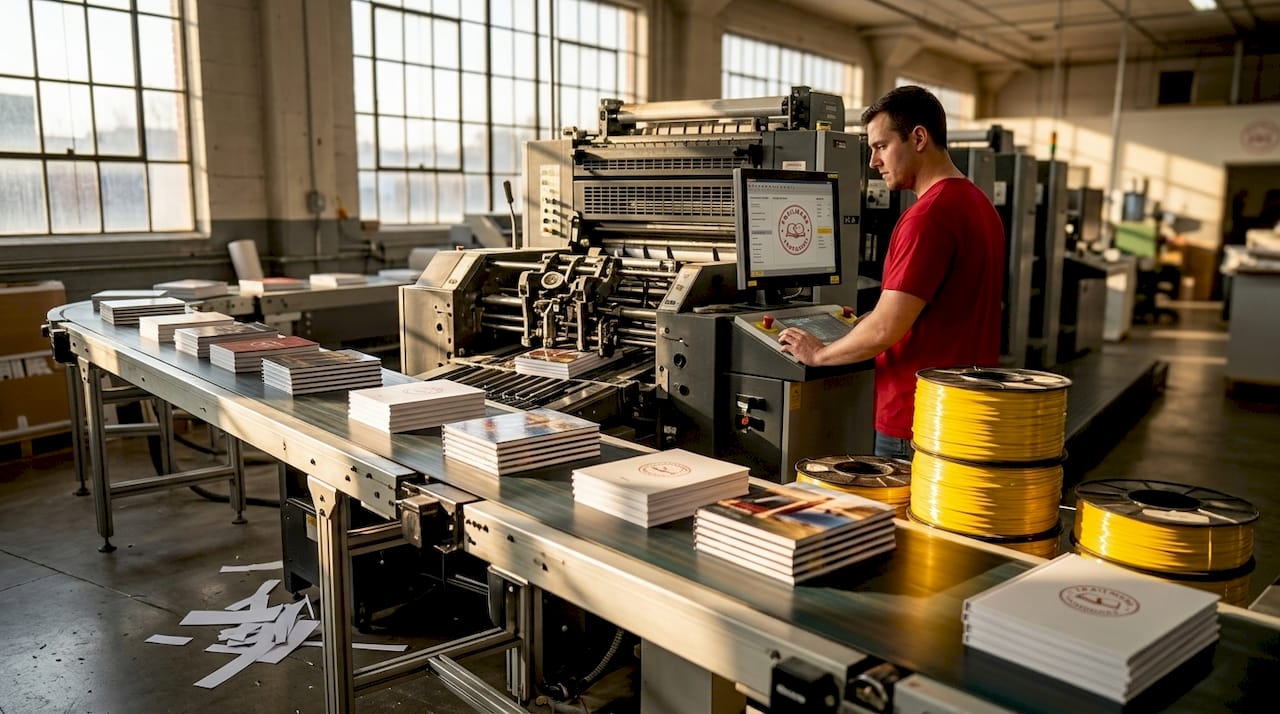
The price sensitivity data makes this particularly complicated. When yearbook prices exceed $75, sales decline by approximately 18 percent. Publishers and schools are caught in a feedback loop: prices rise to cover declining volume, rising prices accelerate the decline in volume, and that further pressure pushes prices up again. Recognizing this cycle is the first step toward breaking it at the school level.
Publishers also operate on thin margins where every missed minimum order or last-minute design change has an outsized financial consequence. When demand fluctuations occur, pricing adjustments follow quickly because there is simply no buffer to absorb the variance.
For school administrators, this means your yearbook pricing is no longer a fixed annual line item you can simply carry forward from last year's budget. It requires active attention and forecasting to avoid absorbing cost increases that were preventable.
Customization, format choices, and their real costs
Modern yearbooks look nothing like what families received a generation ago, and that evolution in product quality has a price attached to it. Personalization and hybrid print-digital features increase production complexity in ways that compound quickly.
Standard vs. enhanced yearbook cost comparison
| Feature | Standard yearbook | Enhanced yearbook |
|---|---|---|
| Cover finish | Basic gloss laminate | Soft-touch matte or foil stamp |
| Interior paper | Standard 60 lb. offset | Premium 80 lb. gloss coated |
| Digital integration | None | AR pages, QR codes |
| Personalization | None | Individual student pages |
| Relative cost impact | Baseline | 20 to 40 percent above baseline |
Specialty design elements and finishes are the most visible cost additions, but they are also the easiest to evaluate in advance. Foil stamping, spot UV coatings, and debossed covers are priced as add-ons with clear per-unit premiums. The harder costs to anticipate involve AR and digital integration logistics. These features require additional production steps, software licensing by the publisher, and quality control processes that raise final costs beyond typical expectations.
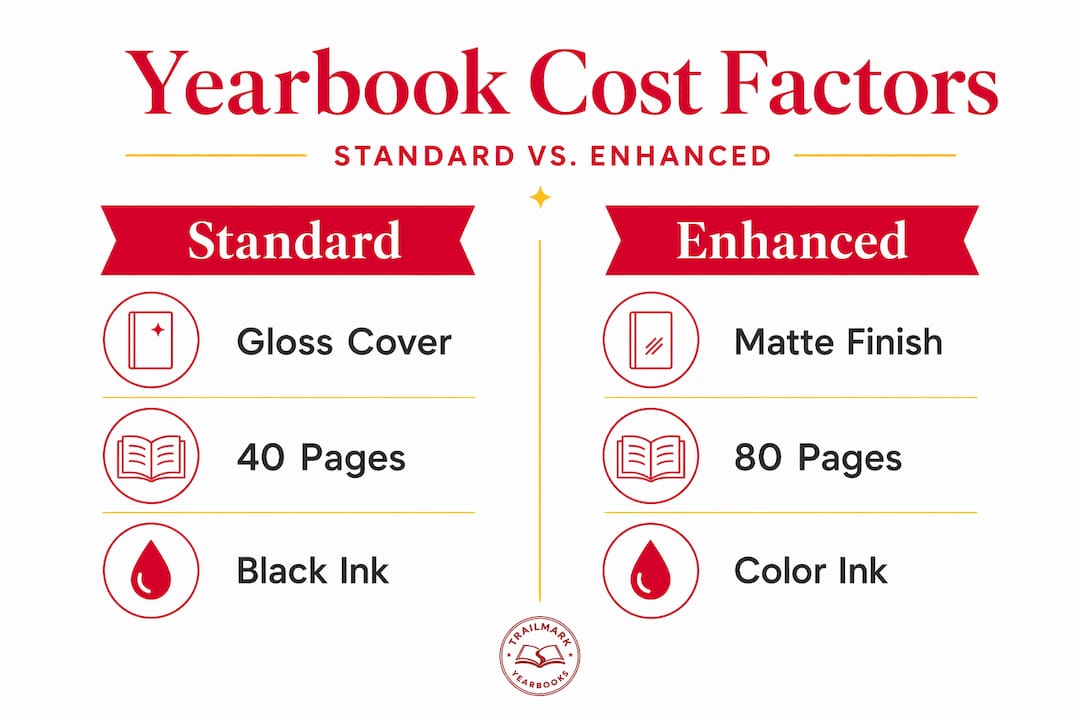
Schools frequently underestimate the cost impact of enhanced features, particularly when decisions about customization happen late in the production cycle. By the time the adviser realizes the per-book cost has jumped, it is often too late to adjust the design without delaying the entire project.
The yearbook cover customization guide from Trailmarkyearbooks walks through how to evaluate which features genuinely add perceived value for students versus which ones inflate cost without proportional impact on satisfaction.
Pro Tip: Lock in your customization choices before you open pre-sales. Families will set their budget expectations based on the price you publish at pre-sale, and mid-production feature additions that raise the final price create trust problems with families and financial exposure for your school.
Practical strategies for managing yearbook budget increases
Knowing why yearbook expenses increase only matters if you can act on that knowledge. Here is a structured approach to protecting your budget and keeping books accessible to families.
-
Start forecasting before sales open. Pull your enrollment numbers, compare last year's sell-through rate, and set a conservative sales projection. Build your minimum order commitment on that conservative number, not your optimistic one. The yearbook deadline management checklist from Trailmarkyearbooks includes forecasting milestones that help advisers avoid late-stage surprises.
-
Use pre-sale pricing strategically. Offering a discounted price during a defined pre-sale window serves two purposes. It generates early revenue to cover upfront costs, and it gives you a real data point on demand before you finalize your minimum order commitment.
-
Evaluate your package tier honestly. Review the types of school yearbook packages available to your school and match features to your actual student preferences. Upgrading to a premium tier when families primarily care about candid photo coverage and class portraits rarely justifies the cost increase.
-
Communicate price changes to stakeholders early. Principals and parents are far more receptive to a price increase when you explain it in terms of specific cost drivers rather than announcing a higher number without context. Prepare a brief written summary for back-to-school night that connects production realities to the price families will see.
-
Negotiate minimum order flexibility. Some publishers, particularly smaller or newer providers, offer more flexible minimum order structures. Ask directly what happens if your final count comes in below projection, and get the answer in writing before you sign anything.
My take on yearbook pricing after years of advising
I've seen schools absorb price increases year after year without ever fully understanding where the money was going. That lack of transparency creates frustration, and frustrated administrators start looking for ways to cut the yearbook program rather than finding smarter ways to manage its costs.
What I've learned is that the schools handling yearbook budgets best are not necessarily the ones with the largest budgets. They are the ones that treat yearbook pricing like any other procurement decision. They ask hard questions about cost structure, they negotiate on minimum orders, and they resist the temptation to add premium features that look impressive in a catalog but do not meaningfully improve the student experience.
The uncomfortable truth about yearbook price inflation is this: a significant portion of the increases schools face are preventable with better planning. Missed minimum orders, late customization decisions, and passive acceptance of quoted prices all contribute to costs that a more engaged adviser or administrator could have avoided.
My honest recommendation is to stop thinking of the yearbook vendor relationship as a service relationship and start treating it like a procurement partnership. You have more leverage than you think, especially if you bring accurate projections, early commitment, and clear design parameters to the table before the contract is signed.
— Jace
How Trailmarkyearbooks helps schools control yearbook costs
Trailmarkyearbooks was built specifically for schools that are tired of pricing surprises. Every quote includes all-inclusive pricing with shipping, no hidden fees, and no minimum order deadlines that create end-of-year budget risk. You can get instant pricing online without signing up or sitting through a sales call.
If you are working through a yearbook budget right now, request a sample to evaluate quality and pricing options without any commitment. For advisers who want structured planning support, the adviser resource PDFs include tools specifically designed to help you forecast accurately, manage customization decisions, and keep per-book costs predictable across the entire production cycle.
FAQ
Why do yearbook prices keep going up every year?
Yearbook prices rise due to a combination of higher printing and materials costs, shipping cost increases, and declining annual sales volume that forces publishers to spread fixed costs over fewer books sold each year.
What happens if our school orders fewer yearbooks than projected?
Most publishers apply surcharges when final order counts fall below the minimum order commitment, which raises your per-unit cost. Accurate early forecasting is the most reliable way to avoid these fees.
At what price point do yearbook sales start to drop significantly?
Research shows that sales decline roughly 18 percent when yearbook prices exceed $75, making it a critical threshold for schools to monitor when setting their per-book price for families.
Do customization features really add that much to the final cost?
Yes. Premium finishes, specialty paper, and AR integrations can push costs 20 to 40 percent above a standard yearbook baseline, and late-stage customization decisions are harder to price accurately before production begins.
How can schools budget more reliably for yearbook costs?
Start with a conservative sales forecast, lock in design features before opening pre-sales, and ask your publisher for a clear explanation of their minimum order surcharge structure before signing a contract.