
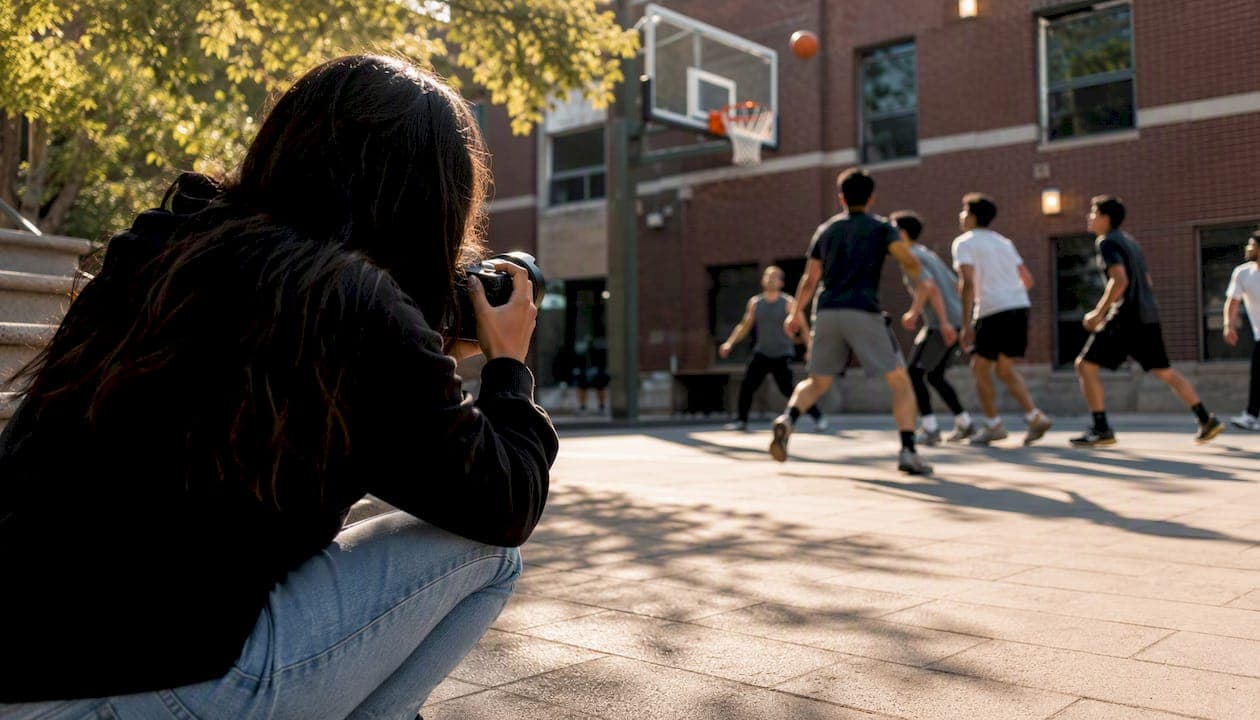
Candid photos are the fastest way a yearbook team can create authentic storytelling and boost student engagement. Multiple experiments confirm that observers respond more favorably to candid images than posed ones, rating subjects as more genuine and expressing greater interest in interacting with them — a finding that maps directly to how students and alumni experience a finished book.
Start this week with three moves:
- Assign one roaming photographer per major event, with a specific brief to shoot interactions, not poses.
- Schedule candid coverage at arrival and lunch — two moments that happen every day and are almost always overlooked.
- Reserve at least one or two spreads in your layout plan specifically for candid-driven storytelling before the semester fills up.
Pro Tip: Create a shared Google Sheet with each photographer's name, assigned location, and shoot date. Thirty minutes of planning prevents three months of coverage gaps.
Key Takeaways
Candid photos create stronger emotional connection than posed portraits because observers perceive them as more genuine, making them the most effective tool for authentic yearbook storytelling.
| Point | Details |
|---|---|
| Research backs candids | Berger and Barasch experiments show candid photos increase perceived genuineness and viewer connection. |
| Use deliberate ratios | Target 50–70% candids on action and community spreads; reserve posed portraits for identification pages. |
| Track consent from day one | Use a filename convention and spreadsheet to log release status before any image goes to layout. |
| Station photographers strategically | Arrival, lunch, and club meetings yield the most natural, high-emotion candid opportunities. |
| Trailmarkyearbooks supports the workflow | Free design assistance, adviser resources, and a 2–3 week turnaround help schools go from candid capture to finished book. |
Table of Contents
- 1. Why candid photos improve storytelling and engagement
- 2. What candid photos show that posed portraits can't — and when posed still wins
- 3. Where to find the best candid moments in your school
- 4. Staff-ready tips for capturing great candid photos
- 5. Ethics, consent, and school policy when photographing minors
- 6. How to balance candid and posed photos across your spreads
- 7. How advisers and vendors turn candid photos into a finished book
- 8. A candid-first approach pays off more than most advisers expect
- Trailmarkyearbooks makes candid-driven yearbooks faster and less stressful
- Sources
1. Why candid photos improve storytelling and engagement
Candid photos outperform posed portraits on the metric that matters most for yearbooks: emotional connection. Across five experiments, Berger and Barasch found that observers consistently rated candid subjects as more genuine and reported stronger feelings of connection with them compared to the same subjects shown in posed photos. For a yearbook, that difference shows up as pages readers actually linger on rather than flip past.
The mechanism is straightforward. As Berger and Barasch explain, candid images give observers an "unvarnished" sense of a person — a clearer read on who someone really is rather than who they're trying to appear to be. Posed photos, by contrast, signal curation. Readers sense that signal even when they can't articulate it, and it reduces the emotional payoff of the image.
There's also a scarcity effect worth knowing. Supporting analyses by Berger and Barasch found that the vast majority of profile photos online are posed, which means a well-placed candid spread can create standout emotional resonance precisely because it's different from what readers expect.
For editorial decisions, this research suggests three shifts in staff priorities:
- Selection criteria: Favor images where subjects are absorbed in an activity over images where they're looking at the camera.
- Coverage planning: Build shot lists around interactions and tasks, not just events.
- Spread sequencing: Place candid-heavy spreads at the opening of a section to pull readers in before transitioning to more structured content.
Yearbooks that build school community through authentic imagery also tend to generate stronger alumni recall — which is the long-term measure of whether a book actually mattered.
2. What candid photos show that posed portraits can't — and when posed still wins
Candid photography adds things to a yearbook that a portrait session simply cannot replicate.
What candids do well:
- Authenticity: A student mid-laugh in the cafeteria tells you something real about who they are. A posed smile tells you they showed up.
- Context: Candids anchor a moment in a place and activity. Readers see the chemistry lab, the gym floor, the art room — not a backdrop.
- Variety: A spread built entirely from posed photos reads flat. Candids introduce visual rhythm and energy.
- Inclusion: Students who skip portrait day still appear in candids. That matters for coverage equity.
- Emotion: Joy, concentration, surprise, pride — these register in unguarded moments, not scheduled ones.
Where candids fall short:
- Composition is unpredictable. You'll discard a higher percentage of candid shots than posed ones.
- Motion blur is a real risk, especially in low-light gyms and hallways.
- Consent tracking is more complex when you're shooting dozens of students across multiple locations.
- Candids don't reliably identify individuals, which makes them unsuitable for staff pages, senior portraits, and formal awards sections.
The practical guidance from The Edvocate's yearbook ideas resource reinforces this: prioritize candids for groups laughing, students working, and community moments — but keep posed portraits where identification and formality are the point.
| Situation | Best photo type | Reason |
|---|---|---|
| Action/community spreads | Candid | Captures emotion and context |
| Staff directory pages | Posed portrait | Requires clear identification |
| Senior portraits | Posed portrait | Formal record and tradition |
| Club and activity spreads | Mix (a majority candid) | Tells the story, names the members |
| Formal awards ceremonies | Both | Candid for reaction, posed for record |
| Classroom learning moments | Candid | Shows authentic academic life |

3. Where to find the best candid moments in your school
The richest candid opportunities are hiding in plain sight — you just need photographers stationed at the right moments before the moment passes.
Highest-yield locations and times:
- Arrival and first bell: Students greet friends, settle in, and show genuine emotion before the school day's social performance kicks in. Station a photographer near the main entrance 15 minutes before the bell.
- Lunch: The cafeteria is the single most reliable location for natural group interaction. Shoot from a slight distance to avoid disrupting conversations.
- Hallways between classes: Brief, unguarded, and full of personality. A 50mm or 85mm lens lets you capture interactions without getting in the way.
- Club meetings and rehearsals: Drama rehearsals, robotics builds, and band warm-ups all generate focused, expressive moments. These also cover students who don't play sports.
- Athletic events (bench and sideline): The bench reaction shot — a player watching a teammate score — often carries more emotion than the play itself.
- Performances: Backstage before a show is gold. Nervous energy, costume adjustments, group huddles.
- Community service events: Students working together on a project photograph naturally and show character.
- Small-group learning: A student explaining something to a peer, a group working through a problem — these are the academic-life shots most yearbooks miss.
Trailmarkyearbooks's candid photo staff guide breaks these locations down further with sample shot lists your staff can adapt directly.
Coverage checklist to keep inclusion on track:
- Confirm each grade level appears in at least two candid spreads.
- Track which student groups (clubs, teams, academic programs) have been photographed each month.
- Flag any underrepresented groups by mid-semester and schedule a targeted shoot.
- Assign a specific photographer to each high-yield location per event, with a backup battery and a full memory card.
4. Staff-ready tips for capturing great candid photos
The single biggest mistake student photographers make is trying to get technically perfect shots instead of emotionally true ones. Prioritize unobtrusiveness, timing, and context — then worry about settings.
Numbered sequence for event day:
- Blend in before you shoot. Arrive early, move slowly, and let students forget you're there. The first five minutes of any event are the hardest; the next twenty are the most productive.
- Use burst mode for movement. Set your camera or phone to continuous shooting when subjects are in motion. You'll delete most frames, but one will be exactly right.
- Favor a slightly longer focal length. An 85mm lens (or the equivalent portrait mode on a phone) lets you shoot from a comfortable distance without crowding subjects. Indoor gyms and cafeterias respond well to this.
- Watch for interactions, not poses. The moment two students make eye contact over something funny is worth ten posed group shots. Train your eye to anticipate it.
- Include environmental context. A sign, a prop, a piece of equipment in the frame anchors the story. A laughing student with no context is a nice photo; a laughing student next to the robotics trophy is a yearbook spread.
Quick camera reference for school settings:
- Indoors (gym, cafeteria): ISO 800–1600, shutter speed 1/200s or faster, wide aperture (f/1.8–f/2.8).
- Outdoors (field, arrival): ISO 100–400, shutter speed 1/500s or faster, aperture f/4–f/8.
- Phones: Use portrait mode for distance shots; turn off HDR for faster shutter response in action moments.
Sample shot ideas by spread type:
- Sports bench: Reaction shot of a player watching a play, coach mid-instruction.
- Art studio: Student focused on a detail, hands covered in paint.
- Cafeteria: Mid-laugh group, a student sharing food, a quiet reader at the edge of the room.
- Arrival: A handshake greeting, a student reading a notice on the bulletin board.
Pro Tip: A "posed-candid" — where you ask students to continue what they were doing and shoot while they re-engage — can produce natural-looking results. The key is perceived awareness: research shows the candid advantage shrinks when viewers sense the subject knew the camera was there. Use this technique sparingly and never present it as a true candid in captions.
5. Ethics, consent, and school policy when photographing minors
Always follow your school's photo release policy and secure appropriate consent before publishing any image of a student. When in doubt, don't publish.
This isn't just legal protection — it's the foundation of trust with students, parents, and administrators. A single consent violation can shut down a yearbook program faster than any budget cut.
Permissions checklist:
- Confirm your district's standard photo release form is on file for every student you plan to feature.
- Maintain an opt-out list and cross-reference it before any image goes to layout.
- Check for athletic department restrictions — some programs have separate media policies for game photography.
- For off-campus events or community service shoots, verify whether additional parental permission is required.
Situations where you must not shoot or publish:
- Medical or emergency situations on school grounds.
- Private counseling spaces or any setting where a student has a reasonable expectation of privacy.
- Disciplinary events or any moment that could identify a student in a sensitive situation.
- Any image where a student's distress is visible and the student has not consented to its use.
Logging consent and tracking images:
Use a simple filename convention that embeds consent status: for example, 2026_spring_robotics_CONSENTED_0042.jpg. A yearbook photography checklist can help your staff standardize this from the first shoot of the year. Pair it with a consent-tracking spreadsheet that maps student name, grade, release status, and opt-out flag — and share it with every editor before layout begins.
Pro Tip: Review your school's yearbook policy best practices at the start of each year and update your opt-out list within the first two weeks of school. Policies change, and students who were fine with photos last year may have opted out over the summer.
6. How to balance candid and posed photos across your spreads
The goal isn't to maximize candids — it's to use them deliberately so they do storytelling work that posed photos can't. Aim for a purposeful mix rather than a fixed rule, but editorial ratio guidance helps when staff disagree.
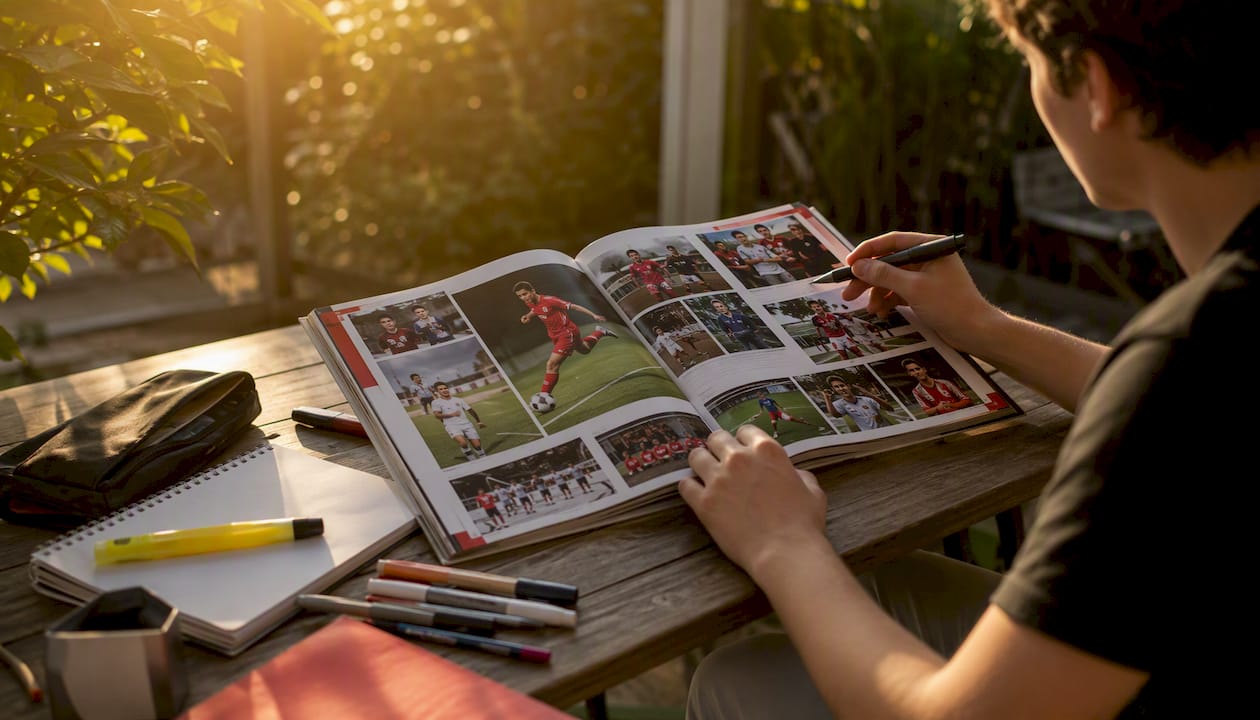
A workable starting point: for action and community spreads (sports, clubs, events, classroom life), target a majority of candid images. Reserve posed portraits for identification-critical pages — staff directories, senior portraits, formal awards. That ratio gives spreads visual energy while keeping the book navigable.
Layout matters as much as ratio. A candid image works best as the anchor photo on a spread — the largest image that establishes the emotional context. Smaller supporting photos can be a mix of candids and posed shots. Sequencing two or three candids in a visual narrative across a two-page spread (setup, action, reaction) creates a story arc that readers follow without realizing it.
Group photo storytelling works the same way: a candid group shot at the center of a spread, surrounded by tighter individual candids, tells a richer story than a formal lineup ever could.
Captioning checklist for candids:
- Who: Name every identifiable student (first and last name, grade).
- What: Describe the activity, not just the emotion ("celebrates after scoring" not just "smiles").
- Where: Name the location or event.
- Why it matters: One phrase that connects the moment to the school year's story ("during the first home game of the season").
Captions are where candid photos earn their identification value. A great candid with a vague caption is a missed opportunity; the same photo with a precise caption becomes a record.
7. How advisers and vendors turn candid photos into a finished book
Standardizing file naming, consent metadata, and delivery windows is what separates a smooth production cycle from a chaotic one. The workflow below fits a typical school-year schedule.
End-to-end workflow:
- Build a shot list at the start of each semester, organized by event and location.
- Tag every image at import with consent status, photographer name, event, and date.
- Use a consistent naming convention across all photographers (example:
YYYY_event_location_CONSENTED_####). - Hold a mid-semester edit session where editors select final candids for each spread, flagging any consent gaps.
- Upload approved images to your layout platform (Canva, Adobe InDesign, or Trailmarkyearbooks's online creator) using the agreed folder structure.
- Submit spreads to your vendor for color and print proofing before final production.
- Run a final production checklist: confirm all opt-outs are removed, captions are complete, and image resolution meets print specs.
Trailmarkyearbooks's adviser resources hub includes shot list templates, consent-tracking spreadsheets, and proofing checklists that fit directly into this workflow. Free design assistance is available for advisers who need help placing candid-heavy spreads without losing layout clarity.
When to send candids for layout and proofing:
- Submit first-semester candids for layout review no later than January.
- Complete final candid selections four weeks before your print deadline.
- Allow one week for vendor color proofing on candid-heavy spreads, where skin tones and low-light shots need the most attention.
8. A candid-first approach pays off more than most advisers expect
The conventional wisdom in yearbook advising is that candids are a nice supplement to portraits — something you add when you have extra space. That framing gets it backwards.
Portraits are the supplement. They serve a specific, narrow function: identification. Candids are where the actual story of a school year lives. The research by Berger and Barasch isn't about photography aesthetics — it's about how people form impressions and connections. When readers open a yearbook and feel something, it's almost always because a candid photo caught a moment that couldn't have been planned.
The practical implication for advisers is this: build your coverage plan around candid opportunities first, then fill in portraits where identification requires them. Most yearbook staffs do the opposite, which is why so many books feel like a collection of school IDs with captions.
There's also a staffing argument here. Candid photography is something student photographers can do well with modest training — it rewards patience and observation more than technical mastery. Recruiting students who are naturally curious and giving them a clear shot list produces better candid coverage than sending a technically skilled photographer who doesn't know how to disappear into a crowd. If you're building your team, the student photographer recruiting guide is worth a read before the school year starts.
One more thing advisers underestimate: the opt-out and consent workflow is not a burden — it's a quality filter. When you track consent carefully, you also track coverage. Advisers who run tight consent logs consistently end up with better-distributed candid coverage across grade levels and student groups, because the log forces them to notice gaps.
Trailmarkyearbooks makes candid-driven yearbooks faster and less stressful
Putting together a candid-heavy yearbook is a different kind of production challenge than a portrait-based one: more images, more consent tracking, more layout decisions. Trailmarkyearbooks is built for exactly that workload.

With a 2–3 week turnaround, free design assistance, and a dedicated adviser, Trailmarkyearbooks gives your staff the support to move from candid capture to finished spreads without the usual bottlenecks. Flexible design options through Canva, Adobe InDesign, or the Trailmarkyearbooks online creator mean your photographers can work in whatever format fits your workflow. Downloadable adviser resource PDFs include shot lists, consent-tracking templates, and production checklists your staff can use from day one.
The clearest next step: request a printed sample to see how your candid photos actually look on the page before you commit to a full print run. No signup, no sales pitch, shipping included.
Sources
The sources below back the article's core claims and give advisers vetted starting points for staff training and internal documentation.
- A Candid Advantage? The Social Benefits of Candid Photos
- Candid online photos improve social status and dating prospects — Alixandra Barasch (NYU Stern)
- So Long, Selfies: Why Candid Photos Make a Better Impression - Knowledge at Wharton
- Say Goodbye to Boring Yearbook Photos: 10 Ideas to Use Instead - The Edvocate