
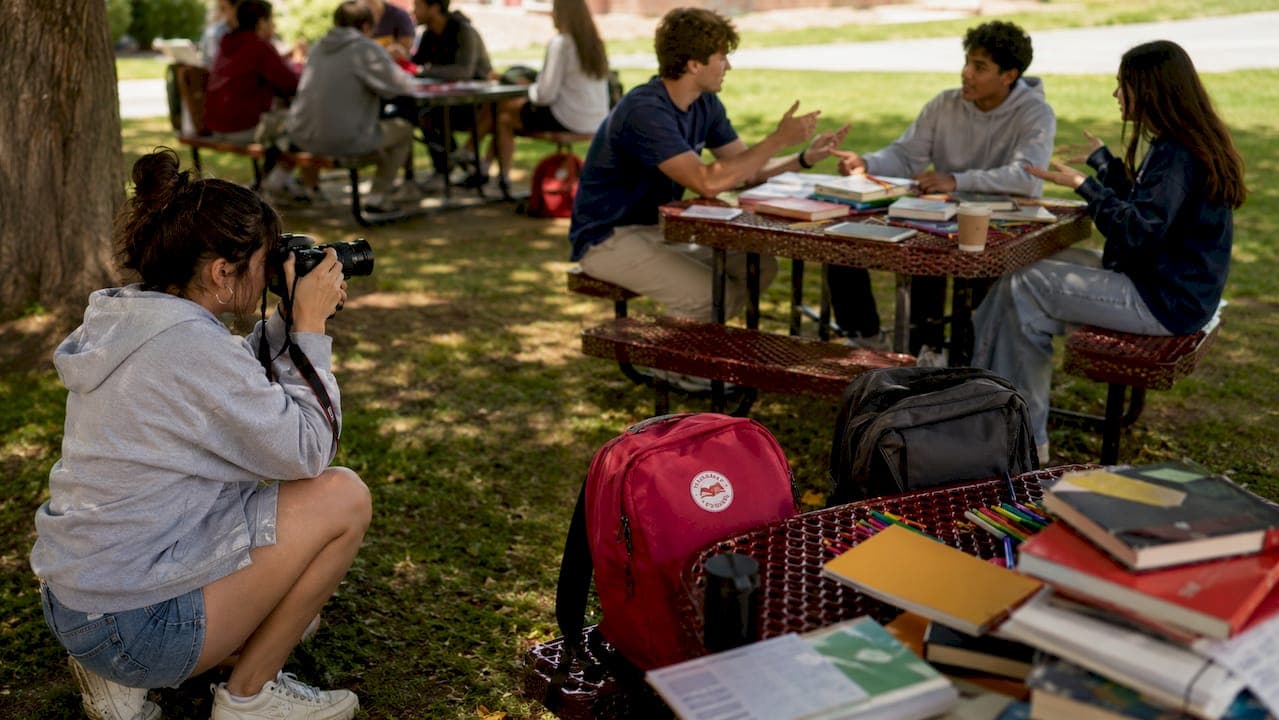
Candid photography is defined as unposed, unscripted images that capture genuine emotions and real interactions as they happen. The types of yearbook candid photos your team collects directly determine how authentic and memorable the final book feels. Posed portraits tell students who they were. Candid shots show them how they actually lived. Yearbook experts at Trailmarkyearbooks consistently point to candid coverage as the single biggest factor separating a yearbook students flip through once from one they return to for decades.
Types of yearbook candid photos every spread needs
The most effective yearbook candid photos fall into distinct categories. Each category serves a different storytelling purpose, and mixing them across spreads creates visual variety that keeps readers engaged.
Natural expression shots capture a student mid-laugh, mid-thought, or mid-conversation. These are the gold standard of candid photography because they require no setup and no direction.

Environmental portraits place a student in a recognizable school setting, like a lab bench, a locker row, or a rehearsal room, and let the context do the storytelling. The location itself becomes part of the image.
Action shots freeze movement during sports, theater rehearsals, or science experiments. They communicate energy and effort in a single frame.
Group interaction shots document the social fabric of school life. Two students debating at lunch, a cluster celebrating a test score, or a team huddle before a game all qualify. These images are irreplaceable because they show relationships, not just individuals.
Triptych and before/during/after sequences are a layout technique, not just a photo type. Storytelling layouts like triptychs and photo essays with captions featuring student quotes increase yearbook engagement compared to traditional grids. Sequencing three related candids on one spread turns a moment into a narrative arc.
Milestone event candids cover homecoming, graduation rehearsal, pep rallies, and field trips. Yearbook pages with timestamps and contextual captions preserve the feeling of time passing and deepen emotional connection to those events.
Pro Tip: Shoot at least one of each category per major school event. A single event can yield natural expressions, action shots, and group interactions all in the same afternoon.
How to elicit genuine expressions in candid photography
The biggest mistake yearbook photographers make is asking students to smile. Avoiding "say cheese" and using candid prompts triggers genuine emotions rather than forced grins. The difference shows up clearly in print.
Micro-task prompts work better than pose directions. Try these approaches:
- Ask a debate question. "What's the best lunch option?" sparks real disagreement and animated faces.
- Request a secret. Whispering creates natural leaning, eye contact, and laughter.
- Give a small task. Ask two students to plan something together. The focus on the task removes self-consciousness.
- Use group storytelling. Ask a group to retell a funny moment from class. Reactions become your photos.
- Stay quiet and wait. After any prompt, stop talking. The silence pushes students back into natural behavior within seconds.
Timing matters as much as prompting. Shooting 3–5 seconds after a main event captures the most authentic expressions, when subjects drop their guard and vulnerability shows. Burst mode through those after-moments increases the number of usable shots significantly.
Camera settings also affect the quality of candid shots in school environments. Recommended settings for indoor candid shots include an aperture of f/1.8–f/2.8, auto ISO, and a high shutter speed to reduce blur. For fast-moving settings like gyms or hallways, shutter speeds above 1/250 combined with continuous autofocus and face or eye detection keep subjects sharp.
Pro Tip: Arrive early to every event and spend the first ten minutes just talking with students. Once they stop noticing the camera, your best shots become possible.
Creative candid photo ideas for yearbook staff and contributors
The most revisited yearbook pages focus on everyday school life, not just big events. Candid life spreads covering hallway chats, lunchroom dynamics, and class prep receive the highest engagement and longevity because they reflect what students actually experienced day to day.
Strong candid photo ideas organized by setting:
- Cafeteria: Friends mid-conversation, a student reacting to food, a group sharing earbuds
- Hallways: Locker exchanges, a student rushing with an armful of books, a quiet moment before class
- Fine arts: A musician lost in practice, a painter stepping back to evaluate their work, a drama student running lines alone
- Sports: The bench reaction to a big play, a coach mid-instruction, a player catching their breath
- Classrooms: A student's face during a surprise quiz result, a group project debate, a teacher's genuine reaction to a student's answer
Thematic mosaic layouts work especially well for these images. High-density candid mosaics combined with journalistic captions and student voice quotes create reader interest and draw people into the page rather than scanning past it.
| Candid photo type | Best setting | Layout style |
|---|---|---|
| Natural expression | Classroom, cafeteria | Single large photo with quote caption |
| Action shot | Gym, stage, lab | Full-bleed spread or triptych |
| Group interaction | Hallway, lunch table | Mosaic grid with captions |
| Milestone event | Homecoming, graduation | Before/during/after sequence |
| Environmental portrait | Library, art room | Single photo with location label |
Diversity in candid coverage matters. A strong yearbook documents every student group, every activity, and every corner of campus life. The yearbook photography checklist from Trailmarkyearbooks helps staff track coverage gaps before the deadline.
Common challenges in capturing candid yearbook photos
Camera awareness is the most common obstacle. Students stiffen the moment they see a lens pointed at them. Blending into the environment and building trust so students stop noticing the camera is the most reliable solution. Consistency helps: the more often a photographer appears at events, the less attention the camera attracts.
Other frequent challenges include:
- Lighting and motion blur: Gyms and auditoriums have inconsistent lighting. Adjust ISO and shutter speed before each new environment rather than relying on auto settings alone.
- Missing the moment: Candid photography requires deliberate high-volume shooting during real activities, not waiting for a perfect frame. Shoot more than you think you need.
- Overreliance on candids: Balance between candid and posed shots is necessary. Formal portraits serve a different purpose and belong in the book alongside candid coverage.
- Inconsistent coverage: Some students appear on every page while others appear on none. Assign photographers to specific groups, clubs, and events to close coverage gaps.
- Photo organization: Hundreds of candid shots become unusable if they are not labeled by date, event, and subject. Set a naming convention at the start of the year and stick to it.
Reviewing common yearbook design errors before layout begins helps teams avoid the most frequent mistakes that undercut even strong candid photography. A well-organized photo library makes the difference between a spread that comes together quickly and one that stalls the entire production schedule.
Creating a comfortable environment for students also pays off in unexpected ways. Schools that invest in welcoming, well-designed spaces, including thoughtfully arranged school facilities, tend to produce students who feel more at ease on campus, which translates directly into more relaxed and natural candid photos.
Key takeaways
The most engaging yearbooks combine multiple types of candid photos, from natural expressions and action shots to milestone event sequences, all captured through deliberate high-volume shooting and trust-building with students.
| Point | Details |
|---|---|
| Use multiple candid categories | Mix natural expressions, action shots, group interactions, and milestone candids across every spread. |
| Prompt instead of pose | Micro-task prompts and debate questions produce genuine reactions that posed directions never can. |
| Shoot after the moment | Capturing images 3–5 seconds after peak events yields the most authentic and unguarded expressions. |
| Balance candid with posed | Formal portraits and candid shots serve different purposes; a strong yearbook needs both. |
| Organize photos from day one | Label every image by date, event, and subject to keep the layout process moving without delays. |
Why candid photos are the soul of a yearbook
Posed portraits are necessary. They are not sufficient. After fifteen years of watching yearbooks come off the press, the pages that stop people cold are always the candid spreads, not the class photos.
The reason is simple. A posed portrait shows you what a student looked like. A candid shot shows you who they were in a specific moment that will never happen again. That specificity is what creates nostalgia. You cannot manufacture it with a studio backdrop and a forced smile.
What I find most interesting is how many yearbook teams underestimate the skill required to capture good candids. They treat it as the easy assignment. Show up, point the camera, done. The reality is that students respond best to prompts that encourage interaction rather than posing, and building that kind of rapport takes patience and practice. The photographers who get the best candid shots are the ones who spent the first month of school just being present at events without shooting at all.
The trend in 2026 yearbook production is moving clearly toward candid-first layouts. Mosaic spreads, photo essays with student voice captions, and before/during/after sequences are replacing the old grid-of-headshots approach. Schools that adapt to this shift produce yearbooks that feel like journalism, not just documentation. That is a meaningful difference, and students notice it.
— Jace
Trailmarkyearbooks makes candid photo integration easy
Getting great candid shots is only half the work. Turning them into a yearbook that students and parents actually want to keep requires a production process that handles photo organization, layout flexibility, and print quality without adding stress to your team.

Trailmarkyearbooks supports yearbook staff with free design assistance, flexible layout options through Canva, InDesign, or their online creator, and a 2–3 week turnaround that keeps production on schedule. Their team brings 50+ years of combined experience helping schools build yearbooks that showcase candid photography at its best. See how real candid spreads look in a finished book by requesting a sample yearbook directly from Trailmarkyearbooks, with no signup and no sales pitch required. You can also browse their full range of yearbook production services to find the right fit for your school.
FAQ
What are the main types of yearbook candid photos?
The main types include natural expression shots, environmental portraits, action shots, group interaction shots, and milestone event candids. Each type captures a different aspect of school life and works best in specific layout styles.
How do you get students to act natural in candid photos?
Use micro-task prompts like debate questions or storytelling requests instead of asking students to pose or smile. Shooting 3–5 seconds after a peak moment also captures more authentic, unguarded expressions.
What camera settings work best for school candid photography?
Set your aperture to f/1.8–f/2.8, use auto ISO, and keep your shutter speed above 1/250 in active environments. Enable continuous autofocus with face or eye detection to maintain sharpness during movement.
How many candid photos should a yearbook include?
There is no fixed number, but candid shots should appear on the majority of spreads alongside formal portraits. Yearbook teams should plan for both types to create a complete and engaging narrative.
How do you organize candid photos for yearbook layout?
Label every photo by date, event, and subject from the moment it is taken. A consistent naming convention prevents confusion during layout and helps staff identify coverage gaps before the deadline.