
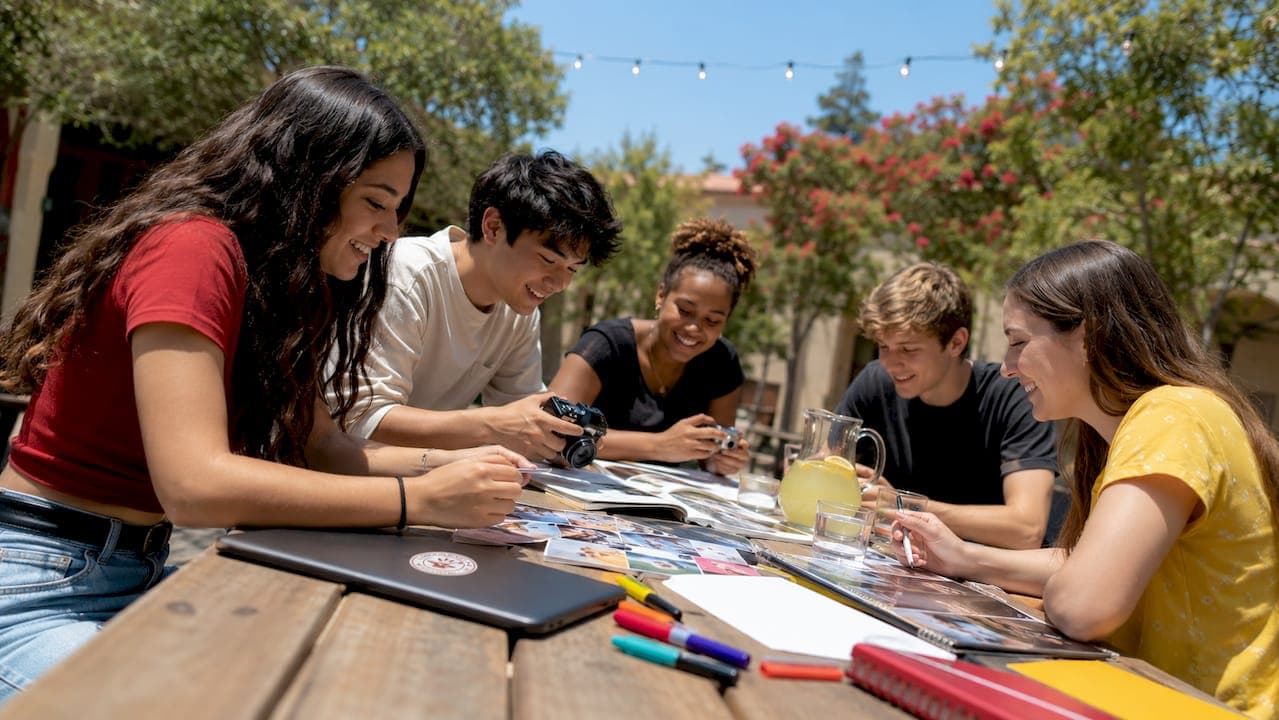
A school yearbook is a collective creation that actively builds community by connecting students, staff, and families through shared stories, representation, and collaborative production. The importance of yearbooks extends far beyond photo collections. Research published in 2026 links strong school belonging directly to better adult mental health, life satisfaction, and educational attainment. Understanding why yearbook builds school community means understanding how the process itself, not just the finished product, generates the belonging that shapes students for life.
Why yearbook builds school community through collaboration
The yearbook program is one of the few school activities that requires students to engage with the entire school, not just their own social circle. Students must interview peers, attend events outside their usual groups, and coordinate with teachers, coaches, and club leaders. That sustained, cross-group engagement is where real community building happens.
At Kelloggsville Public Schools, the yearbook class model caps enrollment at 20 students and requires attendance at 6 to 8 external school events per semester. Students conduct peer interviews, sell advertising, and take on professional roles like editor, photographer, and copy writer. This structure forces students out of their comfort zones and into genuine relationships with people they would never otherwise meet.
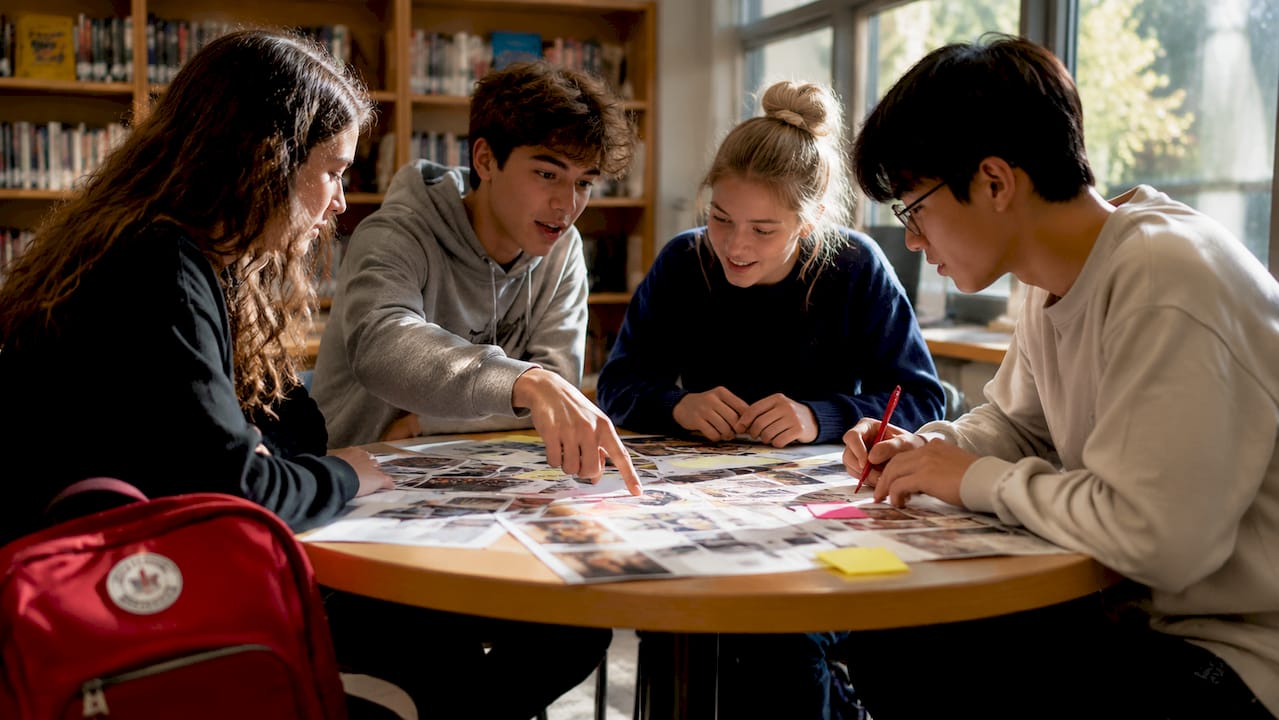
The benefits of this model go beyond social skills. A 2026 qualitative study on belonging-oriented classroom practices in K through 12 schools identifies student voice, agency, and collaborative decision-making as the core mechanisms that produce a sense of belonging. Yearbook teams naturally embody all three. Students own the decisions, share the workload, and see their contributions published for the entire school community.
Here is what that looks like in practice for a well-structured yearbook program:
- Student leadership roles such as editor-in-chief, section editor, and photo editor give students real responsibility and a visible stake in the outcome.
- Cross-group event coverage requires students to attend sports, arts, academic competitions, and cultural events, building empathy and awareness across the school.
- Peer interviews create one-on-one connections between students who share no other class or activity.
- Collaborative deadlines teach shared accountability, a skill that reinforces group identity and mutual respect.
Pro Tip: Assign yearbook students to cover events outside their own extracurricular interests. A student athlete covering the drama production, or a theater student covering a varsity game, builds the cross-group connections that make yearbook a genuine community tool.
Reviewing your yearbook adviser responsibilities before the year begins helps you structure these roles intentionally from day one.
How yearbooks serve as durable cultural artifacts for schools
The Victorian Government describes school yearbooks as among the most useful school records a school can maintain, confirming enrollment, documenting staff, and reflecting the culture and values of a given year. That institutional framing matters. A yearbook is not just a keepsake. It is a primary source for school identity.
Yearbooks function as time capsules that consolidate scattered memories into a single coherent narrative. A student who attended three sports events, two school plays, and one science fair during the year experiences those as separate, disconnected moments. The yearbook places them inside a shared story. That story is what families revisit at kitchen tables, what alumni pull off shelves at reunions, and what new students use to understand the culture they are joining.
"Yearbooks help families and students keep a coherent story of the school year in one durable place, preserving culture and activities for ongoing connection." — Victorian Government guidance on school records
The power of that narrative comes with responsibility. A 2026 sociological study from USC Dornsife found that yearbooks shape youth culture representation by focusing heavily on celebratory moments while obscuring difficult student experiences. The choices made about what to include, and what to leave out, define who feels part of the community story and who does not.
| Yearbook function | Community impact |
|---|---|
| Documents school events and traditions | Creates a shared reference point for all students and families |
| Confirms enrollment and staff records | Provides an official institutional memory for the school |
| Preserves student achievements | Validates individual contributions within the collective story |
| Reflects cultural values of the year | Shapes how current and future students understand school identity |
What research says about yearbooks and student outcomes
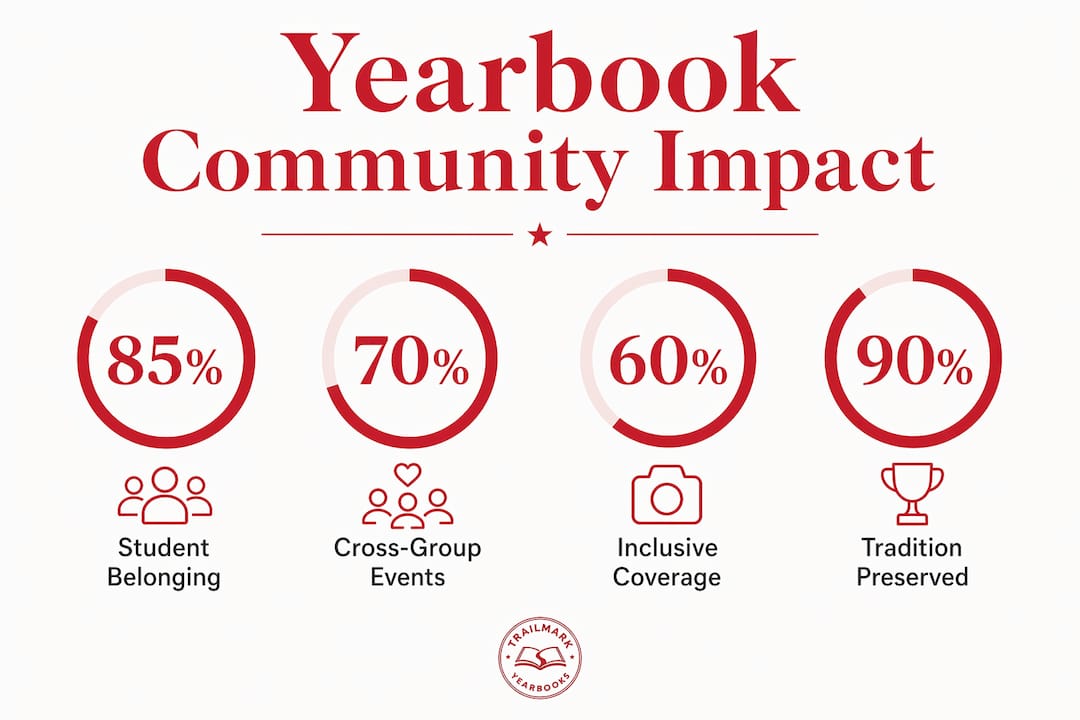
School belonging is defined by the SOBAS framework as a student's perceived sense of acceptance, respect, and support within the school environment. A 2026 paper in the International Journal of Wellbeing reports that higher SOBAS scores predict significantly better adult life satisfaction, mental health, and educational attainment across four general linear models. That finding means the belonging students feel during school years has measurable consequences decades later.
Yearbook programs are not just extracurricular activities. They are structured belonging interventions. The 2026 qualitative study on belonging-oriented practices confirms that psychological safety and collaborative roles in student teams produce the three core psychological needs: autonomy, competence, and relatedness. Yearbook teams deliver all three by design.
The research points to several specific outcomes educators should know:
- Students in collaborative, voice-centered programs report stronger peer relationships and higher school identification.
- Psychological safety within yearbook teams, where students feel free to contribute ideas without fear of ridicule, directly mirrors the relational climate that belonging research identifies as critical.
- The impact of yearbooks on students extends beyond the students who create them. Every student who sees themselves represented in the final product receives a signal that they belong to this school's story.
Pro Tip: Track belonging indicators, not just sales numbers, when measuring your yearbook program's success. Survey students about whether they feel seen and represented in the yearbook. That data is more meaningful than copies sold.
For a structured way to measure what your program is actually achieving, the yearbook program success metrics framework from Trailmarkyearbooks offers a practical starting point.
How to design yearbook programs that maximize community building
Creating school unity through yearbooks requires intentional program design, not just good intentions. The most common failure point is representation gaps. When students, clubs, or demographic groups are missing from the yearbook, the message is clear: you are not part of this community's story. That omission actively undermines belonging.
Follow these steps to build a yearbook program that works as a genuine community tool:
- Audit your coverage plan before production begins. Map every student group, club, sport, and cultural organization at your school. Cross-reference against your planned sections to identify gaps before they become permanent omissions.
- Assign dedicated section editors to underrepresented groups. A student editor responsible for covering the robotics team, the ESL program, or the school garden is far more likely to produce thorough coverage than a general assignment approach.
- Use roster verification at the layout stage. The Victorian Government recommends lightweight verification checks such as class rosters and group confirmations to catch omissions before print. This takes one afternoon and prevents years of regret.
- Give students real decision-making authority over content. Research on belonging-oriented practices is clear: student voice and shared ownership are not optional extras. They are the mechanism through which belonging is produced.
- Build in a community review step. Before final submission, share section drafts with student representatives from each major group. This catches errors and signals that their input matters.
Advisers who want a policy framework to support these steps will find the yearbook policy best practices guide from Trailmarkyearbooks directly applicable to this process.
The distinction between a yearbook that documents a school year and one that actively builds community comes down to intentionality. Documentation is passive. Community building requires deliberate choices about voice, representation, and student agency at every stage of production.
Key takeaways
Yearbooks build school community through collaborative creation, inclusive representation, and the preservation of a shared identity that students, families, and alumni carry forward.
| Point | Details |
|---|---|
| Collaboration drives belonging | Yearbook programs requiring cross-group event coverage and peer interviews produce stronger community ties than in-class-only models. |
| Representation shapes identity | Inclusion decisions in yearbooks directly determine which students feel part of the school's community narrative. |
| Belonging has lifelong outcomes | Higher school belonging scores predict better adult mental health, life satisfaction, and educational attainment. |
| Verification prevents exclusion | Roster audits and group confirmations before print catch omissions that would otherwise undermine student validation. |
| Student agency is the mechanism | Giving students real decision-making authority over yearbook content is what produces the psychological safety belonging requires. |
Why yearbooks deserve more credit than they get
I have spent years watching schools treat the yearbook as a nice-to-have, a fundraiser with photos, something the journalism teacher handles. That framing misses what is actually happening in a well-run yearbook program.
The yearbook is one of the only school activities where a student can walk in on the first day of the year with no prior relationship to anyone in the room and leave in June having interviewed the football captain, photographed the spring musical, and built a working relationship with the principal's office. That range of connection does not happen in any other class.
What I find most underappreciated is the artifact dimension. A student who felt invisible during their school years, who ate lunch alone and never joined a club, can still open a yearbook decades later and find their name in the index. That small act of inclusion carries weight that no one anticipated when the page was laid out. It is a signal, however modest, that the school knew they were there.
The harder truth is that yearbooks can also do harm when they are produced carelessly. A yearbook that features the same 40 students across 200 pages, while entire programs go undocumented, does not build community. It reinforces existing hierarchies. The USC Dornsife research on yearbooks and student representation makes this point with sociological precision, but any experienced adviser already knows it intuitively.
My recommendation to school leaders is to treat the yearbook program as a belonging intervention with a print deadline, not a print project with some belonging side effects. That reframe changes every decision you make about staffing, coverage, and student authority.
— Jace
How Trailmarkyearbooks helps schools build stronger communities
Building a yearbook that genuinely connects your school community starts with having the right support behind you. Trailmarkyearbooks works with elementary, middle, and high schools nationwide to make yearbook creation straightforward, affordable, and stress-free. With free design assistance, flexible tools including Canva and InDesign, and a 2 to 3 week turnaround, your team can focus on coverage and community rather than logistics. You can request a free sample to see the quality firsthand, or connect with a rep for personalized guidance on building a program that reflects every student in your school.
FAQ
Why does yearbook build school community?
Yearbooks build school community by requiring students to document the entire school through interviews, event coverage, and collaborative production, creating cross-group connections and a shared identity that all students and families can access.
What is the impact of yearbooks on student belonging?
Research published in 2026 links higher school belonging scores directly to better adult mental health, life satisfaction, and educational attainment, and yearbook programs produce belonging by giving students voice, agency, and visible representation.
How can educators make yearbooks more inclusive?
Advisers should audit coverage plans against full school rosters before production, assign dedicated editors to underrepresented groups, and use verification checks at the layout stage to catch omissions before the yearbook goes to print.
What roles do students play in yearbook community building?
Students serve as editors, photographers, interviewers, and event reporters, and those professional roles create real responsibility and cross-group relationships that extend well beyond the classroom.
How do yearbooks affect families and alumni?
Yearbooks preserve a coherent school-year narrative that families revisit at home and alumni reference for decades, making them one of the most durable community-building tools a school produces.