

School yearbook policy best practices are the ethical, legal, and organizational guidelines that help advisers and administrators produce inclusive, accurate, and well-managed yearbooks while protecting student rights and school interests. Effective yearbook governance covers student media freedom, FERPA-compliant privacy protections, ethical journalism standards, and distribution logistics. Frameworks like the Quill and Scroll PSJA model and federal FERPA guidance give advisers a proven foundation. When these policies are written down, communicated clearly, and applied consistently, they reduce legal risk, build student trust, and produce a publication the entire school community is proud of.
1. School yearbook policy best practices start with a written policy document
Every strong yearbook program begins with a written policy that defines the publication's purpose, editorial independence, and adviser role. Without a document, decisions get made inconsistently, disputes escalate, and students have no clear reference point for what is expected of them. The policy should cover content standards, photo permissions, privacy rules, and distribution procedures in plain language that both students and parents can understand.
A written policy also protects the adviser. When a principal questions a content decision or a parent objects to a photo, the adviser can point to a pre-approved document rather than defend a judgment call made in the moment. Trailmarkyearbooks recommends reviewing and updating this document every academic year to reflect changes in state law, school demographics, and technology.
2. Uphold student freedom of expression without prior administrative review
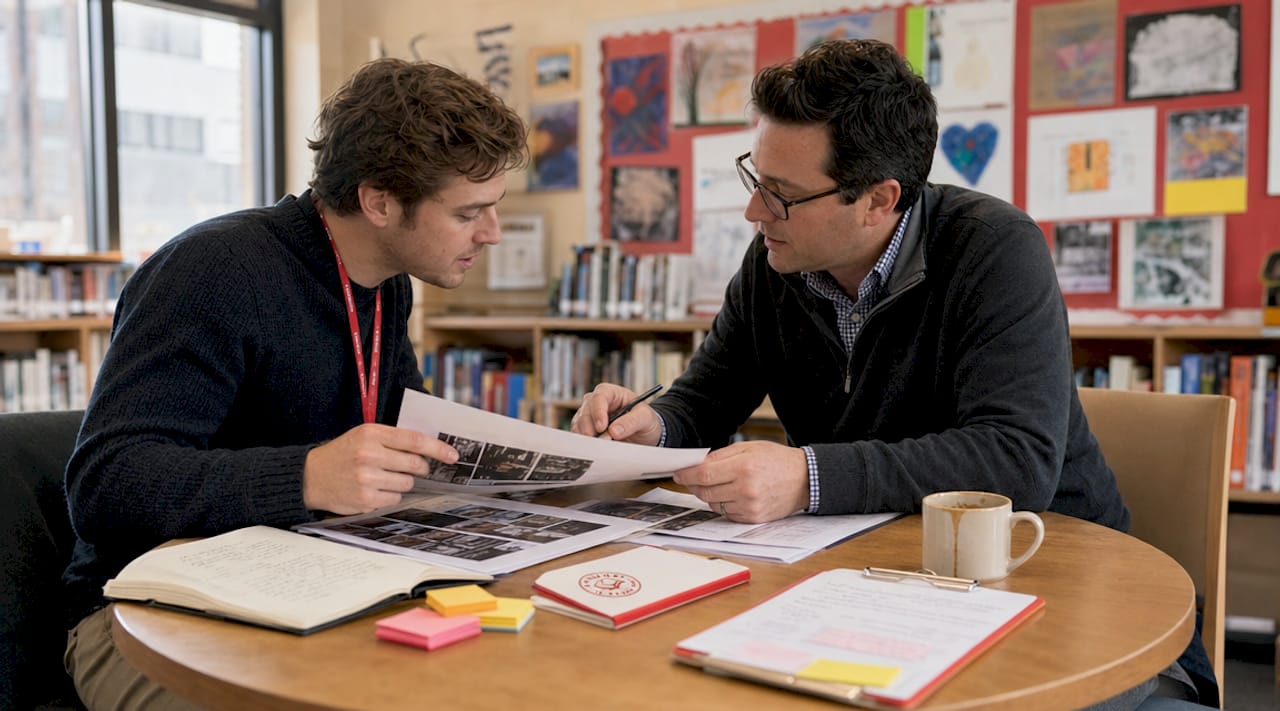
Student expression in school yearbooks represents student perspectives and does not reflect the administration's official views, as affirmed by the Quill and Scroll PSJA model. This distinction matters because it establishes the yearbook as an independent student publication, not a school marketing tool. Advisers who treat it as the latter tend to produce sanitized books that students ignore.
Prior administrative review of student media material undermines trust and should be limited to legally unprotected expression such as defamation, obscenity, or material that causes substantial disruption. Routine content review by principals or communications directors is not a best practice. It is a liability that erodes the student-adviser relationship and discourages authentic storytelling.
- Protected expression includes opinion pieces, critical coverage of school events, and student profiles that reflect diverse viewpoints.
- Unprotected expression includes defamatory statements, invasion of privacy, and content that incites harassment.
- The adviser's role is to teach students to distinguish between the two, not to make every editorial decision for them.
Pro Tip: Build a one-page "what we publish and why" reference sheet for your student staff. It sets expectations at the start of the year and reduces content disputes by 90% before they reach the adviser's desk.
3. Implement FERPA-compliant privacy policies with annual opt-out notices
FERPA defines directory information as data schools may release publicly, including student names, photos, grade levels, and participation in activities. Yearbooks routinely publish all of these. Schools must provide an annual FERPA notice listing what directory information they disclose and offering parents and eligible students a formal opt-out mechanism before publication.
Privacy risks are growing. New technology makes it easier to cross-reference yearbook photos with social media profiles, creating reidentification risks that did not exist a decade ago. Schools must continuously review directory information policies as these tools become more accessible to bad actors.
State laws add another layer. Ohio and Virginia, for example, restrict disclosure of student phone numbers and home addresses and give parents more granular opt-out controls than federal FERPA requires. Advisers in those states need policies that go beyond the federal minimum.
Practical steps for FERPA compliance in yearbooks:
- Send the annual directory information notice before the first photo deadline.
- Maintain a current opt-out list and share it with your photography coordinator.
- Remove opted-out students from group photos in the digital file before sending to print.
- Never publish home addresses, personal phone numbers, or medical information regardless of opt-out status.
4. Establish written ethics standards for yearbook journalism
Ethics in yearbook journalism require fair and accurate representation, respect for privacy, and a consistent decision-making framework that students can apply independently. A written ethics policy is not optional. It is the document that guides every content decision from photo selection to caption writing to memorial coverage.
Strong ethics policies address four core areas:
- Accuracy: Every name, date, and fact must be verified before publication. Assign a fact-checker role within the student staff.
- Representation: Coverage must reflect the full school community, not just athletes, honor students, or friend groups of the editorial team.
- Permissions: Obtain written consent for quotes and photos involving sensitive topics, including mental health, disciplinary incidents, or personal loss.
- Memorial coverage: Handle tributes to deceased students with care, consulting with school counselors and the student's family before publishing.
Pro Tip: Review your ethics policy at the first staff meeting of the year, not just when a problem arises. Students who internalize the standards early make better decisions under deadline pressure.
Advisers can strengthen ethics training by referencing the adviser responsibilities framework that outlines how to guide students without overriding their editorial judgment.
5. Build inclusive coverage plans that represent every student group
A yearbook that only covers varsity sports and student government fails its purpose. Inclusive coverage means deliberately planning spreads for clubs, performing arts, academic teams, cultural groups, and students who are not involved in any organized activity. The coverage plan should be built before the school year starts, not assembled from whatever photos happen to arrive.
Assign specific staff members to cover specific groups and set photo deadlines for each. When coverage gaps appear mid-year, address them immediately rather than hoping they fill themselves. Students who never see themselves in the yearbook stop buying it, and that revenue loss compounds over years.
6. Manage photography with clear permission and quality standards
Photo policies are where privacy law and editorial quality intersect. Every photo published in the yearbook must meet two tests: it must be technically acceptable, and it must comply with the school's privacy and consent policies. A yearbook photography checklist helps coordinators apply both standards consistently across hundreds of submissions.
Specific rules to include in your photo policy:
- Minimum resolution requirements for print (typically 300 DPI at print size).
- Prohibition on photos taken in private spaces such as locker rooms or restrooms.
- Consent requirements for photos of non-student adults, including parents and community members.
- A clear process for students to request removal of a photo before the print deadline.
7. Set production timelines with enforced deadlines
Best practices for yearbook production include clear role assignments, efficient timelines, and layered editorial review before final content approval. Missed deadlines are the single most common cause of rushed layouts, factual errors, and cost overruns. A deadline management system that assigns ownership to specific students and builds in review checkpoints prevents these problems.
Use a backward-planning approach. Start from your print submission date and work backward to assign deadlines for photography, copy writing, layout drafts, and final approval. A deadline management checklist gives advisers a repeatable structure that works across different staff compositions each year.
8. Create an efficient distribution day system
Distributing yearbooks on distribution day requires a system that moves students through quickly while maintaining accountability for every book. Alphabetical lookup and check-off workflows are the standard for tracking delivery and managing exceptions. Without a check-off system, you cannot confirm who received a book, which creates disputes when students claim they never got theirs.
The school yearbook distribution process explained simply: students present ID or provide their name, a staff member locates the name on a pre-printed roster, the book is handed over, and the name is checked off in real time. This takes under 30 seconds per student when the roster is organized and the table is staffed adequately.
| Distribution challenge | Recommended solution |
|---|---|
| Absent students | Hold books in a labeled bin; notify via school email with pickup window |
| Unpaid copies | Separate table with payment options; do not hold up the main line |
| Name or photo errors | Prepare correction labels in advance; log errors for future print runs |
| Lost or damaged books | Apply replacement policies with a set fee and reorder window |
| High-volume schools | Stagger distribution by grade level or homeroom to reduce crowding |
After-hours distribution events work well for high schools where students have varying schedules. An evening pickup window with a signing station turns distribution day into a social event rather than a logistical burden.
9. Apply school yearbook storage best practices after distribution
Physical yearbooks that remain after distribution day need proper storage to preserve their condition for future requests, archival purposes, and replacement sales. School yearbook storage best practices focus on environment, inventory tracking, and access control.
Key storage guidelines:
- Store remaining copies in a cool, dry location away from direct sunlight. Heat and humidity accelerate paper degradation and cause covers to warp.
- Keep an accurate inventory count after each distribution event and update it whenever a replacement copy is sold or given away.
- Designate one person as the archive custodian responsible for logging requests and maintaining the storage area.
- Store digital design files and photo archives on a school-managed cloud platform with backup redundancy. Hard drives fail. Cloud storage does not disappear when a staff member graduates.
- Establish a retention policy that specifies how long physical copies and digital files are kept, typically a minimum of five years for compliance purposes.
10. Address legal considerations before publication, not after
School yearbook legal considerations include copyright, defamation, privacy, and student press rights. Copyright applies to student-created content as well as third-party material. Using a song lyric, a professional photograph, or a trademarked logo without permission creates legal exposure for the school. The policy should prohibit unlicensed third-party content and require students to document the source of every image they did not take themselves.
Defamation risk is real in yearbooks that publish opinion content or candid captions. Teach students the difference between a protected opinion ("the cafeteria food is bad") and a defamatory statement of false fact ("the cafeteria manager steals food"). A single review pass by the adviser focused specifically on legal risk, not editorial preference, catches most problems before they reach print.
Key takeaways
Effective school yearbook policy best practices require written standards, legal compliance, and systematic distribution workflows applied consistently across every production cycle.
| Point | Details |
|---|---|
| Written policy is non-negotiable | Document content standards, privacy rules, and distribution procedures before the school year begins. |
| FERPA compliance requires annual action | Send opt-out notices before the first photo deadline and maintain a current list throughout production. |
| Student press freedom builds better yearbooks | Limit prior review to legally unprotected content; adviser guidance, not censorship, produces authentic publications. |
| Distribution day needs a system | Alphabetical check-off workflows prevent disputes and handle absent students, unpaid copies, and errors efficiently. |
| Storage protects long-term access | Keep physical copies in climate-controlled spaces and back up digital files on a school-managed cloud platform. |
What I've learned from watching yearbook programs succeed and fail
I've seen well-funded yearbook programs produce forgettable books and underfunded ones produce publications that students keep for 30 years. The difference is almost never budget. It is policy clarity and adviser-student trust.
The programs that struggle most are the ones where the principal reviews every page before it goes to print. Students learn quickly that their real audience is the administrator, not their classmates. The writing gets safe, the photos get staged, and the book stops feeling like a record of actual school life. The Quill and Scroll PSJA model gets this right: trust between students and advisers is foundational, and reducing prior restraint is how you build it.
The privacy piece is where I see the most complacency. Advisers who set up their FERPA process in 2015 and never revisited it are operating with outdated assumptions. The reidentification risk from combining a yearbook photo with a name and grade level is genuinely different now than it was ten years ago. Schools need to treat their directory information policies as living documents, not one-time setups.
My honest recommendation: spend one hour at the start of every school year reading your written policy out loud with your student staff. Not summarizing it. Reading it. The questions that come up in that hour will tell you exactly where your policy has gaps.
— Jace
See how Trailmarkyearbooks supports your yearbook program

Building a yearbook program that meets legal standards, respects student rights, and runs smoothly on distribution day takes the right production partner. Trailmarkyearbooks works with elementary, middle, and high schools nationwide, offering transparent pricing, free design assistance, and a 2 to 3 week turnaround with no hidden fees. Whether you are refining your distribution workflow or starting your policy framework from scratch, the team brings 50-plus years of combined experience to every school it works with. Request a sample yearbook to evaluate quality and customization options firsthand, or connect with a representative for guidance specific to your school's needs.
FAQ
What should a school yearbook policy include?
A school yearbook policy should cover editorial independence, FERPA-compliant privacy procedures, photo consent requirements, content ethics standards, distribution workflows, and storage protocols. Written policies reduce disputes and protect both advisers and administrators.
How do you handle FERPA compliance for yearbooks?
Schools must send an annual FERPA notice listing directory information disclosures and offer parents and eligible students a formal opt-out option before the first photo deadline. Opted-out students must be removed from published content before the file goes to print.
What is the best system for yearbook distribution day?
An alphabetical check-off roster is the most reliable system for distributing yearbooks on distribution day. Staff members verify each student's name, hand over the book, and mark the name as received in real time, which creates an accountable record for every copy distributed.
How long should schools store yearbooks after distribution?
Schools should retain physical yearbook copies and digital design files for a minimum of five years to meet archival and compliance needs. Digital files should be stored on a school-managed cloud platform with backup redundancy to prevent loss when staff members change.
Can a school administrator review yearbook content before publication?
Prior administrative review should be limited to legally unprotected expression such as defamation or obscenity. Routine content review by administrators undermines student trust and editorial independence, as affirmed by the Quill and Scroll PSJA model.