
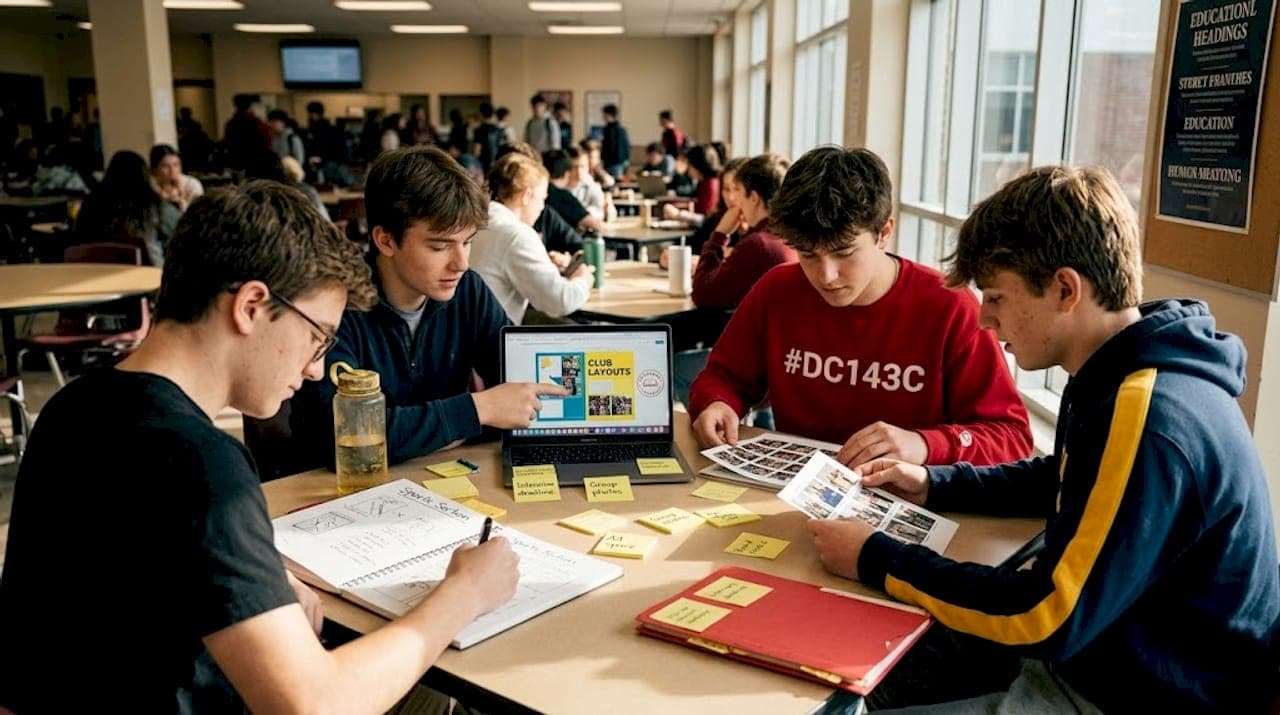
Most club yearbook sections end up looking like an afterthought. Photos are missing, names are misspelled, and half the clubs get two lines while the other half get a full spread. Club section yearbook planning is the work that prevents all of that, and it starts long before anyone opens a design tool. Whether you are the clubs and organizations editor or a club leader coordinating with yearbook staff, this guide walks you through exactly how to organize your section from initial role setup to final proofread so nothing falls through the cracks.
Table of Contents
- Key takeaways
- Club section yearbook planning: roles and requirements
- Building a timeline for your club section
- Collecting, organizing, and designing club content
- Proofreading and final checks for club sections
- What I have actually learned from doing this
- Ready to build a yearbook your clubs will love?
- FAQ
Key takeaways
| Point | Details |
|---|---|
| Assign a dedicated editor early | A clubs and organizations editor owns the section and prevents gaps in coverage and missed deadlines. |
| Work backward from print dates | Set internal milestones for fall, winter, and spring club content before the printer's deadline arrives. |
| Photograph with intention | Planned photo assignments across diverse clubs capture authentic school culture and avoid representation gaps. |
| Use a structured proofing workflow | At least three reviewers checking different error types catches mistakes before they become permanent. |
| Design for navigation and recognition | Grid layouts, spotlight spreads, and dividers make club sections easy to read and genuinely rewarding for students. |
Club section yearbook planning: roles and requirements
Before anyone writes a caption or shoots a single photo, you need to know who is responsible for what. The single biggest reason club sections fall apart is not lack of time. It is unclear ownership. A dedicated clubs editor manages club section planning separately from the writing editor, photo editor, and design team. That distinction matters because club coverage requires coordination outside the yearbook room, and someone has to own that relationship with sponsors, club presidents, and activity coordinators.
Once you have identified your clubs and organizations editor, build out the support structure around them:
- Photographers assigned to specific clubs: Rather than hoping someone shows up with a camera, assign two or three photographers to documented club events throughout the year.
- A current club roster: Pull this from your school's activity office at the start of the year. Clubs form and dissolve. An outdated roster means missed coverage.
- Access to club schedules: Your editor needs to know when the robotics team competes, when drama rehearsals start, and when the cultural club holds its annual showcase.
- A working relationship with club sponsors: Sponsors can flag key events, supply rosters, and catch errors during the proofing stage.
Setting your expectations for software early also saves headaches later. Whether your team uses Canva, InDesign, or an online yearbook creator, the clubs editor should be trained on the same platform the rest of the staff uses. Template consistency across the section keeps the design from looking patchwork.
Club section planning works best when it is treated as a distinct thread woven into the full yearbook schedule, with its own milestones and ownership rather than squeezed in at the end.
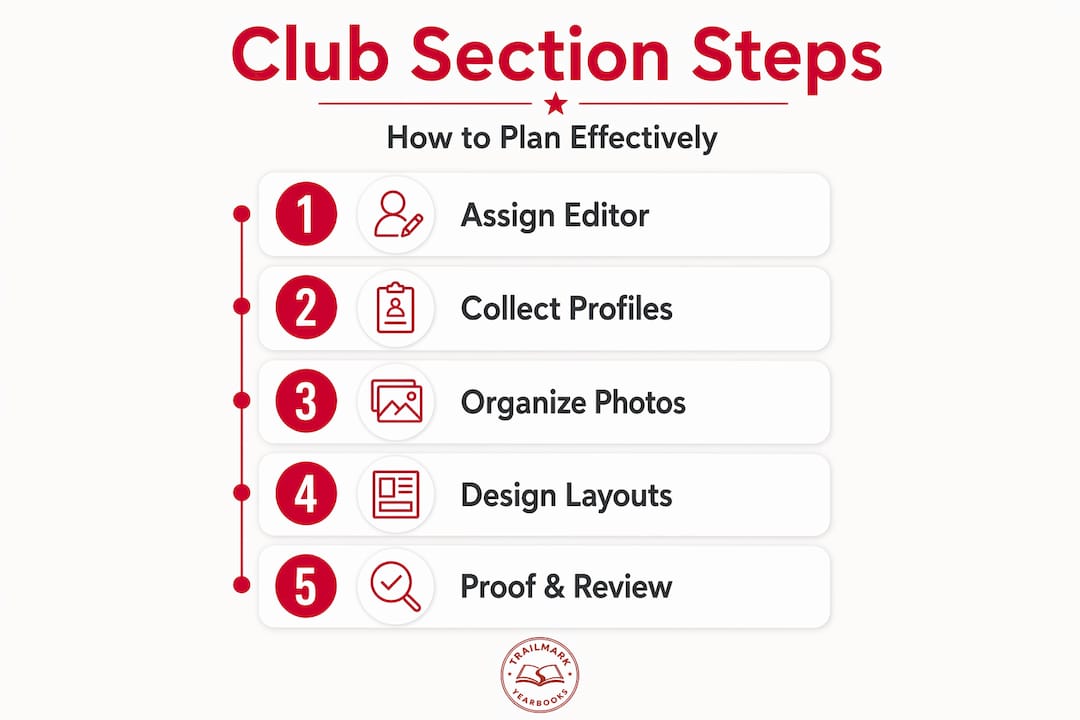
Pro Tip: Have the clubs editor send a one-page "club profile" form to each club president at the start of the year. Ask for the club's meeting schedule, key events, advisor name, and roster. You will save yourself three weeks of chasing information later.
Building a timeline for your club section
Planning yearbook sections without a timeline is like planning a road trip without checking if the roads are open. You might get there, but you will definitely miss things along the way.
Start with your printer's deadline and work backward. Print deadlines often fall in late January or February, which means your final club section content needs to be locked at least two to three weeks before that date. That sounds manageable until you realize club season runs through spring, and you need to account for that.
Here is how a workable milestone calendar typically breaks down:
- August to September: Confirm club roster, assign photographers, distribute club profile forms, set up your yearbook ladder with club section placeholder spreads.
- September to October: Document the club fair, photograph fall sport and activity clubs in action, collect first round of photos and rosters.
- November to December: Draft layouts for fall clubs, write and fact-check captions, submit first spreads for internal review.
- January to February: Complete winter club coverage (debate tournaments, winter guard, etc.), finalize all layouts, run the full proofing workflow, lock content before print deadline.
- March to May: If your school allows spring updates or a supplemental section, capture spring activities and competitions for any remaining pages.
The yearbook ladder is your best organizational tool here. It is a visual grid that maps every spread in the book to a deadline and an owner. Scheduling club coverage across fall, winter, and spring in the ladder prevents the common situation where thirty clubs get crammed into two weeks of production.
| Season | Content to capture | Deadline target |
|---|---|---|
| Fall (Sep–Oct) | Club fair, fall clubs, opening portraits | Mid-October |
| Winter (Nov–Jan) | Club features, competitions, mid-year events | Late January |
| Spring (Feb–Apr) | Spring activities, final club updates | 3 weeks before print |
Pro Tip: Set your internal club section deadline two full weeks before the printer requires it. That buffer absorbs the inevitable late photo submission or last-minute roster correction without blowing your production calendar.
Collecting, organizing, and designing club content
Getting photos is one thing. Getting good photos that actually represent your school's full range of clubs is another challenge entirely. Photographing diverse groups and capturing real moments in action, not posed lineups against a wall, is what separates a memorable club section from a forgettable one. Assign photographers to specific events in advance and give them a shot list: the group working on a project, a close-up of a student leading a meeting, the reaction shot after a competition.

Once photos come in, organize them immediately. Rename files by club name and event date before they pile up in a folder labeled "Photos Nov." That small habit saves hours when you are building spreads under deadline pressure. Check out the yearbook photography checklist from Trailmarkyearbooks for a detailed shot breakdown by club type.
For captions, precision beats cleverness every time. A caption should answer: who is in the photo, what are they doing, and when did it happen. Writing strong captions requires verifying names against the official roster before the spread goes to print, not after.
Layout options for club sections include:
- Grid layouts: Clean and consistent, these work well when you have twenty or more clubs and limited page space. Each club gets equal treatment.
- Spotlight spreads: Dedicate a full spread or half-page to a club that had a standout year. This rewards achievement and gives readers something memorable to land on.
- Collage pages: Great for clubs with strong visual identities, like theater, art club, or dance ensemble. Layer photos with short pull quotes from members.
- Section dividers: A single designed page between major categories (academic clubs, performing arts, service organizations) makes the section feel organized and intentional.
Creative layouts give clubs a sense of recognition and make the section far easier for readers to navigate. When every page looks identical, students stop reading. When there is visual variety with consistent typography and color, they linger.
The comparison below shows why layout choice matters for clubs of different types:
| Club type | Best layout option | Why it works |
|---|---|---|
| Large academic clubs (NHS, debate) | Grid with caption blocks | Shows all members fairly and clearly |
| Performing arts groups | Collage spread | Captures energy and visual identity |
| Service and community clubs | Spotlight feature | Highlights impact stories and real-world work |
| Small or niche clubs | Shared page with divider | Gives representation without oversizing the section |
Proofreading and final checks for club sections
Here is the uncomfortable truth about proofing: most yearbook errors live in the club section. Names are harder to verify, events are less documented, and the clubs editor is often working with submitted information rather than firsthand knowledge. Small errors like misspelled names or incorrect event details create lasting impressions. A student who sees their name wrong in print remembers it for years.
A structured proofing workflow prevents this. Follow these steps before any spread gets submitted:
- Print every spread. Errors you miss on screen jump out on paper. This is not optional.
- Name check against the official roster. Every name in every caption must match the school's official club roster exactly.
- Fact check dates and event names. "Winter Showcase" and "Holiday Concert" are not interchangeable. Confirm the official event name with the club sponsor.
- Run at least three proofers. Differentiated proofing roles, where one person checks layout and one checks factual accuracy, reduce errors significantly more than one person doing everything.
- Schedule a fresh-eyes pass. Someone who has not touched the section in 48 hours will catch things the original editor is now blind to.
Club sponsors are your best fact-checking resource. They know their members, their events, and the correct spellings of names you have never heard. Get them involved in the proofing stage, not just the content collection stage.
Pro Tip: Create a proofing sign-off sheet for each spread. Every reviewer initials the sheet when they complete their pass. This builds accountability and gives you a paper trail if an error somehow makes it to print.
What I have actually learned from doing this
I have seen clubs editors put in weeks of work only to have half their section cut at the last minute because the rest of the yearbook ran long. I have watched advisors scramble through 200 unlabeled photos the week before the printer deadline. And I have heard the frustrated reaction of a student who opened the yearbook to find their club photo missing entirely.
What I know for certain now is this: the clubs section fails at the planning stage, not the production stage. When the role is vague, when deadlines are soft, and when photo assignments are left to chance, you are already behind before the school year starts.
The teams that get it right do something simple. They treat the club section like a product with a project manager, a schedule, and checkpoints. They do not wait for content to arrive. They go get it. And they build the proofing process into the calendar rather than treating it as something they will figure out later.
The creativity matters, and the design absolutely affects how students feel when they see their page. But none of that saves you if the foundation is not there. Get the roles clear, get the timeline set, and the design work becomes the fun part instead of the panic part.
— Jace
Ready to build a yearbook your clubs will love?
Planning yearbook sections is a lot less stressful when you have the right templates and production support behind you. Trailmarkyearbooks works with schools across the country to make the entire process faster and more manageable, from design to print.

Request a free sample to see how club section layouts can look in a finished book. Browse the adviser resources library for deadline checklists and workflow guides built specifically for yearbook coordinators. And if you want to talk through your school's specific needs, connect with a rep for personalized help with no sales pressure attached. Trailmarkyearbooks offers all-inclusive pricing, fast turnaround, and free design assistance for every school.
FAQ
What is a clubs and organizations editor in yearbook?
The clubs and organizations editor manages all extracurricular and club coverage in the yearbook, separate from the writing or photo editor roles. They coordinate directly with club sponsors and are responsible for content collection, layout, and deadline management for the club section.
When should club section planning start?
Club section yearbook planning should begin at the start of the school year, ideally in August or September. Setting up your roster, photographer assignments, and yearbook ladder early means you capture fall club fair coverage and avoid the last-minute scramble.
How many people should proof a yearbook club section?
At least three proofers should review each spread, with different people checking layout accuracy and factual details. Including a club sponsor in the proofing stage catches name and event errors that the yearbook team would likely miss.
What are the best layout options for a club section?
Grid layouts work well for large clubs with many members, while spotlight spreads and collages suit performing arts and service clubs. Section dividers between club categories make the section easier to navigate and give it a polished, intentional feel.
How do you avoid missing clubs in a yearbook?
Pull an official club roster from your school's activity office at the start of the year and map each club to a spread in your yearbook ladder. Tracking coverage deadlines by season prevents any club from being left out simply because it was forgotten during a busy production period.