

A school yearbook is a curated annual publication that captures the memories, events, and people that define a school year. Why schools offer yearbooks explained simply: these books serve as time capsules, official records, and community builders all at once. The tradition of school yearbooks in American education spans more than 160 years, evolving from simple class books without photos into media-rich archives. That longevity is not accidental. Yearbooks fill a role that no social media feed or school website fully replaces.
Why schools offer yearbooks explained: history and cultural record
A school yearbook is one of the most reliable records a school produces. It documents student enrollment, staff employment, clubs, sports teams, academic achievements, and social events in a single, permanent volume. When administrative files are incomplete or lost, yearbooks serve as formal evidence for verifying attendance and identifying staff. That practical function alone justifies their place in every school's annual calendar.
Beyond administration, yearbooks capture how a school community actually lived through a given year. They show which traditions mattered, which teams competed, and which students led. Researchers and families regularly turn to yearbooks for historical information that official records simply do not contain. A graduation photo or a club roster from 1987 can answer questions that no database can.
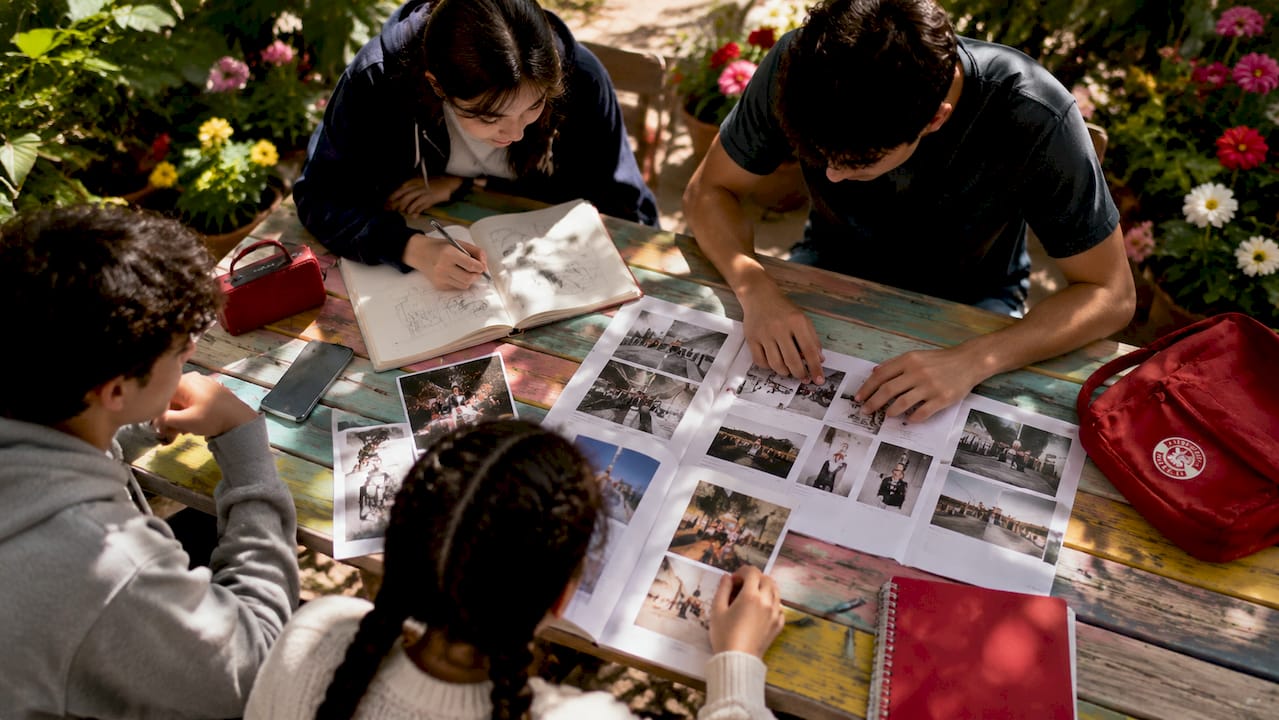
The cultural record a yearbook creates is also deeply personal. Portraits, candid photos, and event coverage reflect the values and priorities of a school at a specific moment in time. That snapshot quality is what makes yearbooks useful to historians, genealogists, and anyone trying to understand what school life looked like in a particular era.
| Yearbook function | What it documents |
|---|---|
| Student portraits | Enrollment and grade-level records |
| Staff pages | Employment and role verification |
| Club and team photos | Participation and extracurricular life |
| Event coverage | School traditions, sports, and social milestones |
| Quotes and messages | Personal connections and peer relationships |
Schools that maintain complete yearbook archives give future generations a window into their past. That is a form of institutional memory that no digital file folder reliably provides over decades.
What educational benefits do students gain from yearbook participation?
Joining a yearbook staff is one of the most practical learning experiences a school offers. Students develop skills in project management, graphic design, journalism, photography, and communication, all while working toward a real publication deadline. Yearbook programs typically cap enrollment at around 20 students and require attendance at 6–8 school events annually. That structure mirrors a professional newsroom more than a typical classroom.
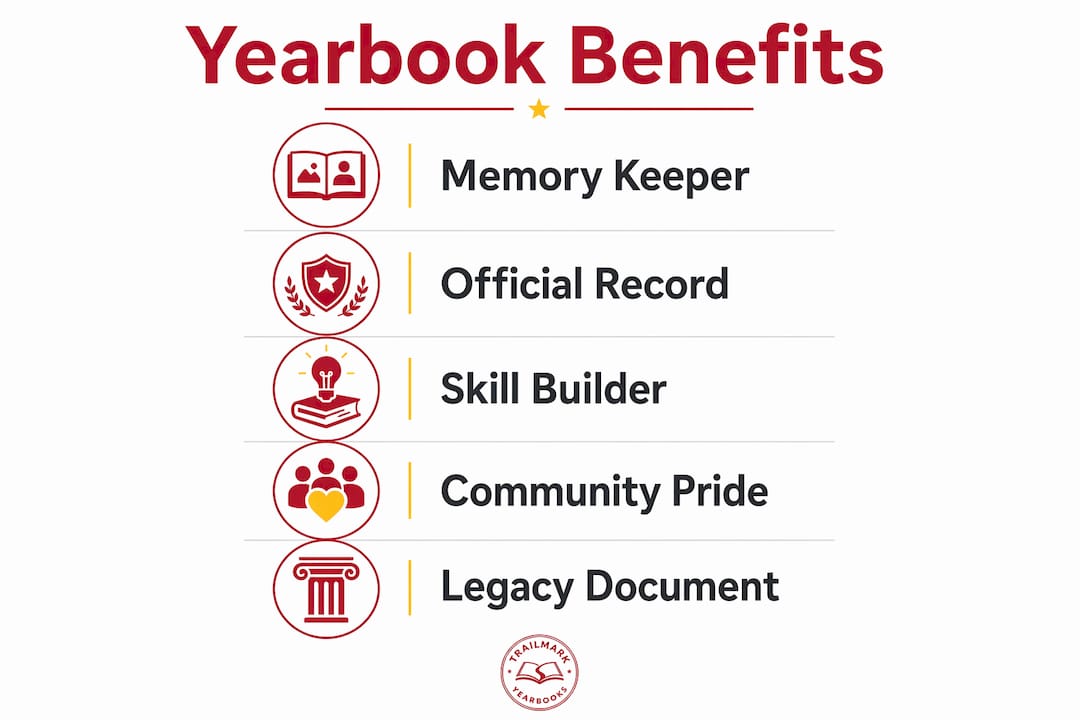
The program operates like a business. Students apply for positions, take on defined roles, and are held accountable for their pages and deadlines. A successful yearbook program treats the publication as a business project with formal applications, real deadlines, and clear accountability. Students who complete the process graduate with a portfolio piece and a set of transferable skills that most elective courses cannot match.
Here is what students typically build through yearbook participation:
- Project management. Students coordinate multiple pages, contributors, and deadlines simultaneously, learning to prioritize and adapt when plans change.
- Visual communication. Photo selection, layout design, and typography decisions teach students how images and text work together to tell a story.
- Journalism fundamentals. Writing captions, conducting interviews, and covering events builds the same core skills used in professional media.
- Team leadership. Editors manage peers, resolve conflicts, and keep the group on schedule, which is direct leadership practice.
- Professional accountability. Missing a deadline affects the entire book, so students learn that their work has real consequences for others.
The yearbook making process also fosters school pride and a sense of ownership. Students who document their own school culture develop a stronger connection to it. That connection shows up in how they talk about their school, how they treat shared spaces, and how they engage with the broader community.
Pro Tip: If your school is starting or rebuilding a yearbook program, treat staff selection like a job application process. Students who apply formally take the work more seriously and produce better results.
Why do yearbooks still matter in the digital age?
Physical yearbooks remain relevant because they do something digital media cannot. A yearbook is a curated, permanent object that students can hold, sign, and return to decades later. Despite digital media, yearbooks remain cherished for tangible memories, autographs, and the kind of community storytelling that a social media feed never quite captures. A signed page from a best friend in eighth grade carries weight that a comment thread simply does not.
Social media documents moments in real time, but it does not curate them. A yearbook applies editorial judgment. Someone decided which photos told the year's story best, which quotes captured the mood, and which events deserved a full spread. That editorial process gives a yearbook its authority as a record.
There is also a nuance worth acknowledging. Scholars use the term "critical nostalgia" to describe how yearbooks emphasize positive public rituals while sometimes leaving out students who did not fit the dominant social narrative. Yearbooks have historically highlighted popular or successful students, which means some voices go underrepresented.
"Readers should approach yearbooks with critical nostalgia, appreciating their value while recognizing their selective storytelling."
That awareness does not diminish the value of yearbooks. It sharpens it. Schools that actively work to include diverse student experiences, clubs, and achievements produce yearbooks that more honestly reflect who their community actually is. Inclusive representation makes the record stronger, not weaker.
The role of yearbooks in student memory is also tied to belonging. When students see themselves in the book, they feel recognized. That recognition is a quiet but powerful form of community building.
What do schools include in a yearbook?
A complete yearbook covers the full range of school life, not just graduation and prom. The most meaningful books document the ordinary moments alongside the milestones. Yearbooks document student clubs, academic achievements, social events, and personal messages, which together create a rich portrait of school life.
Standard yearbook sections include:
- Student and staff portraits. The core record of who was present during the year.
- Sports coverage. Team photos, season highlights, and individual athlete recognition.
- Club and organization pages. Evidence of student interests beyond the classroom.
- Academic achievements. Honor rolls, award recipients, and scholarship announcements.
- Event spreads. Prom, homecoming, field trips, pep rallies, and graduation ceremonies.
- Autograph pages. Space for personal messages that make each book unique to its owner.
- Candid photography. Unposed moments that capture the actual texture of daily school life.
The autograph section deserves special attention. It transforms a mass-produced book into a personal artifact. No two students end up with the same yearbook because the messages written inside are unrepeatable. That personalization is a large part of why students love yearbooks long after the school year ends.
Schools that invest in strong visual storytelling, diverse coverage, and quality printing produce yearbooks that students actually keep. A book that sits in a drawer for 30 years and still holds its meaning has done its job.
How do yearbooks serve official and practical functions?
Yearbooks function as primary source evidence in ways that most people never consider. When a former student needs to verify their enrollment for a job application, a scholarship, or a legal matter, and official transcripts are unavailable, a yearbook photo and name listing can serve as supporting documentation. Yearbooks provide valid evidence for verifying student enrollment, identifying staff, and documenting school culture when official records are missing or incomplete.
This practical function extends to staff as well. A teacher or administrator who worked at a school during a specific period can use yearbook listings to confirm their employment history. That kind of documentation matters in pension disputes, background checks, and historical research.
Genealogists also rely heavily on yearbooks. A family researching a relative's school years in a small town may find that the local yearbook is the only surviving record of that person's adolescence. Schools that preserve their yearbook archives contribute to a broader historical record that serves communities for generations.
The importance of yearbooks in schools goes well beyond nostalgia. They are institutional documents that carry real evidentiary weight, and schools that treat them as such invest in their own long-term accountability and transparency.
Key takeaways
Schools offer yearbooks because they serve as memory keepers, official records, educational tools, and community builders that no digital platform fully replaces.
| Point | Details |
|---|---|
| Yearbooks as official records | They verify student enrollment and staff employment when administrative records are lost or incomplete. |
| Educational value of participation | Yearbook staff develop journalism, design, leadership, and project management skills through real deadlines. |
| Cultural documentation | Yearbooks capture school traditions, events, and achievements that define a community's identity over time. |
| Enduring relevance | Physical yearbooks remain valued for autographs, curated storytelling, and tangible memories that digital media cannot replicate. |
| Inclusive representation matters | Schools that document diverse student experiences produce more accurate and meaningful historical records. |
The part about yearbooks most schools overlook
I have spent years watching schools treat yearbooks as an afterthought, something to check off the calendar in the spring. That framing misses the point entirely. A yearbook is the only school publication that students keep for the rest of their lives. No newsletter, no report card, no school website gets that kind of longevity.
What strikes me most is how the production process itself shapes students. The kids who run the yearbook learn to manage people, meet hard deadlines, and make editorial decisions under pressure. Those are not soft skills. They are the exact skills that employers describe as missing in new hires. Schools that fund and support a serious yearbook program are giving students a professional apprenticeship inside a safe environment.
The critical nostalgia argument is worth taking seriously, too. Yearbooks have historically favored the students who were already visible: athletes, class officers, homecoming royalty. A school that deliberately expands its coverage to include the robotics team, the drama club, the students who quietly excelled in ways that do not photograph easily, produces a more honest book. It also produces a book that more students feel connected to.
The physical object still matters. I have talked to adults in their 40s and 50s who can tell you exactly where their high school yearbook sits on a shelf. Nobody talks that way about a Facebook post from 2009. There is something about a printed, signed, permanent record that digital formats have not replaced and probably never will.
— Jace
Trailmarkyearbooks: built for schools that take yearbooks seriously
Schools that want a yearbook worth keeping deserve a production partner that makes the process straightforward. Trailmarkyearbooks provides affordable, all-inclusive yearbook production for elementary, middle, and high schools nationwide, with transparent pricing, no hidden fees, and shipping included.
With a 2–3 week turnaround, free design assistance, and flexible tools including Canva, InDesign, and an online creator, Trailmarkyearbooks fits the way your school actually works. There are no order deadlines and no sales pitch required to get started. Schools can request a sample to see the quality firsthand before committing. For schools ready to review full production options, the complete range of yearbook production services is available online with instant pricing.
FAQ
What is the main purpose of a school yearbook?
A school yearbook documents the students, staff, events, and culture of a single school year in a permanent, curated publication. It serves as both a personal keepsake and an official institutional record.
How do yearbooks benefit students who create them?
Students on yearbook staff develop skills in journalism, graphic design, photography, project management, and team leadership while working toward real publication deadlines. These are direct, transferable professional skills.
Can a yearbook be used as an official document?
Yes. Yearbooks serve as valid evidence for verifying student enrollment and staff employment, particularly when official administrative records are incomplete or unavailable.
Why do students value yearbooks more than social media posts?
Yearbooks are curated, permanent, and personally signed, which gives them a weight that social media posts do not carry. A signed yearbook from a close friend remains meaningful decades after graduation.
What should every school yearbook include?
A complete yearbook covers student and staff portraits, sports teams, clubs, academic achievements, major events, candid photography, and autograph pages. Diverse coverage of all student groups produces the most meaningful and accurate record.