
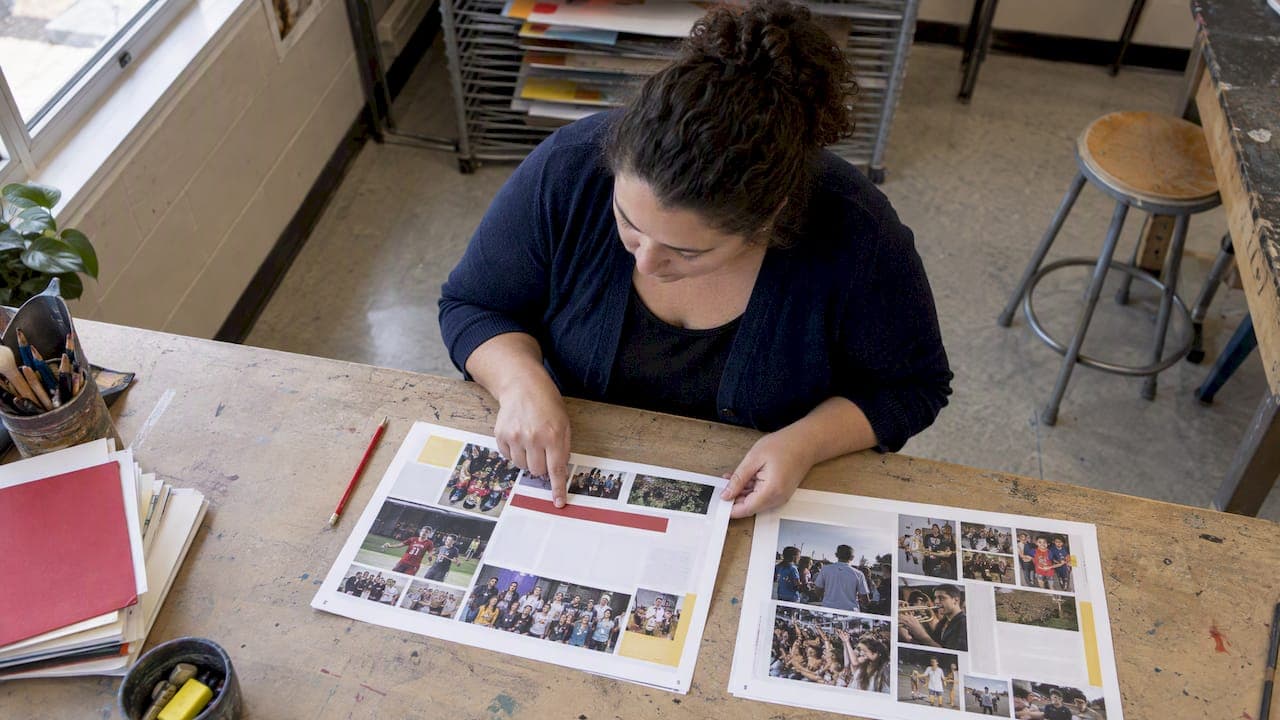
Here are dozens of ready-to-use yearbook headlines organized by spread type, plus short rules to pick or edit them. You will find categorized lines for sports, clubs, seniors, academics, and candid spreads, along with the exact headline style name for each (magazine-style, kicker, hammer) and a short workflow your staff can run under deadline pressure.
TL;DR:
- Keep hammers and headlines of one word under four words, magazine style headlines between three and seven, and kickers under three.
- Have the photo editor, a writer, and a featured student brainstorm for five minutes, then compare three finalists against the actual image and crop.
- Match headlines to the yearbook theme and school’s everyday voice, keeping section tones consistent instead of placing a joke in a sentimental spread.
- Use students’ interview quotes when they capture a moment, trim only the vivid phrase, and confirm edited wording with the student before print.
- Before sign off, check that the headline adds something beyond the caption or story lead, fits its style’s word limit, and suits the photo’s mood.
Table of Contents
- 1. Headline Ideas by Spread Type
- 2. Headline Styles and How to Use Them
- 3. A Workflow Your Staff Can Run Under Deadline
- 4. Matching Headlines to Your School's Culture
- 5. Bringing Student Quotes Into Your Headlines
- 6. Headline Mistakes That Undercut a Good Spread
- 7. What a Headline Taught Our Staff About Restraint
- 8. When You're Ready to Print What You've Written
- FAQ
- Resources for Finishing Your Spreads
1. Headline Ideas by Spread Type
Different spreads call for different moods. A sports layout can carry a loud, punchy line, while a candid montage usually needs something quieter. Below are grouped examples with a tone tag and a rough word count, so your staff can scan and pick instead of staring at a blank page.
Sports spreads
- "Game Changers" (one-word impact style, 2 words, playful; works over a wide action shot)
- "Leave It All on the Field" (emotional, 6 words, dramatic; best as a hammer over a full-bleed photo)
- "Undefeated and Unbothered" (pun, 3 words, playful)
- "Why Do We Run?" (question style, 4 words, reflective; pairs well with a quote pull)
- "Grit, Sweat, Repeat" (literal, 3 words, energetic)
- "Chasing the Scoreboard" (literal, 3 words, neutral tone)
- "Fourth Quarter Heroes" (literal, 3 words, dramatic)
Clubs and organizations
- "Finding Their People" (sentimental, 3 words; good folio for a multi-club spread)
- "Built on Shared Interests" (literal, 4 words, neutral)
- "Clubbing Together" (pun, 2 words, playful)
- "More Than a Meeting" (emotional, 4 words, warm)
- "Where Hobbies Become Friendships" (sentimental, 4 words; strong over group photos)
Prom and homecoming
- "A Night to Remember" (classic literal, 5 words, formal)
- "Crowned and Celebrated" (literal, 3 words, formal)
- "Dressed Up, Lit Up" (pun, 4 words, playful)
- "One Night, All the Feels" (emotional, 5 words, sentimental)
- "The Dance Floor Didn't Stand a Chance" (playful hammer, 7 words)
Seniors
- "The Last First Day" (emotional, 4 words, sentimental; works as a magazine-style cover line)
- "Ready for What's Next" (literal, 4 words, hopeful)
- "Four Years, One Chapter Closed" (sentimental, 5 words)
- "Senior Moment" (pun, 2 words, playful; pair with a superlatives sidebar)
- "They Made It" (emotional, 3 words, warm)
Academics
- "Minds at Work" (literal, 3 words, neutral; good kicker over classroom candids)
- "The Grade Behind the Grade" (pun, 5 words, thoughtful)
- "Proof in the Process" (literal, 4 words, neutral)
- "Homework Optional, Curiosity Required" (playful, 4 words)
Candid and montage spreads
- "Unscripted" (one-word impact, formal or playful depending on photos)
- "Caught in the Act (of Being Themselves)" (pun, 6 words, playful)
- "Real Life, Real Moments" (literal, 4 words, warm)
Dividers
- "Here We Grow" (pun, 3 words, playful opener)
- "Chapter One" (literal, 2 words, formal; works for a beginning-of-year divider)
2. Headline Styles and How to Use Them
Knowing the headline style name helps your staff match the line to the layout instead of guessing. Each style has a job.
Magazine-style headlines read like a cover line: punchy, often emotional, and built to stand alone without a subhead. "The Last First Day" is a magazine-style line. These work best large, in a bold weight, sitting near the top third of the spread where a reader's eye lands first.
Folio or kicker headlines are short tags, often just a word or two, placed above or beside the main headline to label the section ("Sports," "Minds at Work"). Keep these small and consistent in placement across every spread in that section.
Kicker plus subhead pairs a short label with a longer explanatory line underneath, useful when the headline alone is too abstract. "Unscripted" as a kicker could sit above a subhead like "What happens when nobody's posing."
Hammer headlines are big, bold, and usually short, meant to hit hard over a dominant photo. "Grit, Sweat, Repeat" works as a hammer because it reads fast at a large size.
Question-style headlines invite the reader in, like "Why Do We Run?" These work well when paired with a pull quote that answers the question.
One-word impact lines ("Undefeated," "Unscripted") demand the most visual confidence: they need a strong photo to carry the weight, since the text alone offers little context.
As a rule of thumb, keep hammers and one-word lines under 4 words, magazine-style lines between 3 and 7 words, and kickers under 3 words.

3. A Workflow Your Staff Can Run Under Deadline
Good headlines rarely come from one person staring at a cursor. They come from a short, repeatable process.
- Brainstorm as a group. Pull in the photo editor, a writer, and at least one student featured on the spread; five minutes of rapid-fire ideas beats twenty minutes of solo guessing.
- Shortlist three options. Narrow to the lines that best match the photo's energy, not just the ones that sound clever.
- Pair with the photo. Lay the headline over the actual image before deciding. A line that reads great in a list can fall flat over the wrong crop.
- Edit for length and tone. Trim to the style's target word count and check that the tone tag matches the section (a prom spread shouldn't borrow a sports hammer).
- Sign off. A headline editor reviews every headline across the book for consistency and flags anything that repeats the caption or story lede, a role that exists on most yearbook staffs to enforce balance across sections.
Check that the headline doesn't just restate the caption, that it fits the word count for its style, and that it won't read oddly out of context months later.
Pro Tip: Build a small bank of pre-approved templates per section (one hammer format, one question format, one kicker format) so staff can swap in new words fast instead of designing from scratch every deadline.
4. Matching Headlines to Your School's Culture
A headline bank only works when the tone fits the school it's written for. A line that sounds right for one campus can feel off at another, so it helps to filter every shortlist through your school's actual personality before locking anything in.
Start with your yearbook's theme, if you have one. If the book is built around a travel or journey theme, lean into lines like "Chapter One" or "Ready for What's Next" rather than unrelated puns. Consistency between the cover concept and section headlines makes the whole book feel intentional instead of assembled from a generic list.
Pay attention to how your school actually talks. Some campuses lean playful and meme-driven; others favor a more formal, traditional voice. Pull a few headlines straight from the idea bank above, but swap in language, inside jokes, or recurring phrases that students already use in hallways and group chats. A headline that sounds like it came from inside the building lands better than one that sounds generic.
Finally, keep tone consistent across sections. If seniors get sentimental lines, don't drop a sarcastic pun into the senior spread two pages later. Readers notice when the voice shifts without reason.

5. Bringing Student Quotes Into Your Headlines
Some of the strongest headlines aren't invented, they're overheard. Collecting quotes during interviews gives your staff raw material that often beats anything brainstormed cold.
Train your writers to ask open questions during interviews rather than yes-or-no ones, since a good follow-up question often surfaces the line that becomes the headline. Our interview questions guide walks through prompts that tend to get students talking in specific, quotable ways rather than giving flat answers.
When a quote is strong enough to stand alone, consider using it as the headline itself, trimmed to its most vivid phrase, with the full quote running as a pull quote or in the body copy nearby. This keeps the headline in the student's own voice instead of a staff writer's paraphrase. If a quote is too long for a headline, pull the sharpest clause and build the rest into a subhead or caption. Always confirm phrasing with the student before print, especially if you've trimmed or edited their words for space.
6. Headline Mistakes That Undercut a Good Spread
A strong photo can still get buried under a weak headline, and a few mistakes show up again and again in student-run yearbooks.
The most common one is defaulting to a flat label instead of a real headline. Middle-school staffs in particular tend to fall back on literal tags like "Basketball" or "Clubs" unless someone coaches them toward something sharper. A label isn't wrong, but it wastes a chance to add personality to the page.
Another frequent issue is a headline that simply repeats the caption or story lede underneath it. If the caption already says "the team celebrates their win," the headline shouldn't say the same thing in different words; it should add a layer the caption doesn't, like mood or perspective.
Forced cleverness is its own trap. A pun that makes sense only to the person who wrote it, or wordplay stretched past the point of clarity, confuses readers more than it charms them. When in doubt, pick the clearer line over the cuter one.
Finally, watch for tone mismatches, a joke headline over a serious photo, or a somber line over a lighthearted candid can send mixed signals and should get caught in the sign-off step of your workflow.
7. What a Headline Taught Our Staff About Restraint
A few years back, a staff I worked with almost ran a clever pun over a quiet candid of two students helping a classmate pick up dropped books. The joke landed fine on paper, but it fought the photo. Swapping it for a plain, three-word line let the image do the work.
The takeaway: clarity and mood beat forced cleverness almost every time. A headline's job is to frame the photo, not outshine it.
— Jace
8. When You're Ready to Print What You've Written
Once your headlines are locked and the spreads are designed, the next step is getting the book into print without a new set of headaches. You can find instant, transparent pricing with no sales calls and no hidden fees, so your adviser can see real costs before committing to anything.

- A fast 2 to 3 week turnaround once files are submitted, with no order deadlines forcing your staff to rush final edits.
- Design flexibility through Canva, Adobe InDesign, or an online creator, so your existing workflow doesn't have to change.
- A dedicated support team with extensive experience, for schools that want a second set of eyes on production.
If your staff is ready to move from editorial to print, request a sample and see the paper, binding, and print quality before you order.
FAQ
What are some good titles for a yearbook?
Strong yearbook titles usually tie to a theme or school identity rather than a generic phrase, things like "Chapter One," "Here We Grow," or a line pulled from a school motto or mascot. The best titles work on the cover and echo through section dividers, so pick one flexible enough to repeat in different forms throughout the book.
What are good yearbook quotes?
The strongest yearbook quotes come directly from students and staff rather than being invented by the editorial team, since real voices feel more authentic on the page. Short, specific quotes that capture a moment or feeling tend to work better as headlines or pull quotes than generic inspirational lines.
What are some good slogans for a yearbook?
Good yearbook slogans are short, memorable, and tied to the book's theme, similar in structure to a magazine-style headline: three to six words, built around a shared experience like "One Year, One Team" or "Ready for What's Next." Reusing the same slogan style across the cover and section openers helps the whole book feel unified.
What does headline mean in yearbook?
In a yearbook, a headline is the short line of text that introduces a spread or section, similar to a newspaper or magazine headline, setting the tone before the reader looks at photos or captions. It can take several forms, including a magazine-style line, a kicker, or a hammer, depending on the spread's design and mood.
Resources for Finishing Your Spreads
For more help turning ideas into finished pages, our copywriting techniques guide covers editing headlines alongside body copy, and our deadline management checklist keeps sign-offs on schedule. For club and community-service spread ideas, this community service ideas list offers extracurricular angles worth pairing with a headline.