

The six highest-impact student life section ideas you can assign today: event highlight spreads, candid day-in-the-life essays, clubs mosaic pages, senior micro-profiles, traditions timelines, and student playlist or "soundtrack of the year" features. A student life ideas pack circulated widely among yearbook advisers catalogs 170+ coverage topics organized by theme, from food and hobbies to social media trends and school traditions. That breadth is useful, but most staffs work with a page budget of 12–20 pages for the Student Life section, so picking the right six to eight spreads matters more than having every idea.
Three practical constraints to lock in before you start planning: your page count (which determines how many full spreads versus half-spread modules you can run), your photo release policy (check your school's existing media consent forms before any photo sprint), and your production deadline from your printer. Trailmarkyearbooks, Canva, and Adobe InDesign are the three tools that cover every workflow from first draft to print-ready PDF.
- Event highlight spread
- Candid day-in-the-life photo essay
- Clubs and organizations mosaic
- Senior micro-profiles
- Traditions timeline
- Student playlist / "soundtrack of the year"
Pro Tip: Assign one spread owner per idea this week, then schedule a two-hour photo sprint within the next ten days. Ownership and a calendar date are the two things that separate spreads that get done from spreads that get cut.
Key Takeaways
The most effective student life section combines six to eight well-executed spread types, a realistic production timeline, and authentic student voice collected through QR forms and in-person prompts.
| Point | Details |
|---|---|
| Pick six to eight spreads | A tight, well-executed spread list beats a padded section with thin content every time. |
| Schedule a photo sprint early | Run your main photo sprint eight weeks before final export to leave time for reshoots. |
| Use QR forms for quotes | QR-based collection outperforms email surveys for student participation; deploy at lunch tables. |
| Reserve a late-additions page | Plan one open module page for spring events that happen after your main photo deadline. |
| Trailmarkyearbooks as your printer | Free design assistance, 2–3 week turnaround, and flexible file workflows make production straightforward. |
Table of Contents
- The best student life spread ideas, grouped by category
- How to organize the Student Life section for maximum impact
- Photography and caption best practices for Student Life spreads
- Design templates and sample spread blueprints
- Production checklist: timeline, deadlines, and print handoff
- Senior prompt bank and bucket list feature ideas
- How Trailmarkyearbooks supports advisers producing the Student Life section
- What actually works in the Student Life section
- Trailmarkyearbooks turns your Student Life spreads into a finished yearbook
- Sources
The best student life spread ideas, grouped by category
A categorized idea bank lets you match spreads to your actual page budget instead of chasing every concept at once. Each category below includes execution notes so editors know what to shoot, how much space to plan for, and what to ask students.
Events and traditions
- Homecoming or prom highlight: 8–12 photos, full spread. Caption prompt: "Describe the moment you'll remember most." Works as a timeline treatment if you have multiple events.
- Spirit week day-by-day: 6–8 candids per day, half-spread module per day or one full spread collage. Year-specific; plan the shoot in advance.
- Annual school traditions: evergreen. A timeline spread works well here — one photo per tradition, one sentence of context, one student quote.
Candid moments
- A day in the life: follow three to five students through a single school day. One hero shot per student, four to six candids total. Half-spread to full spread. Caption template: "[Name], [grade], [one sentence on their day]."
- Lunch table portraits: environmental portraits at the cafeteria. One-module page. Pairs well with a "what's in your lunch?" micro-survey.
- Between-class candids: B-roll style. Fill a mosaic module with 10–15 tight candid shots. No captions needed beyond photo credits.
Clubs and organizations
A dedicated clubs mosaic spread gives every organization a moment without requiring a full page per club. Aim for one hero group shot per club, a two-line description, and one officer quote. For detailed planning guidance, the club section yearbook planning guide walks through layout options and photo counts.
Sports and arts
- Season highlight: one spread per major sport or arts program. Hero action shot, three to four supporting candids, one coach or director quote, one athlete or performer quote.
- Behind the scenes: pre-game warmups, backstage at the musical, pottery drying on the shelf. These candids are often more memorable than the performance itself.
Student voice and profiles
Reflective senior features resonate across the whole student body, not just seniors. Senior year through different eyes: three students, three perspectives illustrates this well: when senior content covers athletics, academics, and memory-making from distinct viewpoints, it connects with readers at every grade level. Plan at least one micro-profile spread that captures three to five seniors with varied roles.
Food and local favorites
- Off-campus lunch spots: a half-spread map or photo collage of the three to five places students actually go. Evergreen with minor updates each year.
- Cafeteria favorites: a one-module poll result paired with candid food photos. Quick to produce and always gets a reaction at distribution.
How to organize the Student Life section for maximum impact
Structure matters as much as the ideas themselves. A section that opens flat and saves its best content for page 14 loses readers before they get there.
Three sample page-allocation models
| Book size | Total pages | Full spreads | Half-spread modules | Module-only pages |
|---|---|---|---|---|
| Small (under 100 pages) | 8–10 | 2 | 3–4 | 1 |
| Medium (100–140 pages) | 14–15 | 4 | 4–6 | 2 |
| Large (140+ pages) | 20–22 | 6 | 6–8 | 3–4 |
Section flow rule of thumb
Open with your highest-energy event spread — homecoming, prom, or a major spirit week moment. Follow with clubs and activities. Place your longer feature spreads (candid essays, senior micro-profiles) in the middle of the section where readers slow down. Close with traditions and senior memories, which feel like a natural ending.
Reserve one to two pages near the back of the section for late-year events. Spring sports championships, last-day-of-school moments, and surprise events happen after most deadlines. A blank "late additions" module page planned in advance is far easier than scrambling to redesign a spread.
Editorial roles to assign
- Spread owner: responsible for photos, captions, and copy for one spread
- Lead photographer: coordinates the photo sprint and manages the shot list
- Copy editor: reviews all captions and quotes for accuracy and consistency
- Deadline owner (usually the adviser): holds the production calendar and escalates late assets
Photography and caption best practices for Student Life spreads
The difference between a spread that looks polished and one that looks rushed usually comes down to shot variety, not photo count. Candid photos that capture genuine moments carry more emotional weight than posed group shots, and student publications that lean into imperfect, honest imagery tend to produce content readers actually keep.
Shot list by spread type
| Shot type | Description | Recommended count per spread |
|---|---|---|
| Hero shot | Wide or medium establishing image | 1 |
| Environmental portrait | Subject in their natural setting | 1–2 |
| Candid action | Unposed moment mid-activity | 3–5 |
| Detail / B-roll | Close-up of an object, texture, or background element | 2–3 |
| Group candid | Natural group interaction, not posed | 1–2 |

Shoot at 300 DPI minimum for print. Save files as TIFF or high-quality JPEG in CMYK color profile before handing off to your printer.
Caption templates
Event caption: "[Student name], [grade], [action verb describing what they're doing] during [event name]. "[Direct quote from student.]""
Micro-profile caption: "[Name] spent [time period] [doing X]. "[One-sentence quote about what it meant to them.]""
Quote caption: ""[Quote]" — [Name], [grade], [role or activity]."
Photo credits follow a simple convention: "Photo by [Photographer Name]" placed in 6–7 pt type at the edge of the image or in a credit block at the bottom of the spread. For permissions, follow your school's existing media release policy. The yearbook policy best practices guide covers release language and crediting conventions in detail.
Candid photography tip: Student pieces that emphasize social-group dynamics, growth, and imperfect memories produce the most authentic yearbook content. Encourage photographers to shoot first and ask questions later — you can always choose not to run a photo, but you cannot recreate a genuine moment.
Design templates and sample spread blueprints
Four template types cover the vast majority of Student Life spreads. Knowing which to use when saves hours of layout time.
- Collage mosaic: 10–20 photos at varied sizes, minimal text. Best for candid-heavy spreads (between-class moments, spirit week). Use in Canva with a grid template; export as PDF/X-1a at 300 DPI.
- Magazine feature: one dominant hero image (half-page or larger), pull quote, two to three supporting photos, body copy block. Best for senior micro-profiles and event highlights. InDesign handles this layout most cleanly; export as PDF/X-4 with bleed marks.
- Timeline/traditions spread: horizontal or vertical timeline with one photo and one caption per entry. Best for annual traditions or a "year in review" close. Works in both Canva and InDesign; keep type at 9 pt minimum for print legibility.
- Full-bleed feature: one photograph fills the entire spread, with a title and short text overlay. Best for a single iconic moment (championship win, graduation). Requires a high-resolution source image (minimum 3,000 px on the short side at 300 DPI). Export as PDF/X-1a with 0.125-inch bleed.
Color and type notes: pick two typefaces maximum per section (one serif for headlines, one sans-serif for body and captions) and pull your accent color from the school's official palette. Consistency across spreads makes the section read as intentional rather than assembled by committee.
When you need a head start, Trailmarkyearbooks offers free design assistance and supplied templates. The adviser resources PDFs include layout guides and file-spec sheets you can hand directly to student editors.
Production checklist: timeline, deadlines, and print handoff
A realistic timeline prevents the two most common production failures: missing the photo window and submitting files that fail prepress checks.
- 10 weeks before export: finalize spread list, assign spread owners, confirm page count with printer.
- 8 weeks before export: run photo sprint for all planned spreads. Collect 20–30% more photos than you think you need.
- 6 weeks before export: caption collection deadline. Use a QR-linked Google Form or Typeform so students can submit quotes from their phones.
- 5 weeks before export: first layout review. Check photo resolution, caption accuracy, and spread flow.
- 4 weeks before export: copy edit pass. Every caption, headline, and pull quote reviewed for spelling and factual accuracy.
- 2 weeks before export: soft proof review. Print a physical proof or review a PDF proof from your supplier.
- 1 week before export: final corrections and print-ready export. Submit files per printer spec (PDF/X-1a or PDF/X-4, 300 DPI, CMYK, 0.125-inch bleed).
- Confirm bleed and trim marks are on before submitting.
- Keep a "late additions" module page open until the final export week.
- Save a backup of every spread file in a shared cloud folder (Google Drive or Dropbox) so no single computer failure kills a deadline.
Pro Tip: Reserve one full spread near the end of the Student Life section for a late-year event. Spring championships, senior skip day, and last-day moments happen after most photo deadlines. Planning the page now means you can fill it fast when the moment arrives.
Use the yearbook photography checklist to give photographers a single-page reference they can carry to every shoot.
Senior prompt bank and bucket list feature ideas
Ready-to-use prompts are the fastest way to collect authentic student voice at scale. The Ultimate College Bucket List offers 50 experience-driven prompts that adapt directly to high school senior features.
Prompts by theme
Friendship and community
- Who surprised you most this year, and why?
- Describe a moment when a classmate made your day better.
- What's the inside joke only your friend group would understand?
School traditions
- Which school tradition will you actually miss?
- What's the one event you wish you'd attended freshman year?
- Describe the tradition you'd bring back if you could.
Future plans
- Where do you see yourself in five years, and what does your high school self think about that?
- What's the one skill you learned here that you'll actually use?
- What advice would you give a freshman starting next fall?
Funniest moments
- What's the most embarrassing thing that happened in class?
- Describe a moment that was terrible at the time but hilarious now.
- What's the weirdest thing you witnessed in the hallway?
Regrets and growth
- What would you do differently if you could restart sophomore year?
- What did you finally figure out senior year that you wish you'd known earlier?
- What's one thing you stopped caring about, and how did that feel?
Micro-profile template
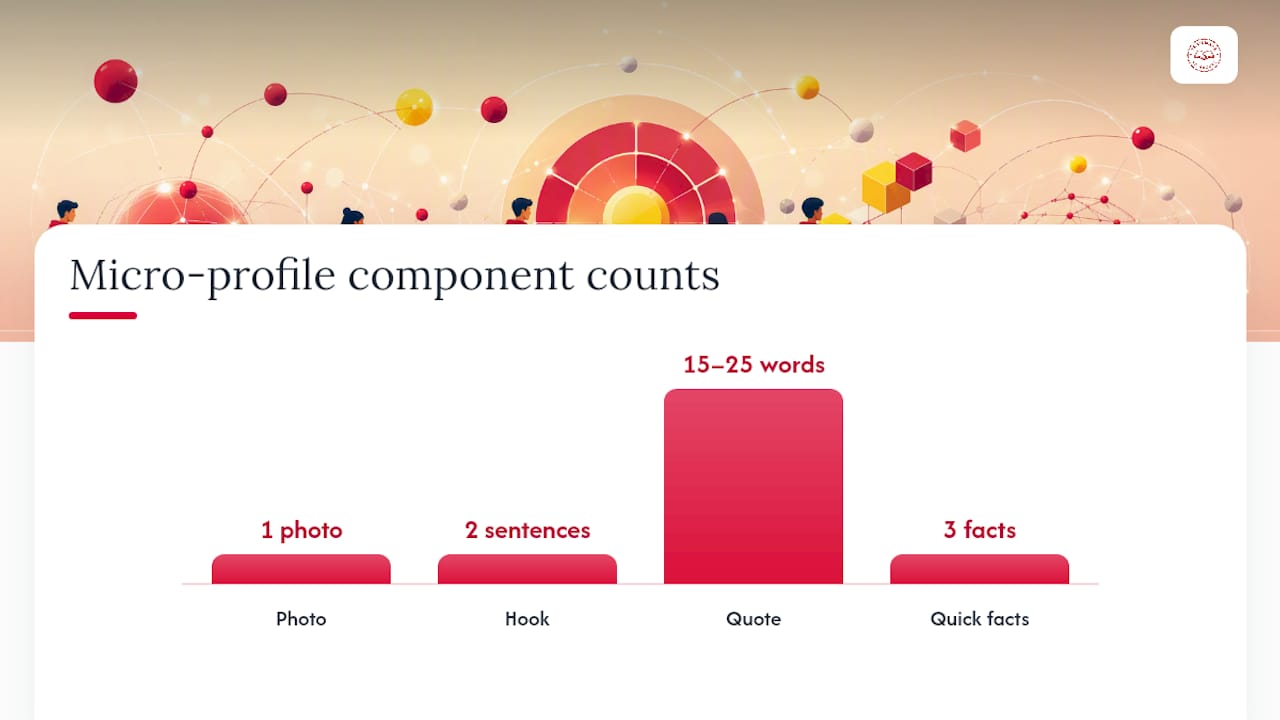
Photo (headshot or environmental portrait) + two-sentence hook describing the student's defining role or moment + one direct quote (15–25 words) + three quick facts (favorite class, post-graduation plan, one word to describe senior year).
Collection methods
- In-person table at lunch with printed prompt cards and a QR code linking to a response form.
- Instagram or Snapchat story prompts with a school hashtag students can reply to.
- Google Form or Typeform embedded in the school newsletter or LMS announcement.
QR-based collection consistently outperforms email-only surveys for student participation. Blend all three methods and you'll have more usable quotes than you need.
How Trailmarkyearbooks supports advisers producing the Student Life section
Trailmarkyearbooks is built around the reality that most yearbook advisers are also full-time teachers with limited prep periods. The support structure reflects that.
- Free design assistance: submit your spread concepts and a Trailmarkyearbooks designer helps you refine layouts at no extra cost.
- Flexible file workflows: work in Canva, Adobe InDesign, or the Trailmarkyearbooks online creator — whichever your staff already knows.
- Fast turnaround: 2–3 week production window after file submission, with no order deadlines.
- Adviser resources: downloadable templates, shot-list guides, and layout references available through the adviser resources hub.
- On-demand reprints: if distribution runs short, additional copies can be ordered without restarting the production process.
To see print quality before you commit, request a physical sample — paper stock, binding, and color fidelity are the three things advisers most often want to evaluate in hand before placing an order.
Pro Tip: Submit one or two of your strongest spread concepts to Trailmarkyearbooks for a design review early in the production cycle. Getting layout feedback at the concept stage is far less painful than redesigning a spread after captions are written and photos are placed.
What actually works in the Student Life section
The conventional wisdom in yearbook advising is that more spreads equal a better Student Life section. That's wrong. A section with six well-executed spreads — strong photos, honest quotes, clean layouts — will outsell and outlast a section with twelve thin ones every time.
The spreads that drive distribution are almost always the candid ones. Not the posed club photo or the official event shot, but the image of two students laughing at something off-camera, or the detail shot of someone's handwritten notes. Those are the photos students flip to first, and they're the ones that make a yearbook feel worth keeping. The role of yearbooks in student memory supports this: reflective, authentic content is what readers return to years later.
Student-authored reflective pieces also punch above their weight. A senior op-ed or memoir, when edited well, often becomes the most-shared piece in the entire book. The instinct to cut long-form content to make room for more photos is understandable, but resist it. One well-crafted 300-word senior reflection paired with a strong portrait does more for the section than three additional candid modules.
Get students involved in choosing the spreads, not just executing them. When editors vote on which ideas make the cut, they have a stake in making those spreads succeed. That ownership shows in the final product.
Trailmarkyearbooks turns your Student Life spreads into a finished yearbook
Designing strong spreads is the hard part. Getting them printed shouldn't be.

Trailmarkyearbooks gives advisers a direct path from design files to a finished book: free design assistance, flexible file workflows (Canva, InDesign, or the online creator), and a 2–3 week turnaround with all-inclusive pricing and no hidden fees. There are no order deadlines and no sales pitch — just transparent pricing you can get instantly online. Schools that want to evaluate print quality before ordering can request a physical sample at no cost. When you're ready to move from spreads to a printed yearbook, the production and ordering page walks through every option.
Sources
Templates and checklists
- student life ideas
- Senior year through different eyes: three students, three perspectives
- The Ultimate College Bucket List
Permissions and crediting
Follow your school's existing media consent policy for photo releases. The yearbook policy best practices guide covers release language, photo credit conventions, and adviser responsibilities in one place.
Next steps with Trailmarkyearbooks