
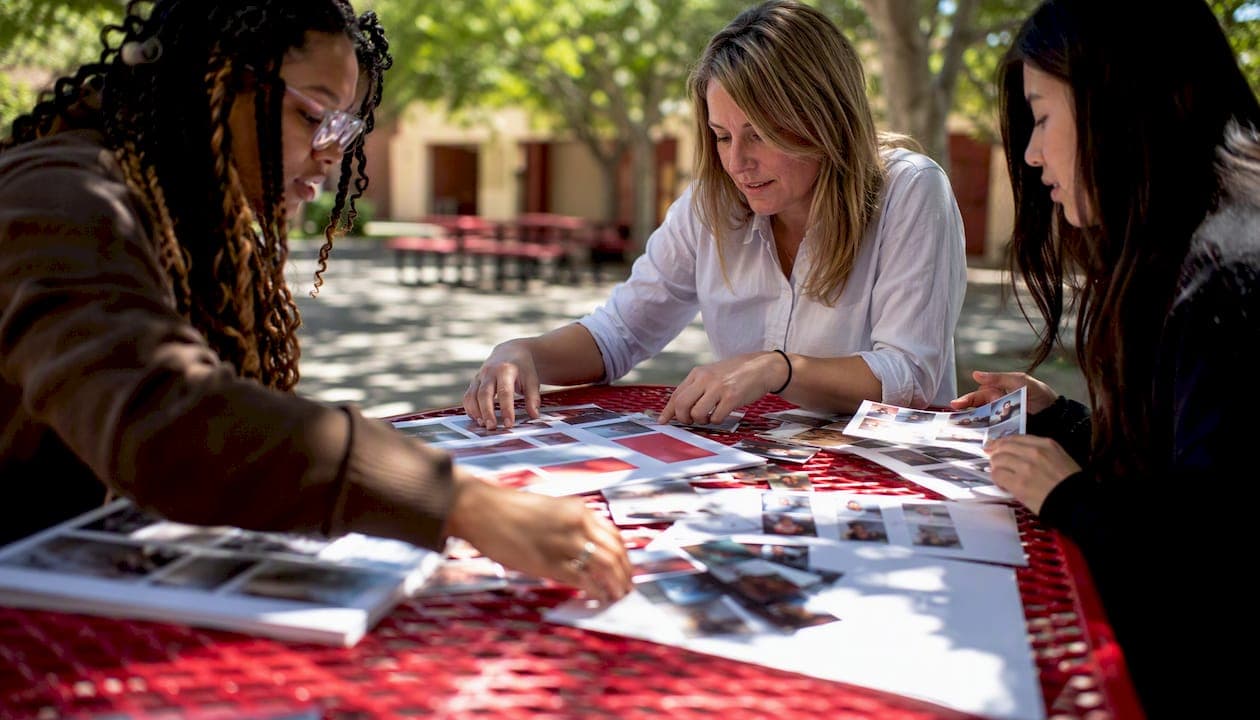
Yearbooks are a high-impact, low-cost tool that preserves school memory, builds belonging, develops student skills, and creates structured opportunities for family and community partnership. Research led by Dr. Karen Mapp at Harvard confirms that intentional, well-resourced engagement programs improve student learning and school climate — and a well-run yearbook program is exactly that kind of intentional structure. The school community engagement yearbook benefits are real and measurable, and advisers who treat the yearbook as a community tool rather than a photography project get dramatically different results.
Start here: Draft a one-page inclusion plan that names every club, grade, and underrepresented group you want to cover, and set a specific ad-sales target before your first staff meeting.
The core benefits at a glance:
- Preserves memories and reinforces school identity through a tangible, lasting artifact
- Raises school spirit and gives students visible proof they belong
- Builds marketable skills and social-emotional learning (SEL) competencies in student staff
- Creates structured touchpoints for family, alumni, and community partner engagement
- Generates fundraising revenue through ad sales and community sponsorships
Key Takeaways
A yearbook treated as a community engagement program, not just a publishing project, produces measurable benefits for students, families, and school culture.
| Point | Details |
|---|---|
| Start with an inclusion plan | Set coverage quotas for every club, grade, and underrepresented group before the first spread is assigned. |
| Ad sales are your highest-yield fundraiser | Assign student pairs to business outreach with a clear revenue target and deadline set in August. |
| Family engagement requires two-way design | Replace one-way newsletters with content submissions, signing events, and post-distribution surveys. |
| Research backs the approach | An APA review of 448 studies links meaningful parent involvement to better achievement, attendance, and motivation. |
| Trailmarkyearbooks reduces production barriers | Free design help, 2–3 week turnaround, included shipping, and instant pricing let advisers focus on community, not logistics. |
Table of Contents
- Why printed yearbooks preserve memories in ways digital content cannot
- How yearbooks boost school spirit, belonging, and positive school culture
- What students actually learn from being on yearbook staff
- How to use the yearbook intentionally to engage families, alumni, and community partners
- Print vs. digital yearbooks: which format actually serves your community?
- Timeline, budget basics, and fundraising ideas that actually work
- A practical implementation checklist for advisers
- What the research says about school–family–community partnerships
- What most advisers get wrong, and the fix that actually works
- Trailmarkyearbooks makes the production side manageable
- Sources
Why printed yearbooks preserve memories in ways digital content cannot
A physical yearbook does something a shared Google Drive folder never will: it becomes an object people keep. Printed yearbooks offer enduring keepsake value that strengthens school pride at distribution and doubles as a project-based learning vehicle for the students who make it. Decades after graduation, alumni pull yearbooks off shelves to remember names, faces, and the texture of a specific school year — that kind of retrieval simply does not happen with a PDF link.

The design choices advisers make directly shape how much emotional weight a spread carries. Signature pages with wide margins, caption fields that name every person in a photo, and dedicated "senior reflection" inserts all invite personal annotation that deepens the book's value over time. A spread that leaves room for a handwritten note is more likely to be kept than one that is purely decorative.
Pro Tip: Design at least two full spreads specifically for signing: wide white borders, a "your message here" prompt, and a QR code linking to a digital memory wall. Students who sign each other's books are more likely to purchase one the following year.
For long-term preservation, encourage families to store yearbooks flat in acid-free sleeves. Schools that want broader access can create a scanned archive — a simple PDF collection stored on a password-protected school server — without replacing the print edition. The role of yearbooks in student memory is well-documented; the physical object anchors autobiographical recall in ways digital files rarely replicate.
How yearbooks boost school spirit, belonging, and positive school culture
An inclusive, well-planned yearbook tells every student: you were here, and you mattered. That signal is not subtle. Students who see their club, their face, and their story in the book feel a measurable sense of belonging — and students who do not see themselves feel the absence just as clearly.

Yearbook themes drive participation and school spirit when they are chosen with the whole school in mind, not just the most visible groups. Advisers who mandate coverage quotas — at least one spread per recognized club, one feature per grade level, and dedicated spotlights for staff and support personnel — report that quieter student groups start showing up to photo sessions once they know a spread is guaranteed. That shift from passive to active participation is the clearest signal the approach is working.
One adviser at a mid-sized Midwest middle school added an "Everyday Heroes" spread featuring custodians, cafeteria staff, and bus drivers. Student feedback at distribution was immediate: kids who had never spoken to those staff members started recognizing them by name. The spread cost nothing extra and took one afternoon to photograph.
Signals that your yearbook is building school spirit:
- Signing event attendance increases year over year
- Post-distribution survey sentiment scores rise (ask: "Do you feel represented in this yearbook?")
- Social shares and photo tags spike on distribution day
Pro Tip: Run a short five-question survey at distribution — paper or Google Form — and compare results year over year. Two or three data points is enough to show administration that the program has measurable community impact.
What students actually learn from being on yearbook staff
Yearbook participation is one of the few high school experiences that teaches project management, journalism, design, sales, and conflict resolution inside a single semester. A 2026 yearbook class documented by School News Network increased student connection by running the program like a professional staff: students attended events, sold ads, met deadlines, and built interviewing and photography skills that translated directly to college applications and early careers.
The skills students build on yearbook staff are specific and trackable:
- Project planning: setting section deadlines, managing a production calendar, and coordinating with photographers
- Journalism: interviewing peers and staff, writing captions and features, fact-checking
- Design: layout principles, typography, color theory, and photo editing in tools like Canva or Adobe InDesign
- Sales and marketing: pitching ad packages to local businesses, writing copy, and managing client relationships
- Budgeting: tracking ad revenue against production costs, understanding break-even math
- SEL competencies: giving and receiving feedback, resolving creative disagreements, and supporting teammates under deadline pressure
The student-facing benefits of yearbook participation extend well beyond the final product. Advisers who document outcomes with rubrics, student portfolios, and before/after confidence surveys can present yearbook as a credit-worthy, outcomes-driven course rather than an elective filler.
Pro Tip: Build a simple two-column rubric: left column lists the skill (e.g., "conducts a structured interview"), right column describes four performance levels. Collect student self-assessments at the start and end of the year. That data is your strongest argument for protecting the program's budget.
How to use the yearbook intentionally to engage families, alumni, and community partners
A yearbook that sits in a box until distribution day is a missed opportunity. Used intentionally across the school year, it becomes a recurring touchpoint for families, alumni, and local businesses.
Year-long engagement checklist for advisers:
- August/September: Send a family call-for-content letter asking for baby photos, family milestone submissions, and permission forms for student features.
- October: Launch ad sales outreach to local businesses. Set a revenue target and assign student reps to specific accounts.
- November: Host a "community sponsor" spread planning session — invite two or three local partners to see how their ad will appear.
- January: Share a mid-year preview spread (one page, printed or digital) with the PTA or school newsletter to build anticipation.
- March: Run a family photo submission deadline reminder and a student-led "caption contest" on the school's social channels.
- May: Host a signing event open to families and alumni — not just students. Set up display boards with candid shots from the year.
- June: Distribute and collect post-distribution feedback surveys.
Fundraising tied to the yearbook works best when it is layered. Ad sales consistently rank among the most profitable yearbook fundraising options, but they work alongside events (restaurant fundraiser nights, preview parties), personalized campaigns (senior dedication pages sold to families), and merchandise (branded tote bags or photo prints). The key is assigning each tactic to a specific student team with a clear revenue target and deadline.
Community engagement add-ons worth trying:
- Student-led yearbook displays at local libraries or community centers during spring
- Alumni "then and now" spreads that invite former students to submit current photos
- QR codes linking to family storytelling resources that families can use to contribute written memories
One logistics note: before publishing any student story, photo, or quote, confirm you have a signed media release on file. Most districts have a standard form; advisers should collect these at the start of the year rather than chasing them in April. The school yearbook policy best practices guide covers the specifics of permissions and distribution compliance.
Print vs. digital yearbooks: which format actually serves your community?
Each format supports engagement differently, and the right answer for most schools is not one or the other.
Print excels at keepsake value. A physical book gets signed, stored, and revisited. It does not require a login, a device, or a working link. For families without reliable home internet access, print is the equitable default.
Digital yearbooks (PDF flipbooks or interactive online editions) increase reach and allow multimedia elements: embedded video, audio captions, and clickable indexes. They are easier to share with alumni and out-of-state family members. The accessibility trade-off is real, though: a digital-only edition excludes families with limited device access and creates long-term preservation risk as file formats and hosting platforms change.
Touchscreen display installations on campus — a kiosk in the library or main hallway showing rotating yearbook spreads — amplify community visibility without requiring individual purchases. They work well as a complement to print, not a replacement.
Accessibility considerations advisers should address:
- Offer large-print versions for students and families with visual impairments
- Add alt-text descriptions to digital editions for screen-reader compatibility
- Provide translated caption summaries for multilingual families where feasible
- Distribute physical copies to families who cannot access digital formats
Statistic callout: An APA review of 448 studies links meaningful parent involvement to better academic achievement, attendance, and motivation — but stresses that engagement must be systemic and accessible. Format equity is not a nice detail; it is a prerequisite for reaching all families.
The recommended approach for most schools: a core printed edition as the primary keepsake, supplemented by a digital flipbook for alumni and remote families, and a campus display installation if budget and staff capacity allow. Yearbook package options vary widely in cost and scope — knowing what your school actually needs before selecting a vendor saves both money and stress.
Timeline, budget basics, and fundraising ideas that actually work
A realistic production timeline and a simple budget template cut risk and boost pre-orders. Advisers who start planning in August and set hard internal deadlines by section finish on time. Those who wait until January scramble.
| Month | Milestone |
|---|---|
| August | Form staff, assign roles, set coverage quotas, open ad sales |
| September | Collect family media releases, launch community sponsor outreach |
| October–November | Cover fall events, complete ad sales, finalize theme and layout templates |
| December | First section drafts due; adviser review and revision cycle begins |
| January–February | Photography deadlines for winter events; senior features drafted |
| March | Full draft to printer for proof review |
| April | Final corrections submitted; pre-orders close |
| May–June | Print run complete; distribution event planned and executed |
Core budget line items:
- Printing and binding (the largest single cost; get all-inclusive pricing upfront)
- Design assistance (free with some vendors, a significant cost with others)
- Photography (student-shot vs. professional; most schools use a hybrid)
- Distribution and shipping (often overlooked; included shipping eliminates a surprise line item)
Fundraising tactics by yield:
- Ad sales to local businesses: highest yield, requires student time investment
- Senior dedication pages sold to families: moderate yield, low effort once the template is set
- Restaurant fundraiser nights: low yield but high community visibility
- Early-bird pre-order discounts: drives cash flow, not net revenue
Pro Tip: Offer on-demand reprints after the main print run closes. Schools that do this capture late orders without overprinting — and the per-unit cost difference is usually small enough that families still pay the same price.
A practical implementation checklist for advisers
Planning is only useful when it is assigned to a specific person with a specific deadline.
Roles and responsibilities:
- Adviser: sets coverage quotas, approves all content, manages vendor relationship, tracks budget
- Editor-in-chief: coordinates section editors, runs weekly staff meetings, enforces deadlines
- Section editors: own their spreads from photography through final proof
- Ad sales team: manages business outreach, tracks revenue, delivers ad copy to layout team
- Faculty liaison: connects yearbook staff to department heads and event coordinators
- Parent volunteers: assist with signing events, distribution logistics, and family outreach
Sample outreach questions for families and community partners:
- "What story from this school year do you most want preserved?"
- "Is there a staff member or student group you feel deserves more recognition?"
- "Would your business like to sponsor a spread and support our students directly?"
- "Do you have photos from school events this year you'd be willing to share?"
Inclusion checklist:
- List every recognized club and confirm at least one spread is assigned to each.
- Verify each grade level has at least one dedicated feature.
- Check that support staff (custodians, cafeteria, bus drivers) appear in at least one spread.
- Review draft layouts for demographic representation across photos.
- Confirm all student names in captions are spelled correctly and verified by the student.
For detailed guidance on yearbook inclusion and accessibility planning, including representation tracking templates, the Trailmarkyearbooks resource hub covers the specifics.
Red flags to catch early:
- The same 15–20 students appear in more than 40% of candid photos
- Ad sales are concentrated in one student's network (ethics and equity risk)
- Media release forms are missing for students featured in stories
- A recognized club has no assigned spread by November
Sample community outreach email advisers can adapt:
Pro Tip: Assign ad sales in pairs — one student handles the pitch, one handles follow-up. Pairs close more accounts and the experience is less intimidating for students who have never sold anything before.
What the research says about school–family–community partnerships
Rigorous research shows that intentional, systemic family and community engagement improves student outcomes and school climate. Yearbooks are a practical instrument for that approach, not a peripheral activity.
Karen Mapp's synthesis at Harvard concludes that effective engagement requires intentional design, leadership, budget, and culturally responsive practice. The implication for yearbook advisers is direct: treating the yearbook as a community engagement program — with assigned roles, outreach milestones, and inclusion goals — is more effective than treating it as a publishing project.
Joyce Epstein's overlapping spheres of influence framework describes how school, family, and community partnerships work best when they are coordinated, intentional, and supported by action teams. A yearbook staff with assigned community outreach roles, a faculty liaison, and a parent volunteer coordinator maps almost exactly onto that model.
A ResearchGate literature review on community involvement finds that partnerships improve attendance, behavior, and inclusive practices when community members are meaningfully engaged — not just informed. The distinction matters: sending a newsletter is not engagement. Inviting a local business to sponsor a spread, attend a preview night, and see their ad in print is.
| Research finding | Yearbook application |
|---|---|
| Intentional engagement requires leadership and budget | Assign an adviser with protected planning time and a line-item budget |
| Two-way relationship-building outperforms one-way communication | Replace announcement-only newsletters with family content submissions and signing events |
| Culturally responsive practice increases participation | Set coverage quotas; translate outreach materials for multilingual families |
| Action teams coordinate partnership activities | Build a yearbook committee with student, staff, parent, and community roles |
| Meaningful community roles improve attendance and behavior | Give local partners visible credit (sponsor spreads, preview invitations) |
What most advisers get wrong, and the fix that actually works
The most common yearbook pitfall is not a design problem or a budget problem. It is a coverage problem: the same 20 students appear throughout the book because those are the students the staff already knows. Every other student notices.
The fix is structural, not motivational. Advisers who mandate coverage quotas before the first spread is assigned — and who track representation data at each review cycle — produce books where quieter students see themselves reflected. That one change, more than any theme or design choice, is what shifts a yearbook from a club newsletter into a genuine community document.
A few paired dos and don'ts from practice:
- Do assign section editors ownership of specific groups. Don't let the editor-in-chief make all coverage decisions alone.
- Do photograph events outside the main gym and main hallway. Don't let your photo archive skew toward varsity sports and student government.
- Do collect family submissions in September. Don't wait until March and then scramble for content.
- Do run a post-distribution survey every year. Don't assume positive feedback at the signing table is representative.
Working with Trailmarkyearbooks's support model, advisers get a dedicated contact who can flag common production mistakes before they become print errors — the kind of check that catches a missing media release or a caption error before 500 copies are bound. That backstop matters more than most advisers realize until they need it.
Test in the next 90 days: Pull last year's yearbook and count how many times each recognized club appears. If any club has zero spreads, that is your first coverage quota target for this year.
Trailmarkyearbooks makes the production side manageable
Producing a yearbook that genuinely serves your school community is hard enough without fighting your vendor. Trailmarkyearbooks offers school-first production services built around the realities advisers actually face: tight timelines, limited budgets, and no dedicated design staff.
The practical advantages for community-focused programs: free design assistance so advisers are not starting from scratch, flexible design tools including Canva, Adobe InDesign, and a proprietary online creator, a 2–3 week turnaround that accommodates late-breaking coverage, on-demand reprints that capture orders without overprinting, and shipping included so the budget line is predictable. Instant all-inclusive pricing is available online with no signup and no sales pitch — advisers can get a real number before the first staff meeting.
For schools building an inclusion-forward program, Trailmarkyearbooks's curriculum and design resources give student staff a starting point for spread templates, coverage checklists, and adviser guides. The yearbook production options page shows the full range of packages, and advisers who want to evaluate print quality before committing can request a physical sample at no cost.
Sources
A short set of authoritative sources for advisers who want to go deeper on the research and the practice:
- The Case for Strong Family and Community Engagement in Schools | Harvard Graduate School of Education
- Yearbook class builds connections, one page at a time - School News Network | A Window into Your Public Schools
- Benefits of Printed Yearbooks for Students and Schools