

Staff buy-in for yearbooks is defined as the genuine commitment and active participation of teachers, advisers, and school leaders in the yearbook creation process. Without it, deadlines slip, content gaps appear, and the final book reflects only a fraction of the school year. Getting staff buy-in for yearbooks is the single most important factor in producing a yearbook that the whole school community recognizes as their own. The Program on Negotiation at Harvard identifies participative leadership as the core driver of shared ownership, and Trailmarkyearbooks builds its school-first support model around exactly that principle.
What does getting staff buy-in for yearbooks involve?
Staff buy-in is not passive approval. It is active, ongoing participation where every contributor feels responsible for the outcome. Participative leadership increases trust, commitment, and acceptance of change by giving people a real voice in decisions. That voice translates directly into motivation to follow through.
Three core elements drive genuine buy-in:
- Shared ownership. Staff who help set goals feel accountable for reaching them. Invite teachers to co-create the yearbook theme, not just approve it after the fact.
- Balanced empowerment. Giving people responsibility without removing their existing workload creates burnout, not buy-in. The risk of overload is real, and leaders must pair new responsibilities with realistic support structures.
- Trust through inclusion. Staff accept changes more readily when they were part of making them. A teacher who helped choose the photo submission process will remind students to use it.
The industry term for this approach is participative leadership, and it applies directly to yearbook committee support. It is not about making every decision by committee. It is about identifying the right moments to open the floor and the right moments to move forward.
Pro Tip: Run a 10-minute "what matters most" vote at your first staff meeting. Ask each person to write one thing they want the yearbook to capture. Use those answers to shape the theme. Staff who see their idea reflected in the final concept stay engaged all year.

The balance between empowerment and support is where most yearbook advisers struggle. Enthusiasm at the kickoff meeting fades when staff realize participation means extra work on top of full teaching schedules. Set clear, time-bounded asks from the start. "We need three photos from your classroom by the end of october" is manageable. "Please stay involved throughout the year" is not.
How can you lower coordination friction for yearbook staff?
Coordination friction is the invisible tax on participation. Every extra step between a staff member's good intention and their actual contribution is a step where they drop out. Reducing that friction is the fastest way to increase yearbook contributions from staff.
- Align tasks with existing routines. Ask the PE teacher to submit action shots on the same day they already upload attendance. Attach photo requests to events already on the school calendar.
- Use multi-channel communication. Clear, multi-channel reminders through email, group chats, and in-person check-ins keep participation visible without feeling like nagging. One channel alone misses too many people.
- State the personal benefit clearly. Staff engage more when they understand what participation means for them and their students. Frame it as: "Your class gets a full spread, not just a group photo."
- Tie incentives to effort. Matching rewards to participation increases engagement. A small public thank-you in the staff newsletter costs nothing and signals that contributions are noticed.
- Avoid the common pitfall of vague asks. "Send us anything you have" produces nothing. "Send us two photos from the science fair by friday, november 14" produces results.
Pro Tip: Create a shared folder labeled by department and pre-populate it with a one-page instruction sheet. Staff upload directly without needing to email anyone. The folder structure itself communicates that you have already done the hard part for them.
Enthusiastic, story-driven communication from school leaders also matters. When the principal mentions the yearbook in a staff meeting and shares why it matters, participation rates climb. Leadership visibility signals that this is a school priority, not just a student project.
How does team culture affect yearbook staff engagement?
Culture is the environment in which buy-in either grows or dies. A yearbook team that celebrates effort, acknowledges stress, and makes space for every voice will outperform a technically organized team that ignores how people feel.
Gratitude walls and regular check-ins create a safe, appreciative culture that reduces stress and sustains involvement. A gratitude wall is a physical or digital space where team members post appreciation for each other's work. It takes five minutes to set up and changes the tone of every meeting that follows.
The rose/thorn check-in is one of the most effective tools in a yearbook adviser's kit. At the start of each meeting, each person shares one positive (rose) and one challenge (thorn). This practice surfaces problems before they become crises and reminds everyone that struggle is shared.
Celebrating small wins and emphasizing progress over perfection keeps morale high during the hardest production phases. Recognition of effort, not just output, is what sustains a team through a full academic year.
Rotating roles gives every staff member a moment of leadership. The student who always handles photography gets to lead the caption-writing session. The quiet contributor gets to present the draft layout to the group. These rotations build confidence and deepen investment in the final product.
Inclusivity in content also drives buy-in. When staff see that the yearbook represents every classroom, every club, and every corner of the school, they feel the project is worth their time. Yearbooks that make students feel seen and valued create a feedback loop: staff contribute more because they witness the real impact of their work.
Step-by-step guide to building yearbook staff involvement
Execution separates good intentions from a finished book. The following framework walks you through the full yearbook cycle, from recruiting to final delivery.
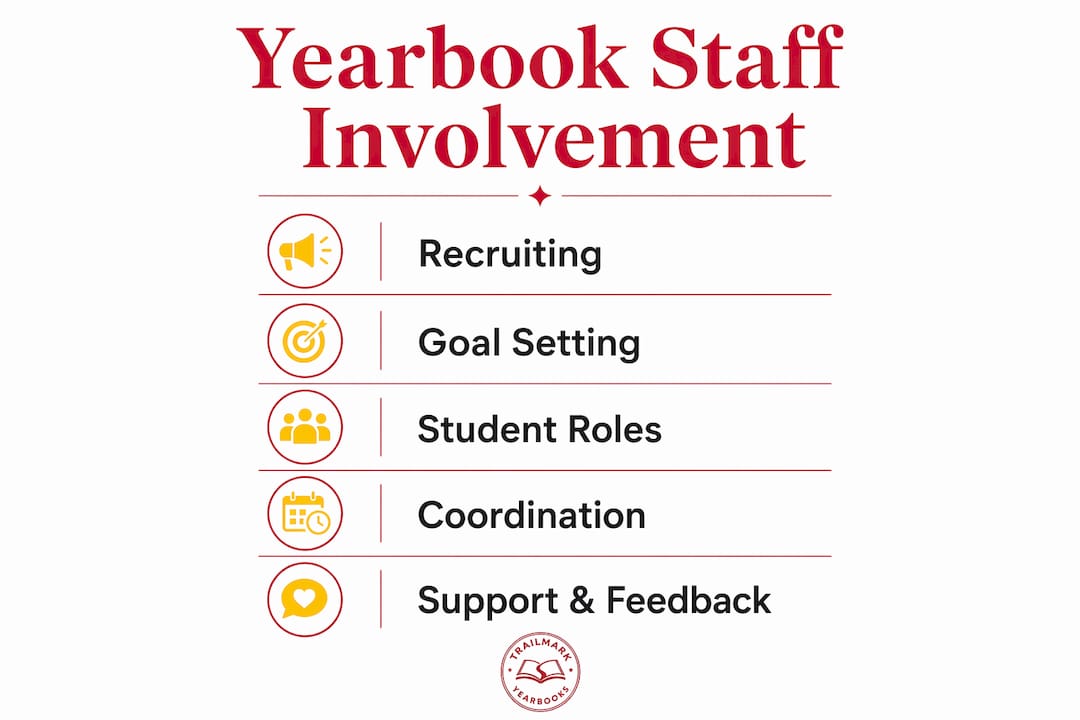
| Phase | Action | Purpose |
|---|---|---|
| Recruiting | Send personalized invitations to specific staff members | One-on-one asks produce stronger commitment than open sign-ups |
| Planning | Involve staff in goal-setting and theme selection | Early inclusion creates ownership before the work begins |
| Production | Create student-led sections by department or grade | Gives contributors direct control over their content area |
| Midpoint | Hold a progress presentation with a short celebration | Maintains momentum and makes effort visible to the whole team |
| Feedback | Run a brief survey after each major deadline | Identifies friction points before they repeat next cycle |
| Wrap-up | Host a closing event that honors every contributor | Builds the internal traditions that make the team want to return |
Start recruiting with one-on-one conversations rather than a general announcement. A personal ask communicates that you chose this person specifically, which raises their sense of responsibility from day one. Open sign-ups attract enthusiasm but not always commitment.
Involve staff in planning before any design decisions are made. A 30-minute goal-setting session in september, where staff vote on the top three things the yearbook must capture, produces a shared reference point that resolves disagreements for the rest of the year.
Create student-led sections tied to specific departments. The art teacher's class designs the divider pages. The history department contributes a "this year in history" spread. These sections give contributors ownership of a defined piece, not a vague responsibility. Check the yearbook deadline management checklist to keep these contributions on schedule without adding stress.
Avoid overloading staff by keeping participation asks time-bounded and specific. A staff member who submits photos twice a year and attends one planning meeting is a genuine contributor. Treat them as one.
Key Takeaways
Sustained staff buy-in for yearbooks requires participative leadership, reduced coordination friction, and a team culture that values effort as much as output.
| Point | Details |
|---|---|
| Define buy-in clearly | Buy-in means active participation and shared ownership, not passive approval. |
| Use participative leadership | Involve staff in decisions early to build trust and commitment throughout the year. |
| Reduce coordination friction | Align tasks with existing routines and use multi-channel reminders to lower barriers. |
| Build a supportive culture | Gratitude walls, check-ins, and role rotation sustain engagement across the full cycle. |
| Recruit one-on-one | Personalized invitations produce stronger commitment than open sign-ups. |
What I have learned about sustaining yearbook buy-in over time
The yearbook staff is a community within a community. That is the insight most advisers miss in their first year. They focus on logistics: deadlines, photo counts, page layouts. Those matter. But the teams that produce the best books are the ones that feel like a real group, with inside jokes, shared rituals, and genuine care for each other's work.
The mental well-being piece is not soft. It is structural. Advisers who use wellness tools like gratitude walls and check-ins consistently report higher staff retention and fewer mid-year dropouts. That is a production outcome, not just a morale outcome.
The hardest part of participative leadership is knowing when to stop asking for input and start making decisions. Staff lose confidence in a leader who never commits. The best advisers I have observed gather input fast, decide clearly, and explain the reasoning. That combination builds more trust than endless consensus-seeking.
One-on-one engagement is the highest-leverage activity in your calendar. A five-minute conversation with a hesitant teacher does more than three group emails. Ask what they care about, find the overlap with the yearbook, and make that the ask. You will rarely hear no.
— Jace
Trailmarkyearbooks makes staff collaboration easier
Yearbook advisers who want to build genuine staff engagement need tools that get out of the way. Trailmarkyearbooks is built around exactly that idea: fewer barriers, more time for the work that actually matters.

Trailmarkyearbooks offers flexible design options through Canva, InDesign, or its own online creator, so staff can contribute in whatever format fits their workflow. Free design assistance and a 2–3 week turnaround mean your team spends less time managing production stress and more time building the culture that makes a great yearbook. Request a sample to see how the platform supports your team's collaboration from the first page to the last. Transparent, all-inclusive pricing with no hidden fees means you can focus on people, not paperwork.
FAQ
What is staff buy-in in the yearbook context?
Staff buy-in means active, ongoing commitment from teachers and school leaders to contribute content, support decisions, and take shared ownership of the yearbook project. It goes beyond permission or approval.
How do you get teachers to contribute to the yearbook?
Send personalized, one-on-one invitations rather than general announcements, align contribution tasks with existing routines, and make the personal benefit clear. Specific, time-bounded asks produce far better results than open-ended requests.
Why does participative leadership matter for yearbook teams?
Participative leadership increases trust and commitment by giving staff a real voice in decisions. Staff who help shape the yearbook's goals are more motivated to follow through on their responsibilities.
How can advisers prevent staff burnout during yearbook production?
Balance new participation asks with realistic support by keeping tasks specific and time-bounded. Pair empowerment with clear expectations, and use tools like the yearbook adviser responsibilities guide to set healthy boundaries from the start.
What team culture practices sustain yearbook engagement all year?
Gratitude walls, rose/thorn check-ins, role rotation, and celebrations of small wins all sustain engagement across a full academic year. These practices reduce stress and signal that every contribution is valued, not just the final product.