

Yearbook quote selection is the process where high school seniors choose a short, meaningful statement to be printed permanently beneath their portrait in the school yearbook. Most schools limit quotes to 75–150 characters or 10–25 words, so every word carries real weight. The right quote captures your personality, reflects your high school years, and stays relevant decades later. Trailmarkyearbooks has worked with schools nationwide for over 50 years and sees firsthand how much this small decision matters to students and families alike. Getting it right starts with understanding the rules, knowing your own voice, and giving yourself enough time to choose wisely.
What is yearbook quote selection, and what rules apply?
Yearbook quote selection follows a formal process at most schools. Quotes go through a mandatory review by yearbook advisers or school administration before they appear in print. Finalization often happens by february, which means students need to start thinking early, not the week before the deadline.

Common content restrictions
Schools enforce clear content rules to protect the school community. Schools typically prohibit quotes that contain:
- Profanity or offensive language
- References to illegal acts, drugs, or alcohol
- Bullying, targeting, or humiliating other students
- Exclusionary inside jokes that could confuse or offend readers
- Hidden meanings or coded language that bypasses the spirit of the rules
Yearbook staff treat quote submissions as professional publications. That standard exists for good reason. A yearbook is a permanent school record, not a social media post you can delete.
Formatting standards matter too
Editing quotes to fit character limits by removing punctuation or abbreviating words creates confusion and often leads to rejection. If a quote does not fit naturally within the word limit, find a different quote rather than butchering the original. Schools enforce formatting rules to keep the yearbook text clear and professional throughout.
Pro Tip: Read your school's yearbook submission guidelines at the start of senior year, not the week quotes are due. Knowing the rules early gives you time to craft something you genuinely love.
How do you choose an authentic and meaningful yearbook quote?
The most meaningful senior quotes come from honest reflection on your values, experiences, and personality, not from scrolling through popular quote lists. Students who start with self-reflection consistently produce stronger, more personal quotes. That is the single most reliable method for choosing something you will still be proud of at your 20-year reunion.
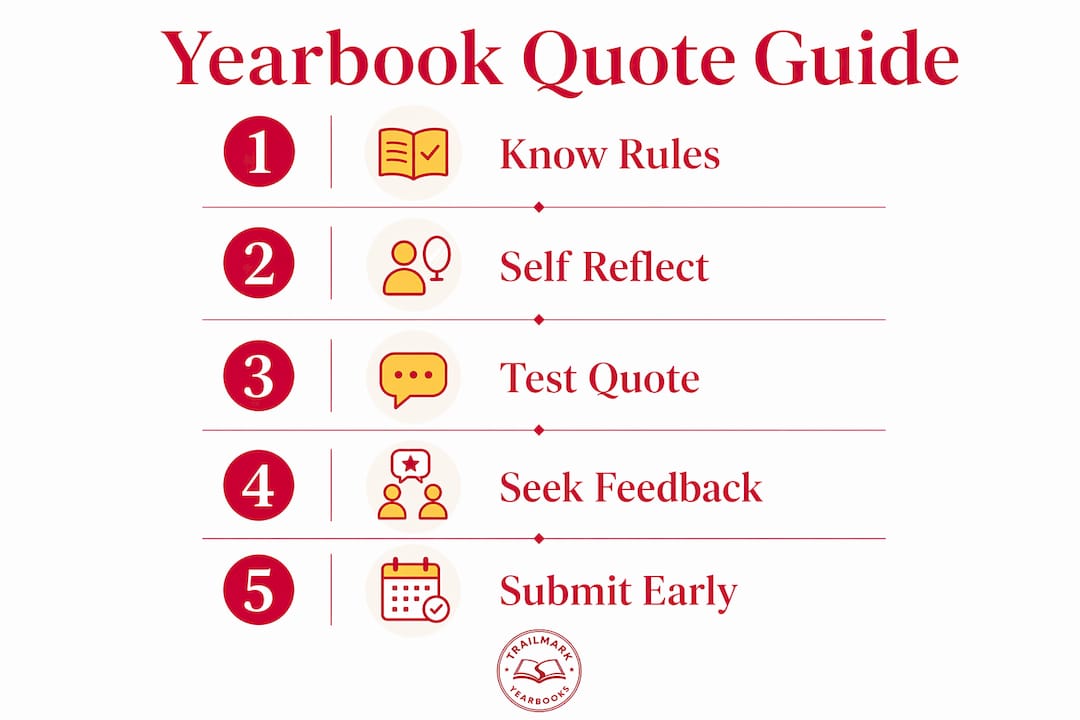
Start with self-reflection
Before you search for quotes online, ask yourself a few honest questions:
- What defined your high school experience?
- What values or beliefs shaped your decisions?
- What do you want classmates to remember about you?
- Is there a phrase, lyric, or line that has genuinely guided you?
- Does humor or sincerity feel more true to who you are?
Your answers point directly toward the right quote. Skipping this step is why so many students end up with generic quotes they regret.
Test your quote before you commit
Quotes that reflect genuine personality resonate better and age well compared to borrowed eloquence. Two simple tests help you verify this. First, read the quote aloud. If it sounds like something you would actually say, it passes. Second, try explaining why you chose it. If you cannot connect it to a real experience or belief, it is not the right quote.
Balancing humor and sincerity is also worth thinking through carefully. A funny quote works beautifully when it reflects your actual personality. It falls flat when it is chosen purely for shock value or because it seemed clever on a list. Lasting relevance is the standard. Ask yourself whether the quote will still feel right when you open that yearbook at age 30.
Original vs. famous quotes
Writing your own quote is underrated. An original line that captures your specific experience will always outperform a borrowed quote from a celebrity or philosopher. That said, famous quotes work well when they genuinely reflect your worldview and you attribute them correctly. The key is that the quote must feel like you, whether you wrote it or found it.
Pro Tip: Share your top two or three quote options with a parent, close friend, or trusted teacher. Their reaction tells you more than any internal debate will.
Senior year is also packed with experiences worth drawing from. If you are planning a senior class trip, those shared memories often spark the most authentic quote ideas.
What mistakes do students make when selecting a yearbook quote?
The most common mistake is choosing a quote without personal meaning. Students pick something that sounds impressive or funny in the moment, then feel disconnected from it by graduation day. A quote that does not connect to your actual life will feel hollow every time you see it.
Pitfalls to avoid
- Ignoring school guidelines: Quotes that violate content rules get rejected or edited without your input. Read the policy first.
- Missing the deadline: Most schools require submissions 2–3 months before graduation to allow time for review and proofing. Late submissions often get cut entirely.
- Choosing trending humor: Avoiding trending or "savage" humor is strongly recommended because yearbook quotes are permanent and will be read decades later. What feels edgy now often reads as embarrassing later.
- Skipping proofreading: Spelling errors, punctuation mistakes, and wrong attributions are among the most common causes of quote rejection or embarrassment.
- Submitting overly long quotes: A quote that exceeds the character limit will be cut off or rejected. Longer does not mean better.
- Using inside jokes: Jokes that only three people understand exclude everyone else and can come across as cliquish or even mean-spirited to readers outside the group.
Pro Tip: Run a final spell-check on your quote and double-check any attribution. If you are quoting a famous person, verify the exact wording and spelling of their name before submitting.
Yearbook advisers catch common design and content errors every year. Most of them are avoidable with a simple review before submission.
What is the process for submitting yearbook quotes?
Submitting a yearbook quote follows a clear sequence at most schools. Understanding each step reduces the chance of rejection and keeps you in control of your final entry.
- Get the guidelines. Obtain your school's official yearbook quote policy at the start of senior year. This document lists character limits, prohibited content, and the submission method.
- Draft your quote early. Give yourself several weeks to write, test, and refine your options. Rushing produces regret.
- Submit through the official channel. Most schools use online portals or paper forms. Submit exactly as instructed, including proper formatting and attribution if required.
- Follow up on approval. After submitting, confirm with your yearbook adviser that your quote was received and accepted. Do not assume silence means approval.
- Respond to change requests promptly. If an adviser flags your quote for revision, address it quickly. Delays can push you past the final deadline.
- Handle rejections calmly. If your quote is rejected, ask for the specific reason. Most rejections are fixable with a small revision or a replacement quote.
- Consider opting out if needed. Some schools provide opt-out options for seniors who prefer not to submit a quote. Choosing not to submit is a valid decision if no quote feels authentic.
- Avoid last-minute changes. Once your quote is approved, resist the urge to swap it out. Late changes create production errors and stress for the yearbook team.
The yearbook adviser's role in this process is significant. Advisers balance student expression with school policy, and working with them rather than around them makes the process smoother for everyone.
Graduating seniors planning a class trip in 2026 often find that the experiences they share during those final months become the inspiration for their most authentic quotes.
Key Takeaways
The best yearbook quotes are authentic, policy-compliant, and chosen early enough to allow for thoughtful revision and proper submission.
| Point | Details |
|---|---|
| Know the rules first | Most schools limit quotes to 75–150 characters and prohibit profanity, bullying, and inside jokes. |
| Authenticity beats cleverness | Quotes that reflect your real personality age better than borrowed or trending phrases. |
| Submit 2–3 months early | Late submissions are frequently rejected; early planning protects your spot in the yearbook. |
| Test before you commit | Read the quote aloud and explain why you chose it. If you cannot, keep looking. |
| Proofread everything | Spelling errors and wrong attributions are among the most common causes of rejection. |
What I have learned from watching students choose their yearbook quotes
The pressure students feel about this decision surprises me every time. It is one sentence, maybe two, and yet it carries the weight of an entire high school career. I understand why. That quote will sit in a physical book for the rest of your life, and people will read it at reunions, in attics, and on social media long after you have moved on.
Here is what I have come to believe after years of watching this process: the students who agonize the longest are usually the ones trying to sound profound rather than honest. The quotes that hold up are almost never the most clever ones. They are the ones that sound exactly like the person who wrote them.
I have also noticed that humor, when it is genuine, ages remarkably well. A quote that captures your actual sense of humor at 18 will make your 40-year-old self smile. A quote that was just edgy for the sake of it will make you cringe. The difference is whether the humor comes from your real personality or from wanting to impress people you barely know.
My honest advice: stop trying to write the perfect quote and start trying to write the true one. Those are rarely the same thing, and the true one is always better.
— Jace
How Trailmarkyearbooks helps your yearbook come together
Choosing the right quote is just one piece of a yearbook that your school will be proud of for years.

Trailmarkyearbooks works with elementary, middle, and high schools nationwide to make the entire yearbook process straightforward and affordable. With free design assistance, flexible tools including Canva and InDesign, and a team backed by 50+ years of combined experience, Trailmarkyearbooks makes sure every page, including the senior quote section, looks polished and professional. Schools receive transparent, all-inclusive pricing with no hidden fees and shipping included. If you want to see the quality before you commit, request a sample yearbook and experience the difference firsthand.
FAQ
What is yearbook quote selection?
Yearbook quote selection is the process where high school seniors choose a short statement, typically 75–150 characters, to be printed beneath their portrait in the school yearbook.
How long should a yearbook quote be?
Most schools limit quotes to 10–25 words or 75–150 characters. Staying within this range avoids formatting issues and increases the chance of approval.
What makes a good yearbook quote?
A good yearbook quote reflects your genuine personality, passes the reading-aloud test, and remains meaningful years after graduation. Authenticity consistently outperforms cleverness.
When should I submit my yearbook quote?
Submit your quote 2–3 months before graduation. Most schools finalize quotes by february to allow time for adviser review, proofing, and production.
What happens if my yearbook quote is rejected?
Ask your yearbook adviser for the specific reason. Most rejections involve content violations or formatting issues, both of which are fixable with a quick revision or a replacement quote.