

A yearbook parent communication plan is a structured system that coordinates timely, clear, and consistent messaging between schools and parents about yearbook activities, deadlines, and involvement opportunities. Without one, families miss deadlines, photos go unsubmitted, and yearbook advisers spend weeks chasing responses. Schools that separate their communication plan (what gets sent and when) from their family engagement plan (how parents actually participate) see measurably better results in both yearbook quality and parent satisfaction. Trailmarkyearbooks works with schools across the country and consistently finds that the families most satisfied with their yearbooks are the ones whose schools communicate with intention and structure from the start.
What is a yearbook parent communication plan and why does it matter?
A yearbook parent communication plan defines the goals, channels, timing, and responsibilities for every message a school sends to families about the yearbook. It is not just a calendar of reminders. It is a deliberate framework that answers three questions: Who needs to know what? When do they need to know it? How will the message reach them?
Schools with a formal communication plan plus a separate family engagement plan show better family involvement and satisfaction than those that treat both as the same thing. The distinction matters because communication is about information delivery, while engagement is about participation. Treating them as one muddled concept leads to messages that inform nobody and motivate nobody.

For parents, understanding this distinction is equally useful. When you know a school has a clear plan, you know where to look for information, when to expect updates, and how to respond. That clarity reduces the anxiety that comes from wondering whether you missed something important.
Setting goals your family can act on
The best plans set measurable outcomes, not vague intentions. "Keep parents informed" is not a goal. "Collect photo submissions from 80% of families by march 15" is a goal. When schools share these specific targets with parents, families understand exactly what is expected of them and by when.
What channels and tools work best for yearbook parent communication?
The most effective communication systems use one authoritative source and point every other channel back to it. A centralized school hub or newsletter serves as the single source of truth, while text alerts and social posts simply direct parents to that hub. This approach eliminates conflicting information and reduces the workload on both staff and families.
The table below compares the most common channels schools use to reach parents about yearbook activities.
| Channel | Best use | Limitation |
|---|---|---|
| Weekly email digest | Routine updates, deadlines, photo reminders | Requires parents to open and read |
| Text or app alert | Urgent notices, last-minute deadline reminders | Overuse causes parents to tune out |
| School website hub | Permanent reference for forms, dates, and FAQs | Parents must know to check it |
| Social media posts | Community excitement, photo spotlights | Algorithm limits who sees each post |
| Printed flyer | Families with limited digital access | Easily lost, hard to update |
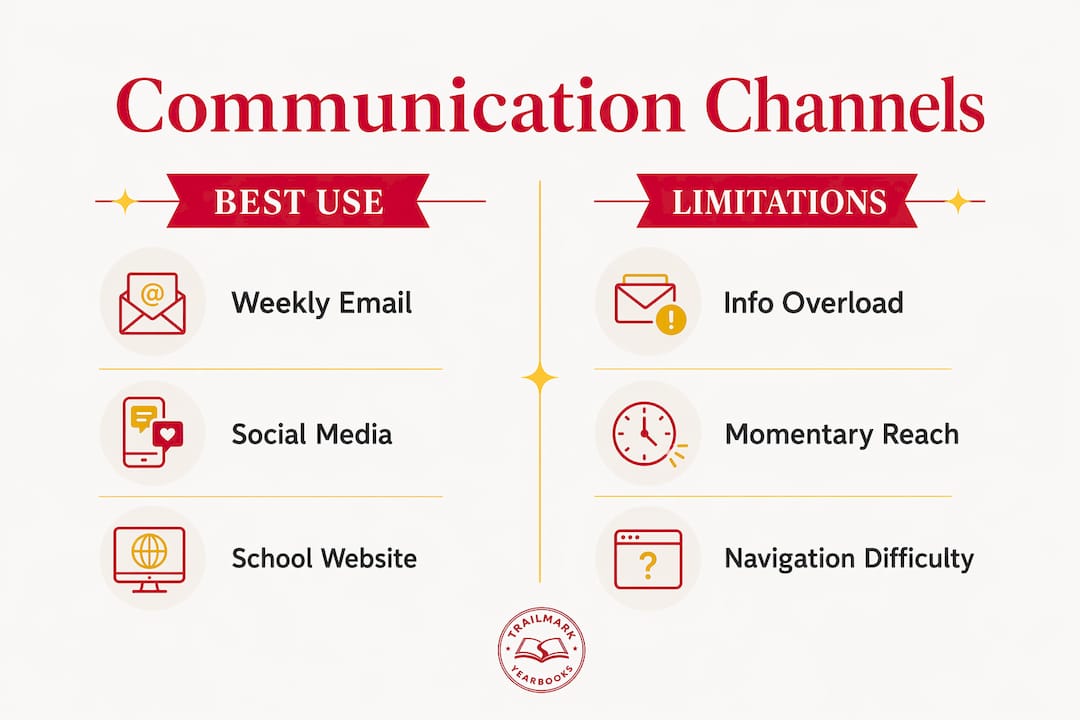
A predictable weekly digest sent on Sunday evenings outperforms sporadic multi-channel blasts. Parents build a habit around it. They know to look for it, and they trust that anything urgent will stand out from the routine content.
Pro Tip: Ask the yearbook adviser to label messages clearly as "Routine Update" or "Action Required" in the subject line. That one change alone cuts the number of missed deadlines significantly.
Accessibility matters as much as channel choice. Schools should offer messages in the primary languages spoken by their families. A digital intake form collected in the first week of school captures each family's preferred contact method, best time to reach them, and language preference. That data personalizes every message that follows and increases the rate at which parents actually respond.
Understanding how parent outreach evolves across different school milestones also helps families recognize which communication patterns to expect and how to engage with them productively.
How can parents actively participate in yearbook planning?
Parent participation is the engine that drives yearbook quality. Active parent involvement in photo submissions, proofreading, and planning meetings directly improves the content and community pride reflected in the final book. The good news is that participation does not require a large time commitment. Small, specific contributions add up fast.
Here are the most effective ways parents can get involved:
-
Submit contact preferences early. Fill out the school's communication intake form in the first week. Specify your preferred channel, best contact time, and language. This one step ensures you never miss a critical update.
-
Contribute photos on a schedule. Mark the photo submission deadlines on your calendar the moment the school shares them. Organize your photos by event or date before uploading so the yearbook team can use them without extra sorting work.
-
Volunteer for proofreading. Yearbook advisers welcome a second set of eyes on captions, names, and dates. A one-hour proofreading session from a parent catches errors that staff members, who are too close to the material, often miss.
-
Use online ordering tools. Online yearbook preorder tools simplify payment and ordering, reducing stress and administrative follow-ups for everyone involved. Platforms with secure online ordering send automatic confirmations so parents never wonder whether their order went through.
-
Attend one planning meeting. Even a single meeting gives parents a clear picture of the timeline, the team's goals, and where help is most needed. That context makes every future communication from the school more meaningful.
-
Communicate respectfully with advisers. When you have a question or concern, email the adviser directly rather than posting publicly. Keep messages specific and solution-focused. Advisers respond faster to clear, concise requests than to general complaints.
Pro Tip: Set a phone reminder two days before each yearbook deadline the school shares. That buffer gives you time to gather materials without rushing.
For parents at the elementary level, the elementary school yearbook planning guide from Trailmarkyearbooks outlines the specific milestones where parent input makes the biggest difference.
What common pitfalls should parents watch for in yearbook communication?
The most common failure in school yearbook communication is sporadic, multi-channel messaging that creates information overload without a clear call to action. Parents receive a text, then an email, then a flyer, each saying something slightly different. The result is confusion, inaction, and missed deadlines.
Watch for these specific warning signs:
- Inconsistent timelines. If the school announces one deadline in an email and a different date on the website, ask the adviser which is correct and request a correction to the other source.
- No clear sender. Messages that come from a generic school address with no named contact make it impossible for parents to ask follow-up questions. A named adviser or coordinator builds accountability.
- Urgent alerts for routine items. When schools label every message as urgent, parents stop treating any message as urgent. Schools that predefine urgent message criteria minimize overwhelm and preserve parent attention for genuine safety or deadline issues.
- No response to parent questions. If you send a question and hear nothing within three school days, follow up once by phone. If there is still no response, contact the school's main office and ask them to route your question to the right person.
"The most common mistake is sporadic multi-channel messages causing information overload and missed calls to action. A single, predictable communication rhythm solves most parent engagement problems before they start."
Proactive dialogue is always more productive than reactive frustration. If you notice a communication gap, name it specifically and suggest a fix. Advisers and school staff respond well to parents who come with solutions, not just complaints. The school yearbook policy best practices resource from Trailmarkyearbooks gives advisers a framework for exactly this kind of structured, accountable communication.
Key Takeaways
A yearbook parent communication plan works best when it combines a predictable weekly digest, a single authoritative information source, early collection of parent preferences, and clearly defined participation roles.
| Point | Details |
|---|---|
| Define the plan clearly | Separate communication (what gets sent) from engagement (how parents participate). |
| Use one central source | Point all channels back to one hub to eliminate conflicting information. |
| Collect preferences early | Gather contact method, timing, and language preferences in the first week of school. |
| Participate specifically | Submit photos, proofread, and attend one meeting rather than trying to do everything. |
| Name and fix pitfalls | Identify inconsistent messaging early and bring specific solutions to the adviser. |
Why predictable communication changes everything for yearbook families
I have spent years watching schools struggle with parent engagement, and the pattern is almost always the same. The schools that get it right are not the ones with the fanciest apps or the most social media posts. They are the ones that pick a rhythm and stick to it.
A Sunday evening digest sounds almost too simple to matter. But when parents know that every Sunday at 7:00 PM they will get one clear email covering everything they need to know for the week, something shifts. They stop feeling like they are chasing information. They start feeling like partners.
The other thing I have seen make a real difference is when schools are honest about roles. Parents do not need to know every detail of the production process. They need to know what is expected of them, by when, and who to contact with questions. That clarity alone cuts adviser stress in half and doubles parent follow-through.
My honest recommendation: if your child's school does not have a named yearbook communication contact, ask for one. Not a committee. One person. Accountability lives with a name, not a group.
The schools that treat parent communication as an afterthought produce yearbooks that feel like afterthoughts. The ones that plan it with the same care they give to layout and photography produce books that families keep for decades.
— Jace
How Trailmarkyearbooks supports schools and families
Trailmarkyearbooks makes the production side of yearbooks straightforward so schools can focus on communication and community rather than logistics. With a 2–3 week turnaround, all-inclusive transparent pricing, and free design assistance, the production process does not add stress to an already full school calendar.
Parents who want to evaluate quality before their school commits can request a free sample directly from Trailmarkyearbooks. The sample gives families a clear picture of paper quality, print clarity, and binding before a single order is placed. Schools looking for a fuller picture of available yearbook production services can browse options online with no signup required. For schools that also need photography support, Trailmarkyearbooks offers school photography studios as a complementary service.
FAQ
What is a yearbook parent communication plan?
A yearbook parent communication plan is a structured system that defines how, when, and through which channels a school communicates with families about yearbook deadlines, participation opportunities, and ordering. It separates routine updates from urgent alerts to keep parents informed without overwhelming them.
How often should schools communicate with parents about the yearbook?
A weekly digest sent at a consistent time, such as Sunday evening, is the most effective cadence. It builds a predictable habit for parents and reduces the need for last-minute urgent messages.
What should parents do if they miss a yearbook deadline?
Contact the yearbook adviser directly by email as soon as you realize the deadline has passed. Many advisers can accommodate late submissions for photos or orders if notified promptly, especially early in the production cycle.
How can parents make sure they receive all yearbook communications?
Fill out the school's contact preference form at the start of the year and specify your preferred channel, language, and best contact time. Check that the school has your current email address and phone number on file.
What is the difference between a communication plan and an engagement plan?
A communication plan covers the timing, format, and frequency of messages sent to parents. An engagement plan defines how families actively participate, such as submitting photos, volunteering, or attending meetings. Both are needed for a successful yearbook program.