
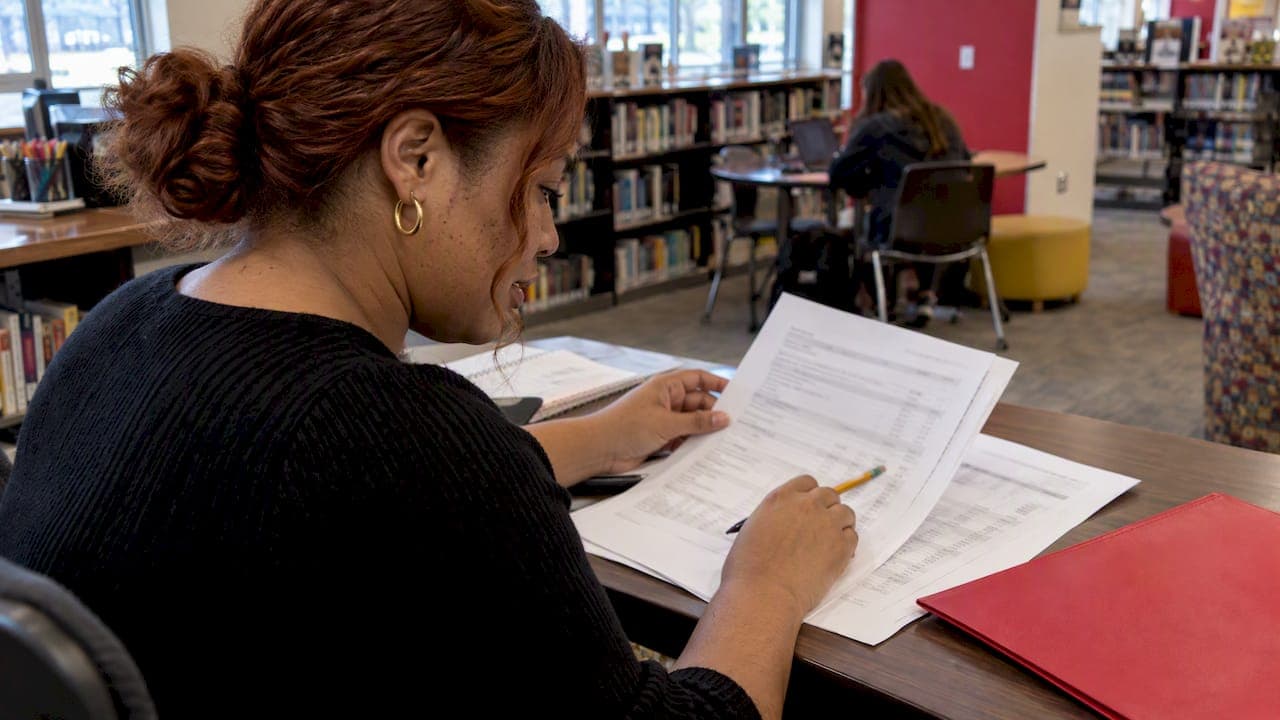
Transparent yearbook pricing means you can see the full cost of your book before you talk to anyone: the per-book price, every upgrade, shipping, and any fee for corrections or late files, all written down in one place. If a quote makes you guess at any of those, it is not transparent yet. This guide shows what a clear quote contains, which charges tend to show up late, and how to compare quotes so your yearbook budget holds from the first proof to the last box delivered.
TL;DR
- A transparent quote itemizes everything: base book, cover and binding choices, add-ons, corrections, shipping and any penalty for missed deadlines.
- Per-book cost is driven by page count, cover type, color pages and quantity. Premium finishes are where budgets usually drift.
- Ask for a price you can get online without signing up or sitting through a sales call, then check it against your own page and copy estimate.
- Review your yearbook budget with your principal and finance office at least monthly, and plan income beyond book sales.
- At TrailMark, you get instant all-inclusive pricing online, with no signup, no sales pitch and no hidden fees.
Table of Contents
- What transparent pricing actually means
- What a clear yearbook quote should include
- Where hidden costs usually come from
- What drives the per-book price
- A worked example with TrailMark's published add-on fees
- Perspective: why we publish prices the way we do
- How to compare yearbook quotes side by side
- Turning a clear quote into a workable budget
- Keeping the schedule from becoming a cost
- See your price with TrailMark
- FAQ
- Sources
What transparent pricing actually means
The phrase gets used loosely, so here is a working definition an adviser can test. A price is transparent when:
- You can see it without handing over contact details or booking a call.
- It covers the whole book, not just the printing, and says what is in and what is out.
- Optional items carry their own price tags, so you can decide on each one.
- Nothing in the contract can add cost later without you choosing it.
That last point matters most. School purchasing offices already know what a good price schedule looks like. A public school-district pricing schedule for yearbook services, issued in Virginia, asks vendors for itemized costs for services, including application support, sales programs, corrections and missed deadlines. In other words, the buyers who write these contracts expect the awkward line items to be on paper, not discovered in March.
You do not need a procurement department to borrow that standard. Use it as a checklist whenever a vendor sends you a quote.
What a clear yearbook quote should include
Open any quote you receive and look for each of these. If one is missing, ask about it in writing.
The base book
The base price should state the trim size, page count, paper, interior color or black and white, cover type and the quantity the price is based on. A price quoted for 300 books is not the price for 120.
Cover and binding choices
Cover type is the first big lever. Soft cover, hard cover and sewn binding are different products with different prices, and a quote should show each as a clear line rather than burying them in an average.
Finishes and extras
Foil stamping, spot UV, printed endsheets, inside-cover printing and personalized covers are the classic budget stretchers. Premium upgrades such as foil stamping, embossing or laminated covers can add roughly $5 to $15 per unit to the base cost, according to one 2026 industry estimate. That is a wide range, which is exactly why each finish should be priced separately in your quote.
Proofs, corrections and reprints
Ask what happens when you find a mistake after submitting pages, and what a printed proof costs. Also ask how reprints work if you under-order. A vendor that prints on demand can make this painless; one with fixed press runs can make it expensive.
Shipping and delivery
Shipping is a common surprise. One 2026 estimate puts it at $2 to $5 per book, depending on location and delivery method. For 400 books, that is the difference between an $800 and a $2,000 line, so the quote has to say whether freight is already in the price.
Deadlines and penalties
The schedule above specifically calls out missed deadlines as something to price. If a vendor charges rush fees or loses your production slot when you run late, you want to know before the school year gets busy.
Tax
Whether sales tax applies depends on your state and your contract. Our guide to yearbook sales tax for school advisers walks through what to check in the paperwork.
Where hidden costs usually come from
Most surprise charges fall into a few families. None is shady on its own. They only become a problem when they appear after you have committed.
| Common surprise | What to ask |
|---|---|
| Freight and handling | Is delivery to the school included in the quoted price? |
| Setup fees for small orders | Is there a minimum, and what happens below it? |
| Premium covers | Is each finish priced per book, with a clear total? |
| Correction or resubmission fees | How many rounds of changes are included? |
| Late or missed deadlines | What does a late file cost, and can the date move? |
| Design or support help | Is it free, optional or required? |
| Software or platform fees | Does your staff need paid tools to build the book? |
Parents feel these too. Our piece on types of yearbook hidden fees covers how they surface for families, and why a clear sticker price makes your sales conversations easier.
What drives the per-book price
Transparent pricing is easier to evaluate when you know what moves the number. Per-book cost depends on page count, cover quality, color versus black-and-white pages, and quantity. The same source puts the typical base cost of a printed U.S. yearbook at $25 to $60. Treat that as a broad industry range rather than a quote: your own book will land according to its specs.
Page count
Every extra signature of pages adds paper, ink and binding time. Decide your page budget early, then plan spreads to fit it. Adding 16 pages in April because a club sent late photos is a budget decision, not just a design one.
Quantity
Higher quantities generally lower the average cost per book. The district pricing schedule mentioned above shows a lower average cost per book at higher quantities. That cuts both ways for smaller schools. If your enrollment is modest, read our budget guide on why school size affects yearbook pricing, and use the quantity ordering checklist so you do not guess your print run.
Cover and finish
Cover choice is the lever advisers control most. A simple perfect-bound soft cover and a hard cover with printed endsheets and foil can sit a few dollars apart per book, and across a few hundred copies that gap becomes a real line in your budget.
Color
Full-color interiors cost more than black and white. Many schools mix them, with color on the most photo-heavy sections. Ask whether your quote allows that, and whether it changes the price.
A worked example with TrailMark's published add-on fees
We publish the cost of our add-ons so you can build a quote line by line. The base price for your school comes from the instant online quote, because it depends on your specs. The options below are listed per book on our printing page:
| Option | Price |
|---|---|
| Perfect bound soft cover | $1.60 per book |
| 150 point board (hard cover) | $1.50 per book |
| Smyth sewn binding | $2.00 per book |
| Printed endsheets (hard cover) | $2.75 per book |
| Inside cover (duplex) printing, soft cover or saddle-stitched | $0.40 per book |
| Flat foil stamp or spot UV | $4.25 per book |
| Personalized covers | $3.00 to $6.00 per book |
| Split binding | $100 |
| Printed proof books, litho only, 2 copies, shipping included | $100 |
| Recognition ads | $5 per ad |
| Lovelines | $1 each |
Here is how an adviser might use that table. Say you plan a hard cover with printed endsheets and a foil stamp for 300 books. The three options add $1.50 + $2.75 + $4.25 = $8.50 per book on top of your base price, or $2,550 across the run. If the foil stamp is the one thing pushing you over budget, dropping it saves $4.25 per book, or $1,275. You can see that trade-off in two minutes with a calculator, without asking anyone.
That is what transparent means in practice: the decision stays with you, and the arithmetic is yours to check.

Perspective: why we publish prices the way we do
We hear the same story from advisers. They ask three vendors for pricing, two want a call first, and the third sends a PDF with a footnote that quietly changes the total. By the time they compare, they have spent a week and still cannot tell which quote is lowest.

So we built TrailMark around the opposite approach. Schools get an instant, all-inclusive price online, with no signup and no sales pitch, and shipping included. There are no order minimums and no submission deadlines, and turnaround is typically two to three weeks. Our team brings more than 50 years of combined experience, and it shows in how we handle questions: we would rather answer one honest question on day one than explain a surprise charge in April.
Our view is simple. An adviser is already managing photographers, student staff, club coverage and a principal who wants a number. The printer's price should be the one thing that does not need managing. If you can read the quote, rebuild it on a calculator and get the same total, we have done our job.
— Jace
How to compare yearbook quotes side by side
Once you have two or three quotes, put them into the same frame. Here is a process that takes about an hour.
- Fix your specs. Write down trim size, page count, cover type, color plan and quantity. Ask every vendor to price exactly that.
- List every line item. Put each vendor's charges into one spreadsheet: base book, cover, finishes, proofs, shipping, setup, corrections.
- Price the extras you actually want. Do not compare a bare book from one vendor against a loaded book from another.
- Add the contingencies. Include a realistic estimate for corrections, a reprint run and any late-file fee.
- Divide by books. Convert each total to a cost per book so you can compare against your selling price.
- Read the terms. Look for minimums, deadlines, auto-renewing contracts and what happens if enrollment changes.
For the printed-book side, our risk management checklist for yearbook printing covers the contract and production questions worth settling before you sign.
Turning a clear quote into a workable budget
A transparent price is the start of a budget, not the whole thing. Montgomery County Public Schools' yearbook financial guidance tells advisers to review the cost plan with the principal and finance office at least monthly, request an itemized vendor budget, focus on pre-sales and look for income from businesses and advertisements. The same guidance says yearbook prices should be kept in line with costs.
That translates into a simple routine:
- Start from cost per book. Take the quote total and divide by the number of books you expect to print.
- Set the selling price. Add a margin for the unexpected, then compare it against what families in your community can reasonably pay.
- Count other income. Ads, sponsorships and extras can offset production costs, which is how many programs keep the book affordable.
- Review monthly. Compare actual sales and spending to the plan while you can still change the page count or push a sales campaign.
Total cost goes beyond the printer's invoice, too. One industry analysis notes that indirect expenses such as staff stipends and software belong in a full view of the program. Add them to your plan so the printing price is not mistaken for the whole program cost.
For more depth, see our 2026 school yearbook budget planning guide, and the break-even worksheet for setting a selling price and timing your orders.
What families are charged
Public order pages show how this ends up in front of parents. One Pennsylvania district lists 2025–2026 prices of $46.40 for softcover and $53.99 for hardcover, with tax included, while senior advertisements are an extra cost paid by parents. Notice what makes that page useful: tax is stated, formats are separated, and the add-on is labeled. It is the same transparency you should ask for from your printer, passed on to families. For a wider look at what schools and families pay, read our overview of school yearbook cost in the USA.
Keeping the schedule from becoming a cost
Deadlines are a pricing issue as much as a planning one, because late files can trigger rush charges or missed production slots with some vendors. If you want a plan that protects both schedule and budget, use our yearbook deadline management checklist. With TrailMark there are no order deadlines to miss, and printing takes two to three weeks, so a late spread does not have to turn into a penalty.
See your price with TrailMark
If you would like to test everything above against a real number, you can. TrailMark gives elementary, middle and high schools an instant, all-inclusive price online, without a signup or a sales call. You choose how to build the book: our online creator, Canva or Adobe InDesign. Free design assistance is available, and optional full-service design is there if your team is stretched thin. Middle schools and K-8 programs can look at the options for designing your own yearbook or having us create it, and you can browse the full list of printing options before you ask for a quote.
Want to hold the paper first? You can request a sample and judge the cover and binding yourself. Or start on the TrailMark home page and get your price in minutes.
FAQ
Is there a standard price for a school yearbook?
No. Cost depends on page count, cover type, color pages, finishes and quantity, so two schools can pay very different amounts. One 2026 industry estimate puts the base cost of a printed U.S. yearbook between $25 and $60, but your own quote is the only number that matters. Get one using your actual specs.
What should I ask a vendor before I sign?
Ask for a written, itemized quote that covers the base book, every upgrade, shipping, corrections and any deadline penalties. Then ask about minimum quantities, reprints and how long the price is valid. If any answer is vague, ask for it in the contract, not in an email.
Does shipping come with the price?
It depends on the vendor, and it can add $2 to $5 per book when it is charged separately. At TrailMark, shipping is included in the instant all-inclusive price. Whichever vendor you choose, confirm in the quote how delivery to your school is handled.
How often should I review my yearbook budget?
Monthly at a minimum. District guidance for advisers recommends reviewing the cost plan with your principal and finance office at least once a month, so you can adjust pre-sales efforts, page count or ad sales while there is still time.
Can a small school get fair pricing?
Yes, but ask about setup fees and minimums up front, since some vendors charge extra below a certain quantity. TrailMark has no order minimums, and you can see your price online before you decide anything.
Sources
- Yearbook Services pricing schedule, Fauquier County Public Schools contract
- Order your Yearbook!, Allegheny-Clarion Valley School District
- Yearbook Financial Management, Montgomery County Public Schools
- Digital Yearbook vs Printed Yearbook: Complete Cost Comparison, Best Touchscreen