
Run an early-bird price with a firm deadline, open online ordering, promote cover and page sneak-peeks on social media, target last year's buyers directly, and keep one merged sales log for every order that comes in. Advisers who run all five typically see faster early sales and far fewer cash-handling headaches at distribution time.
TL;DR:
- Running an early-bird price with a clear deadline and a $5 to $10 price jump significantly encourages prompt orders and increases early sales.
- Online ordering platforms that generate automatic receipts and export clean reports reduce errors and speed up the reconciliation process at distribution time.
- Marketing strategies like social media sneak-peeks with deadlines and in-school activations effectively create anticipation and boost order volume.
- Securing ad sales and offering scholarships decrease the final cost for families, making the yearbook a more accessible purchase and increasing overall revenue.
- Tracking sales percentages, early-bird conversion rates, and last year's buyer data helps set realistic goals and guides targeted marketing efforts.
Table of Contents
- How Do You Sell More Yearbooks? Start With These 8 Tactics
- Which Marketing Channels Actually Move Yearbook Sales?
- What Pricing Tiers and Incentives Actually Increase Orders?
- Why Online Ordering Reduces Errors and Speeds Up Sales
- How Ad Sales and Fundraising Lower the Price Per Book
- Which Deadlines Actually Matter for Yearbook Orders?
- How to Keep Your Sales Log Clean Through Distribution Day
- Who Else Can You Sell Yearbooks To Besides Students?
- What Metrics Should You Track to Improve Next Year's Sales?
- How TrailMark Yearbooks Supports Your Sales Push
- How Do You Set a Realistic Yearbook Sales Goal?
- A Cover Reveal Turned Into the Best Sales Day We've Seen
- Sources
How Do You Sell More Yearbooks? Start With These 8 Tactics
Run these in roughly this order across the school year. Each one builds on the last.
- Set early-bird pricing with a real deadline. A price that jumps by even $5 after a set date pushes procrastinators to act now instead of in May.
- Open online ordering immediately and share the link everywhere. Put it in the morning announcements, the school newsletter, and every flyer you print.
- Post cover and page sneak-peeks on social media. A blurred cover reveal or a countdown graphic creates the kind of anticipation adviser communities have used for years to move copies fast, according to adviser-tested tactics.
- Run in-school activations. Locker notes, assembly shout-outs, and a table at the first home game all work.
- Attach a small incentive or contest to early orders. A raffle entry per early purchase costs you nothing but a little planning.
- Sell ads and offer book scholarships. Every ad dollar you bring in lowers what families actually pay.
- Keep one merged sales log. Every payment, online or cash, lands in the same spreadsheet the same week.
- Target last year's buyers and families of frequently featured students. A coverage report tells you exactly who that is.
Which Marketing Channels Actually Move Yearbook Sales?
Different platforms do different jobs, and matching the message to the medium matters more than posting volume. Pew Research finds social media use among U.S. adults is widespread enough that parents are almost certainly already scrolling wherever you post.
- TikTok: short, behind-the-scenes clips of the yearbook staff working the room at a game or pep rally.
- Instagram: the cover reveal and senior-page previews, timed to build a countdown feel, a tactic Canva's yearbook marketing guide recommends as one of the strongest ways to build urgency.
- Facebook and email: longer posts for parents, with the ordering link and deadline spelled out plainly.
- In-school: posters by the cafeteria line, morning announcement mentions twice a week, locker notes before big deadlines, and assembly shout-outs.
- Event tables: staff a simple table at games, open house, and parent conferences with both a card reader and a cash box.
Pro Tip: Write your sneak-peek captions with a deadline baked in, like "Cover drops Friday. Early-bird pricing ends Sunday." Pairing a reveal with a countdown does more work than either one alone.
What Pricing Tiers and Incentives Actually Increase Orders?
Three tiers work better than two: an early-bird rate through the fall, a standard rate through winter, and a final rate that closes a couple of weeks before your order-count deadline. Keep the jump between tiers noticeable enough to matter, usually $5 to $10.
- Bundle name personalization into the base price rather than pricing it separately. It confuses fewer buyers and rarely costs you much per book.
- Run low-cost incentives tied to early orders: a raffle for a free copy, an ice cream party for the grade with the highest percentage sold, or a locker surprise for early buyers.
- Offer "adopt-a-student" scholarships funded by ad sales or a booster club, so families who can't pay full price still get a book.
- Check your break-even numbers before locking any tier so incentives don't eat your margin.
Why Online Ordering Reduces Errors and Speeds Up Sales
A solid online platform should capture the buyer's name, offer personalization options at checkout, generate an automatic receipt, and export a clean report you can hand your bookkeeper. Those four features alone eliminate most of the "did we get paid for this?" scrambling that eats an adviser's spring.
Online ordering also cuts the amount of cash moving through the building, which platform guides for yearbook sales point to as one of the biggest reconciliation benefits for schools. Advisers still selling in person need to add those names into the online list weekly, not at the end of the year, so nobody buys twice.
- Enable exportable order reports from day one.
- Merge in-person sales into the master list every week, same day, same person responsible.
- Review the Student Privacy Pledge with your school before collecting names or photos through any platform.
Roughly seven in ten U.S. adults use at least one social platform, which is exactly why the online order link belongs in every post, not just the school newsletter.
How Ad Sales and Fundraising Lower the Price Per Book
Ad sales fund scholarships and shrink what families pay out of pocket, which turns your yearbook from an optional purchase into an easier yes.
- Build a simple outreach timeline: local business letters in September, follow-up calls in October, ad proofs due by November.
- Offer businesses a full page, half page, or "adopt-a-student" sponsorship that pays for one family's book directly.
- Treat ad buyers as promotional partners too. A local shop that buys an ad will often post about it, which is free reach.
- Borrow campaign structure ideas from other school fundraising models, including student travel fundraising strategies, which run on a similar sponsor-outreach timeline.
Full breakdowns of ad pricing and scholarship math live in this yearbook fundraising guide.
Which Deadlines Actually Matter for Yearbook Orders?
- Order-count deadline sets your print quantity. Miss it and you risk running short, since reprints take time.
- Personalization cutoff locks in names on covers. This date usually falls before the order-count deadline, not after.
- Payment policy in the final weeks should push toward online and card payments only. Stop accepting checks once you're two weeks out.
- Never sell on distribution morning. Keep a small buffer stock instead, and coordinate both deadlines with your publisher and bookkeeper before you announce them. The quantity ordering checklist walks through how to set that buffer.
How to Keep Your Sales Log Clean Through Distribution Day
Track name, grade, payment type, date, and a personalization flag for every single order, no exceptions.
- Use duplicate receipts for every cash sale and reconcile with the school finance office weekly, not annually.
- On distribution day, assign volunteers to check-in, name lookup, handout, and reconciliation as four separate jobs.
- Map tables by grade or homeroom so the line moves instead of bottlenecking at one table.
- Run a final reconciliation within 48 hours while memories of who paid what are still fresh.
Who Else Can You Sell Yearbooks To Besides Students?
Staff, grandparents, alumni, and local libraries are buyers most schools never ask.
- Reach staff through an internal email list, grandparents through a mailed flyer, and alumni through booster club contacts.
- Offer non-student buyers a no-personalization option with pickup or shipping, since they aren't tied to a homeroom.
- Try this: "Support our seniors, order a copy for pickup by [date], no student ID needed." A single community email plus a gameday table reliably adds sales most advisers otherwise leave on the table.
What Metrics Should You Track to Improve Next Year's Sales?
Track the percent of the student body that bought a book, your early-bird conversion rate, and ad revenue per book printed.
- Run two small experiments: test one sneak-peek caption against another, and test an incentive month against a no-incentive month.
- Use last year's coverage reports to find students who appear often in photos. Their families buy at a higher rate, and a targeted email to them usually outperforms a general blast.
How TrailMark Yearbooks Supports Your Sales Push
Fast production timelines give you real flexibility in how you sell. A typical 2 to 3 week turnaround and instant all-inclusive pricing mean you can advertise a genuine late-order window without gambling on your print schedule.
- Cite the turnaround time directly in late-order announcements: "Order by [date] and your book still ships before summer."
- Design assistance means a small staff can run sneak-peeks and sales at the same time without falling behind on layout.
- Point administrators or your bookkeeper to instant pricing or request a sample before locking your budget.
How Do You Set a Realistic Yearbook Sales Goal?
Base your goal on last year's actual numbers, not a hopeful round figure. Big jumps almost never happen in one cycle, and setting an unrealistic target just discourages the staff running the campaign.
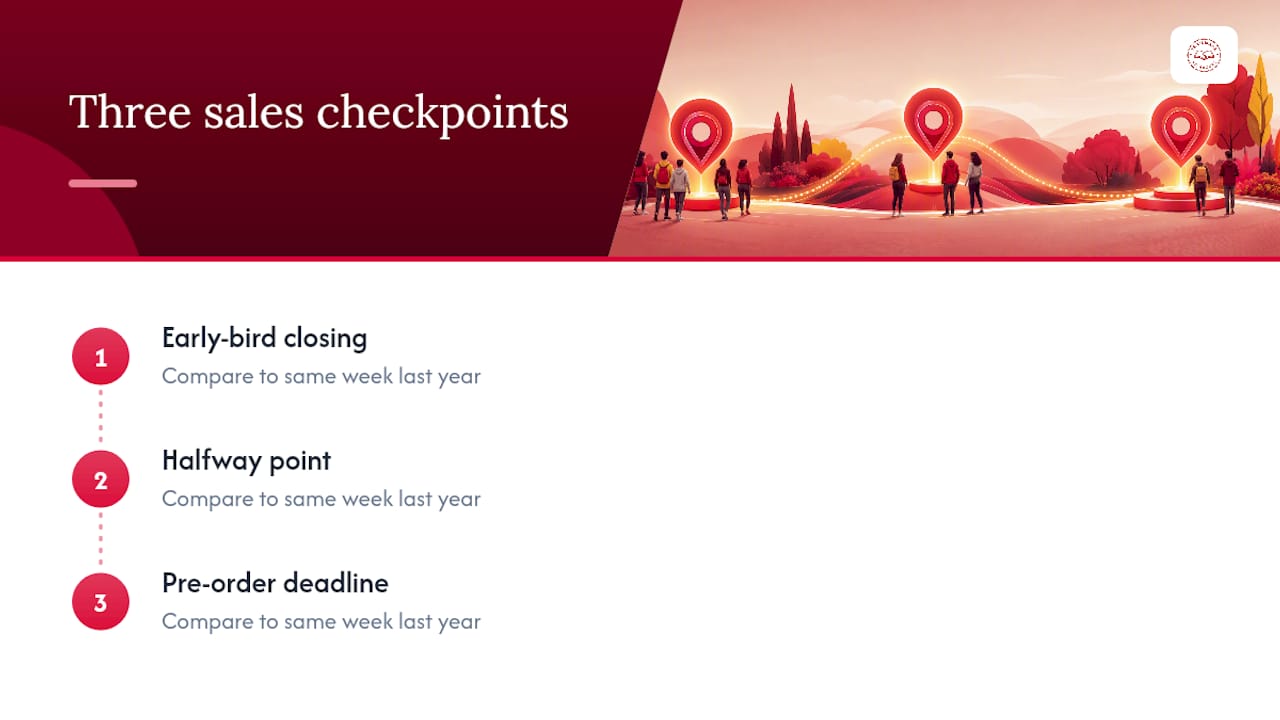
Break the big number into small checkpoints instead of watching one final total. Set a target for the early-bird window closing, a second target at the halfway point of the school year, and a third a few weeks before your order-count deadline. Compare each checkpoint against the same week last year, not against your final goal, so you catch a slow start early enough to fix it.
Administrative validation helps more than most advisers expect. A principal's mention in a summer mailer or a line in the first school newsletter frames the yearbook as standard school practice rather than an optional extra, and that framing alone tends to lift early participation.
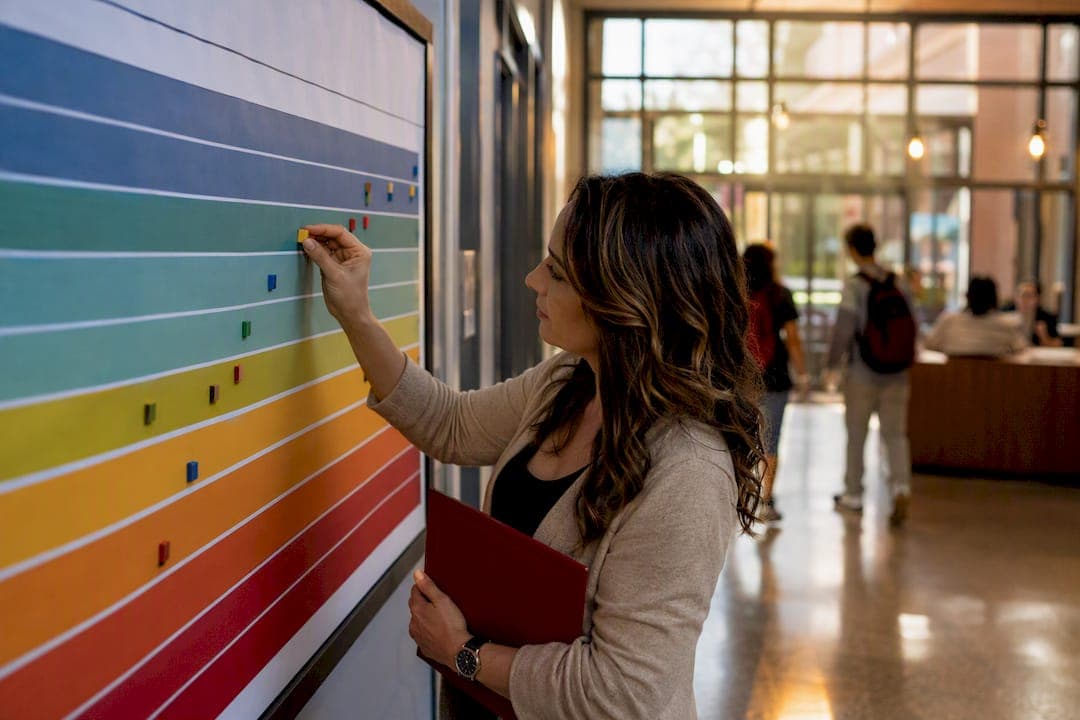
Post progress somewhere visible, even something as simple as a paper thermometer chart by the front office. Update it weekly. Seeing the number move in public does more to motivate a sales push among students and staff than a private spreadsheet ever will, and it gives your ad-sales committee a natural reason to check in.
If a checkpoint comes in low, don't wait for the next one to react. Send a targeted reminder to the segment most likely to still buy, whether that's a specific grade, a sports team, or last year's buyers who haven't reordered, and adjust your next incentive accordingly.
A Cover Reveal Turned Into the Best Sales Day We've Seen
The strongest activation I've heard advisers describe again and again is simple: reveal the cover at lunch, tied to an ice cream cart, right when early-bird pricing is about to close. Students line up for ice cream and walk past the order table on the way out. Run it the week before your early-bird deadline, not after, and let the treat do the work the sales pitch usually has to do alone.
— Jace
Sources
- How to Sell the Yearbook: Everything Advisers Need to Know
- Ultimate guide: yearbook marketing to make your yearbook sell
- Social Media Fact Sheet
- Student Privacy Pledge