

Ad sales, scratch card campaigns, and presales with product add-ons consistently raise the most money for the least staff effort, and they should anchor your fundraising plan before anything else. Ad sales bring in the biggest checks because businesses and families buy space, not products. Scratch cards work because they reach every family in the building at once. Presales lock in revenue early enough to guide your print order. The ranked list below covers eleven more ways to close the gap.
TL;DR:
- Ad sales should be prioritized early fall through winter with student teams cold calling businesses and offering premium rates for full-page ads.
- Scratch card and donation campaigns are low effort, cost-effective options reaching every household, with best results when cards are sent home with clear info on their purpose.
- Presales and early-bird sales in September and October enable accurate print forecasting and maximize margins without upfront costs, with a secondary push in January or February.
- Running campaigns too late or overordering inventory often leads to missed deadlines and unsold stock, emphasizing the importance of timing and realistic sales estimates.
- Selecting vendor partners requires careful vetting of minimum orders, shipping costs, personalization lead times, and transparency to prevent costly surprises and delays.
Table of Contents
- Yearbook Fundraising Ideas Ranked by Effort and Payoff
- How to Choose Which Fundraiser Fits Your Program
- When to Run Each Campaign for Maximum Return
- TrailMark's Practical Tips for Advisers Running Fundraisers
- Turning Each Idea Into an Actual Campaign
- Building a Volunteer Team That Actually Shows Up
- Mistakes That Quietly Sink a Fundraiser
- How to Pitch Local Businesses for Ad Sales and Sponsorships
- A Practitioner's Take on Getting Started
- TrailMark: A Simpler Next Step Once the Money's Raised
- Where to Go Next
- Sources
Yearbook Fundraising Ideas Ranked by Effort and Payoff
Not every fundraiser deserves equal attention. Some take one email and a spreadsheet; others need a committee, a truck, and three weeks of planning. Here's how the most reliable options stack up, ranked roughly by return relative to the work involved.
1. Business and family ad sales
This is the single biggest revenue line for most yearbook budgets, and top yearbook fundraising guides consistently rank it as the most profitable option available to school programs. Sell quarter, half, and full-page packages, with a premium tier for a personalized senior tribute ad. Price the full page highest and let local businesses sponsor a spread in exchange for a logo and a short message.

Effort: medium. Profitability: high. Upfront cost: none. Best timing: early fall through winter, closing before your layout deadline.
Pro Tip: Have a student committee cold call five businesses each, using a one-page rate sheet with a QR code linking to a submission form. It cuts adviser workload roughly in half.
2. Scratch card and donation card campaigns
Every family gets a card, scratches a box, and pays that amount, typically between one and several dollars. Scratch card fundraisers reach every household in the school and produce a predictable per-card gross when staffed and promoted properly, which makes them a strong universal-appeal option outside ad sales.
Effort: low. Profitability: high. Upfront cost: low, cards are usually inexpensive per unit. Best timing: early fall, right at the start of the school year.
Pro Tip: Send cards home in a folder that also includes a one-line explanation of what the money funds. Vague asks get ignored.
3. Presales and early-bird book sales
Locking in orders early lets you forecast print quantities and avoid overordering. Offer a discounted price through October, then step it up monthly.
Effort: low. Profitability: medium to high, since it's pure margin on a product you're printing regardless. Upfront cost: none. Best timing: September through October for planning, with a second push in January or February to close gaps.
4. Product sales: candy, Smencils, spirit wear
Candy bars, Smencils (the scented-pencil fundraiser staple), custom water bottles, and school spirit gear sell fast at events because students buy on impulse. But these campaigns carry real risk from minimum order quantities and shipping costs that quietly eat your margin, and some snack items run into school food policy limits.
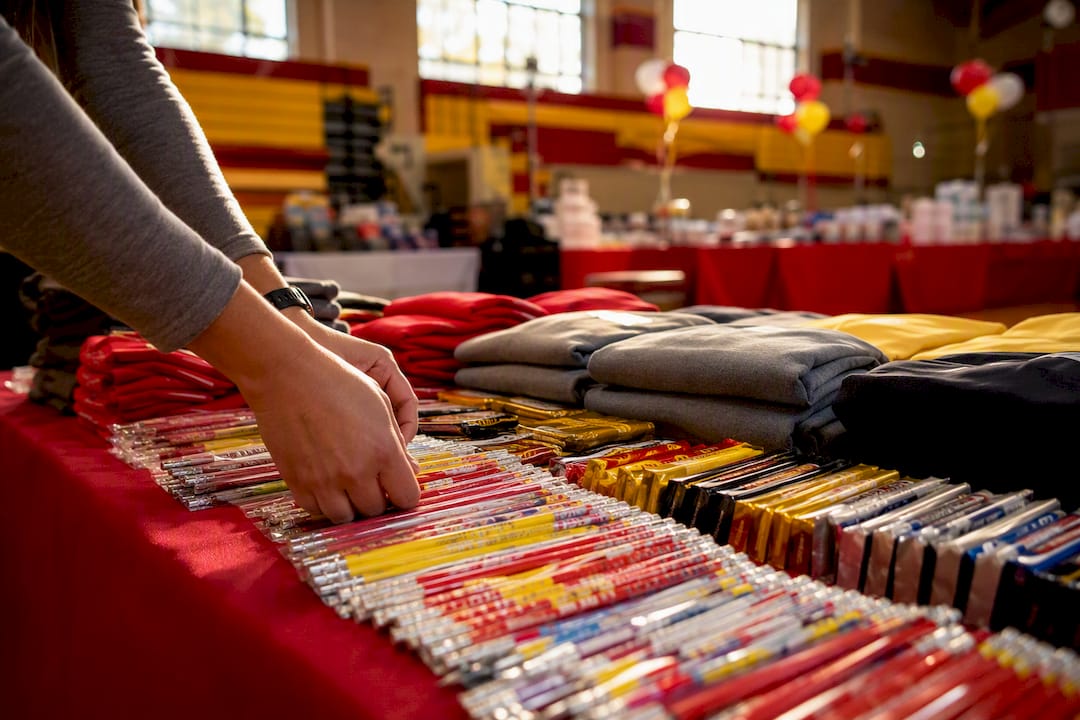
Effort: medium. Profitability: medium. Upfront cost: medium, tied to vendor minimums. Best timing: fall sports season or any high-traffic event.
5. Restaurant nights and dine-to-donate events
A local restaurant donates 10 to 20 percent of sales on a designated night. Zero upfront cost, minimal staffing, but revenue depends entirely on turnout.
Effort: low. Profitability: low to medium. Best timing: anytime, works well as a filler between bigger campaigns.
6. Movie nights and pancake breakfasts
Rent a projector and a field, or borrow the cafeteria griddle. Ticket sales cover costs quickly once you clear about 50 attendees.
Effort: medium. Profitability: low to medium. Best timing: fall or spring, avoid exam weeks.
7. Auctions and talent shows
Bigger lift, bigger reward. A basket auction with donated local business items can outperform several smaller fundraisers combined, but it needs a planning committee and several weeks of lead time.
Effort: high. Profitability: high. Best timing: late winter, tied to a school event people already attend.
8. Crowdfunding and online donation pages
Crowdfunding works best as a supplemental channel for closing a final budget gap, especially when you're reaching alumni or extended family who won't see a flyer sent home. Success depends heavily on how well you promote the link on social media and in newsletters.
Effort: low. Profitability: low to medium. Best timing: late winter, right before your final print deadline.
9. Low-lift options for small staffs
- Penny drives during morning announcements
- A booster text campaign asking parents to round up
- A donation jar at the front office
- Selling extra event photos students already took
These won't fund a whole book, but they add up with almost no staff time, and staff presence at games and performances creates natural selling moments that boost conversion on low-effort items.
How to Choose Which Fundraiser Fits Your Program
Match the fundraiser to your actual capacity, not your ambition. A three-person staff running a full auction alongside finals week is a recipe for missed deadlines, not a bigger check.
Run every idea through four questions before committing: How many volunteer hours does it realistically need? Does your timeline leave room for it before the print deadline? Who's the target donor, businesses, families, or the wider community? And does it need school administration sign-off first?
If you're bringing in a vendor for scratch cards, product sales, or spirit wear, vet them the same way you'd vet any contractor:
- What's the minimum order quantity, and what happens to unsold inventory?
- Who covers shipping, and is it built into the unit price or added later?
- Can items be personalized with your school logo, and what's the lead time?
- What are the refund and payout terms if a campaign underperforms?
Watch for three red flags in particular: minimum orders that force you to buy more than you can sell, fee structures that aren't disclosed until after you sign, and lead times that blow past your printer's personalization deadline. It's also worth checking a vendor's complaint history with the Better Business Bureau before signing anything, since professional fundraiser companies vary widely in transparency.
Pro Tip: Bring this checklist to your first planning meeting and score each idea 1 to 5 on effort, cost, and profit. The lowest combined score usually wins.
When to Run Each Campaign for Maximum Return
Timing decides more of your fundraising outcome than most advisers assume. Two windows matter most.
- September and October: This is your planning window. Launch ad sales, presales, and scratch cards while enthusiasm for the new school year is high and your printer's early deadlines are still months out.
- January and February: This is your gap-closing window. Run crowdfunding, a final product push, or a flash presale discount to cover whatever the fall campaigns didn't.
Running campaigns in these two windows helps programs lock in revenue and forecast print quantities months ahead of the deadline that actually matters, instead of scrambling in April.
Structure early-bird pricing around your publisher's personalization cutoff, not an arbitrary date. Promote sneak-peek layout pages at events, in newsletters, and on your school's social accounts to drive last-minute conversions before each price increase hits.
TrailMark's Practical Tips for Advisers Running Fundraisers
Fundraising only solves half the problem. The other half is turning that money into a book that ships on time without surprise costs. That's where a printer's turnaround and pricing structure start to matter as much as your fundraising total.
- Track presale numbers weekly so your print quantity estimate stays realistic instead of a guess made in March.
- Coordinate ad-sale deadlines with your layout schedule so late submissions don't hold up the whole book.
- Use free design assistance when personalization crunch hits, rather than losing a week to layout troubleshooting.
- Cross-check your fundraising math against a budget planning guide before locking your final order quantity.
Turning Each Idea Into an Actual Campaign
Every idea above needs the same basic launch sequence, just with different details swapped in. Start with a firm goal number tied to your print budget, not a vague "raise some money" target. Advisers who name a dollar figure up front see better participation because families understand exactly what they're funding.
Next, assign one owner per campaign. Ad sales need a point person collecting submissions; scratch cards need someone distributing and reconciling money. Splitting ownership across too many people is how campaigns stall.
Set a start date, a midpoint check-in, and a hard close date, then build your promotion calendar backward from the close. For product sales specifically, confirm your vendor's turnaround time before you announce a date to students, since a shipping delay on Smencils or spirit wear can strand a launch event with nothing to sell.
Finally, build in a reconciliation step. Whoever handles money should count and log it within 48 hours of collection, not at the end of the semester. Campaigns that skip this step are the ones that come up short with no explanation for where the gap happened.
Building a Volunteer Team That Actually Shows Up
Recruit before you need people, not the week of the event. Send a sign-up sheet through your school newsletter in August, listing specific roles: table setup, cash handling, ad outreach calls, social media posts. Vague "help wanted" asks get fewer responses than a list of concrete two-hour jobs.
Parent volunteers are your most reliable resource for event-day staffing, since they're already picking kids up from practice or games anyway. Student staff are better suited to outreach tasks like ad calls and social promotion, where their peer network does the actual selling.
Give every volunteer a single, clearly defined task rather than open-ended responsibility. "Count the scratch card money with another adult present and log the total" produces better results than "help with the fundraiser." Build in a backup for every role too. One missed shift shouldn't stall the whole campaign.
Check in briefly midway through each campaign, even just a two-minute huddle, to catch problems while there's still time to fix them.
Mistakes That Quietly Sink a Fundraiser
The most common failure isn't a bad idea, it's poor timing. A product sale launched the week before winter break, or an ad campaign that opens after your layout deadline has already passed, can't recover no matter how good the pitch is.
Overordering product inventory is the second most expensive mistake. Advisers who commit to a vendor's minimum order without a realistic sales estimate often end up storing unsold spirit wear in a closet through summer.
Unclear money handling causes real problems too. Cash collected without two people present, or without same-day logging, invites both accounting headaches and, occasionally, real losses. And running too many campaigns simultaneously spreads volunteer attention so thin that none of them get the promotion they need to succeed.
Before launching anything, confirm your fundraiser doesn't run afoul of your district's policy on on-campus sales, food items, or vendor contracts. A quick review of your school's fundraising policy saves you from having to cancel a campaign midstream.
How to Pitch Local Businesses for Ad Sales and Sponsorships
Most business owners say yes to an ad request when the pitch is short, specific, and shows exactly what they get. Cold calls work better with a script students can adapt rather than read verbatim.
A basic phone script: "Hi, I'm calling from [School Name]'s yearbook staff. We're offering ad space in this year's book, seen by every student and family. A quarter page starts at [price] and includes your logo and a short message. Would you like more information?" Follow up with a one-page rate sheet by email within 24 hours.
For sponsorships tied to events like auctions or restaurant nights, the pitch shifts slightly: name the event, the expected turnout, and what recognition the sponsor receives, whether that's a banner, a shoutout, or a listing in the book itself. Businesses that sponsor local sports teams or school events are usually your fastest yeses, since they already have a giving line item for community requests. For bigger events, a structured events checklist can help you plan logistics before you start recruiting sponsors.
A Practitioner's Take on Getting Started
Start with ad sales and one scratch card push, then add a single product sale only if your staff has bandwidth left. Trying to run five campaigns in your first year is how most programs burn out volunteers by November. Track weekly totals against your goal, not just at the end of each campaign, because catching a slow week early is the only way to fix it in time.
— Jace
TrailMark: A Simpler Next Step Once the Money's Raised
Raising the money is half the job. Getting it turned into a finished book without surprise fees or a blown deadline is the other half, and that's where a lot of programs lose the advantage they just earned through fundraising. Trailmarkyearbooks gives schools instant, all-inclusive pricing online with no sales calls and no hidden costs added after the fact, so the budget you raised is the budget you actually spend.

That matters most for programs working with tight fundraising timelines, since a 2 to 3 week turnaround and no fixed order deadlines give you flexibility that traditional publishers with rigid cutoff dates don't offer. A few reasons advisers choose Trailmarkyearbooks after a fundraising push:
- All-inclusive pricing with shipping included, no line-item surprises
- Free design assistance using Canva, Adobe InDesign, or the built-in online creator
- Fast 2 to 3 week turnaround with no rigid order deadline
If you want to see the print quality before committing your fundraising total, request a free sample or browse production options and instant pricing to see what fits your budget.
Where to Go Next
For deeper how-to detail beyond this list, RevTrak's fundraising guide covers ad sales strategy, Big Fundraising Ideas' guide breaks down scratch card mechanics, and Yearbook Groupie walks through product sale pitfalls. For campaign planning at home, check TrailMark's order quantity checklist and print quantity planning guide. Advisers looking for professional development can also check NSPA's event listings.
Sources
- The Top 19 Yearbook Fundraising Ideas for Schools | RevTrak
- Best Yearbook Fundraiser Ideas for School Yearbook Programs | Big Fundraising Ideas
- Creative Yearbook Funding Ideas - Yearbook Groupie