

A smooth yearbook distribution day comes down to two things finished before students ever line up: reconciled inventory and a staffed problem table. Confirm every order against what actually arrived, group check in by last name, and put your most patient volunteer at the table that catches missing payments and printing errors. Allocate an appropriate amount of time per grade level to ensure books are distributed and allow time for photos.
TL;DR:
- Confirm shipment counts and inspect damaged books at least three days before distribution to avoid delays and ensure accurate inventory.
- Use clear signage, organized alphabet groups, and scheduled pickup windows to streamline student flow and prevent congestion.
- Staff the distribution with specialized roles, keep shifts short, and rehearse procedures to maintain efficiency and reduce on-the-spot confusion.
- Have backup plans and essential supplies ready, such as paper copies of lists, to resolve payment, damage, or personalization issues quickly without stopping the line.
- Finalize all logistics, communication, and reorders immediately after distribution to prevent last-minute problems and ensure smooth next-year planning.
Table of Contents
- Preparing for Yearbook Day: The Pre-Distribution Checklist
- Setting Up the Space for Fast, Safe Pickup
- Who Staffs a Distribution Day and What They Actually Do
- Getting the Word Out Before Distribution Day
- Fixing Problems Without Stopping the Line
- After the Books Are Gone: Closing Out Distribution Day
- Your Distribution Day Toolkit at a Glance
- What One Adviser Learned From Her First Smooth Distribution Day
- Where TrailMark Yearbooks Fits Into Your Distribution Plan
- Sources
Preparing for Yearbook Day: The Pre-Distribution Checklist
The week before boxes arrive matters more than the day itself. Confirm your delivery window with the printer and allow a few days between arrival and distribution so someone can inspect cartons, count copies, and pull damaged books before they reach a student's hands, a step flagged by Friesens' event planning guidance as one of the most skipped steps in a rushed schedule.
Once the shipment is verified, stop taking new orders. Reconciling your publisher's sales report against your own collection log now, rather than during distribution, is what experienced advisers consistently recommend to avoid oversells and cash mismatches on the day itself.
Before the doors open, gather:
- A master list sorted alphabetically, cross-checked against payment records
- Sign in sheets with signature lines for each pickup
- Table signage, pens, tape, and a receipt log for on-site sales
- A printed backup of every list in case devices fail
- A volunteer schedule with names, shifts, and assigned stations
If you're still finalizing print counts, a quantity ordering checklist can help you avoid ordering short or long before this stage even starts.
Pro Tip: Print two copies of your master list. Keep one at check in and one at the problem table so both stations can confirm a name without radioing back and forth.
Setting Up the Space for Fast, Safe Pickup
Pick a space with one clear entrance and one clear exit. A gym or cafeteria works because you can post flow arrows on the floor and keep the line moving in a single direction, which cuts down on the backtracking that stalls smaller hallway setups.
- Position tables in alphabet blocks (A to D, E to H, I to M, and so on), each with a printed sign visible from ten feet away.
- Route incoming students past a greeter who checks their name against the master list before they reach their letter group.
- Set timed pickup windows by grade or classroom so you're not managing the whole school at once.
- Verify at least one accessible route and table height for students who use mobility devices, following the kind of accessibility planning schools are increasingly expected to build in.
- Test payment devices and printers thirty minutes before doors open, and print a paper backup list in case either fails.
Keep classroom delivery as an option for younger grades. It's slower per book but removes crowd control from your list of problems entirely, and it works well for:
- Kindergarten through second grade classrooms
- Students with accessibility needs who prefer a quieter pickup
- Split campuses where one gym can't hold every grade
Who Staffs a Distribution Day and What They Actually Do
Six roles cover most schools. A greeter checks names before the line splits by letter. A table manager hands out books and marks the master list. A problem-table lead handles anything that isn't a clean handoff. A runner restocks tables and relays messages. Security or a hall monitor manages flow at the entrance. A photographer captures the signing and photo-op moments for next year's coverage.
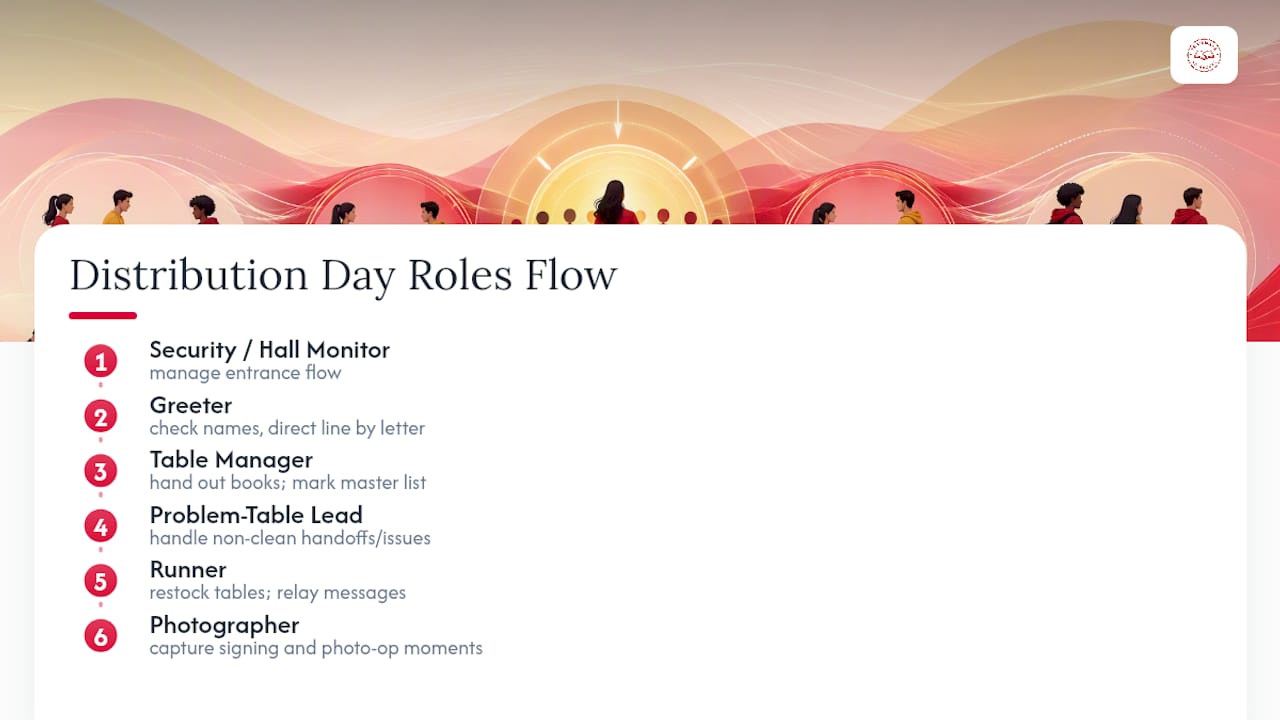
Keep volunteer shifts short to maintain attentiveness and effectiveness, and a short rehearsal the week before prevents the mid-morning confusion that eats up your fastest hour. Give every table manager a one-line script: "Name, please. Sign here. Enjoy your book." Cash handling should always involve two people counting and a locked box, never a single volunteer holding loose bills.
A practical playbook for adviser support covers volunteer coordination in more depth if you're building this team from scratch.
Getting the Word Out Before Distribution Day
Start announcements about ten days out, then increase frequency the final three days. Use morning announcements, a newsletter blurb, a social graphic, and posters near the main office, each repeating the same core details so no version of the message contradicts another.
Every message should answer the same four questions:
- What date and time, and which entrance
- Whether a student ID or signature is required
- Whether unpaid balances can be settled that day
- What happens if a student misses their scheduled window
Distribution day is also your best remaining sales window. Seeing classmates walk around with a new yearbook creates a pull that flyers can't match, and if you still have extra copies, that's the moment to sell them, provided cash handling stays supervised and logged.
Fixing Problems Without Stopping the Line
- Late or incomplete shipment: Distribute what arrived by grade level first, then post a clear sign explaining when the rest will follow.
- Damaged books: Pull them at inspection, not at the table. Log the count and contact the publisher for replacements before students ever see the copy.
- Missing or unclear payment: Send the student to the problem table immediately rather than holding up the main line while staff dig through records.
- Personalization or spelling errors: Note the issue on a reorder log with the student's name, then move on. Fix it after the event, not during.
- Cash disputes: Two staff members confirm the amount together and record it before resolving anything.
Keep a small kit near the problem table stocked with spare pens, extra receipt slips, tape, and the shipping paperwork. Most delays come from someone needing one of those four items and nobody having it within reach.
After the Books Are Gone: Closing Out Distribution Day
Reconcile your signed for list against total copies distributed the same day, while memory is fresh. Flag any name that's marked ordered but not picked up, and set a firm date for those stragglers to collect.
If damaged copies or reorders came up, start that process immediately. Reorder timelines vary by print run, so the earlier you submit the request, the less likely a student waits into summer break for a replacement.
- Thank every volunteer by name, ideally within 48 hours
- Send parents a short update on remaining pickups and reorder timing
- File your master list and problem log somewhere you'll actually find them next year
Your Distribution Day Toolkit at a Glance
You don't need to build these from scratch each year. A handful of documents cover almost every school's needs, whether you're running a single grade through a hallway or three grades through a gym.
| Template | What it's for |
|---|---|
| Sign in sheet | Confirms pickup with a signature against the master list |
| Table signage | Labels alphabet groups and directs line flow |
| Problem table script | Standardizes how staff respond to payment and damage issues |
| Volunteer schedule | Assigns shifts, roles, and break times in advance |
Smaller schools can shrink the alphabet groupings to two tables instead of four. Larger ones may need a duplicate problem table to avoid backups. Whatever size you're working with, keep a paper version of every list on hand, and save a digital copy once distribution wraps so next year's setup starts from a template instead of a blank page. If images or order data will be shared digitally with families, review vendor practices against the Student Privacy Pledge before you post anything.
What One Adviser Learned From Her First Smooth Distribution Day
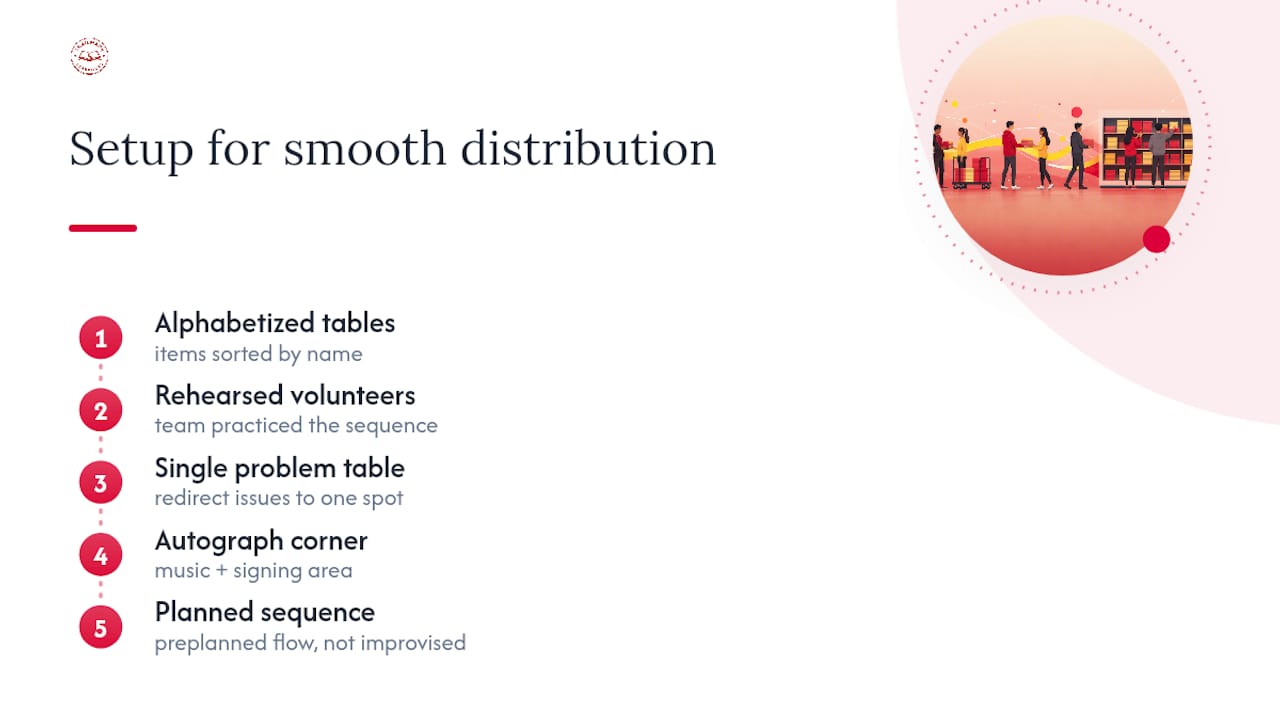
A veteran adviser once described the year everything clicked: alphabetized tables, a rehearsed volunteer team, and a corner set up as an autograph zone with music playing. The line moved faster than expected because problems went straight to one table instead of stalling the whole gym. Her takeaway: the setup doesn't need to be elaborate, it needs to be rehearsed.
Even a school with three volunteers and one folding table can pull off a memorable pickup if the sequence is planned in advance rather than improvised in the moment.
— Jace
Where TrailMark Yearbooks Fits Into Your Distribution Plan
A lot of distribution-day stress traces back to one root cause: not knowing exactly when books will land. Some yearbook publishers provide instant, all-inclusive pricing without sales calls or signup walls, so you may know your delivery window before committing to an order. Fast 2 to 3 week turnaround can help prevent shipment delays from impacting your event calendar.

If you want to check binding quality or print clarity before locking in your order, request a sample and see exactly what arrives at your school. When you're ready to compare turnaround times and pricing for your student count, the production and pricing page lays out every option side by side. Confirm your shipping window early with whichever partner you choose. It's the single decision that determines whether distribution day feels rehearsed or reactive.
Sources
- Student Privacy Pledge · Future of Privacy Forum
- Everything You Need to Know About Yearbook Distribution Day
- How to Plan a Stress-Free Yearbook Distribution