
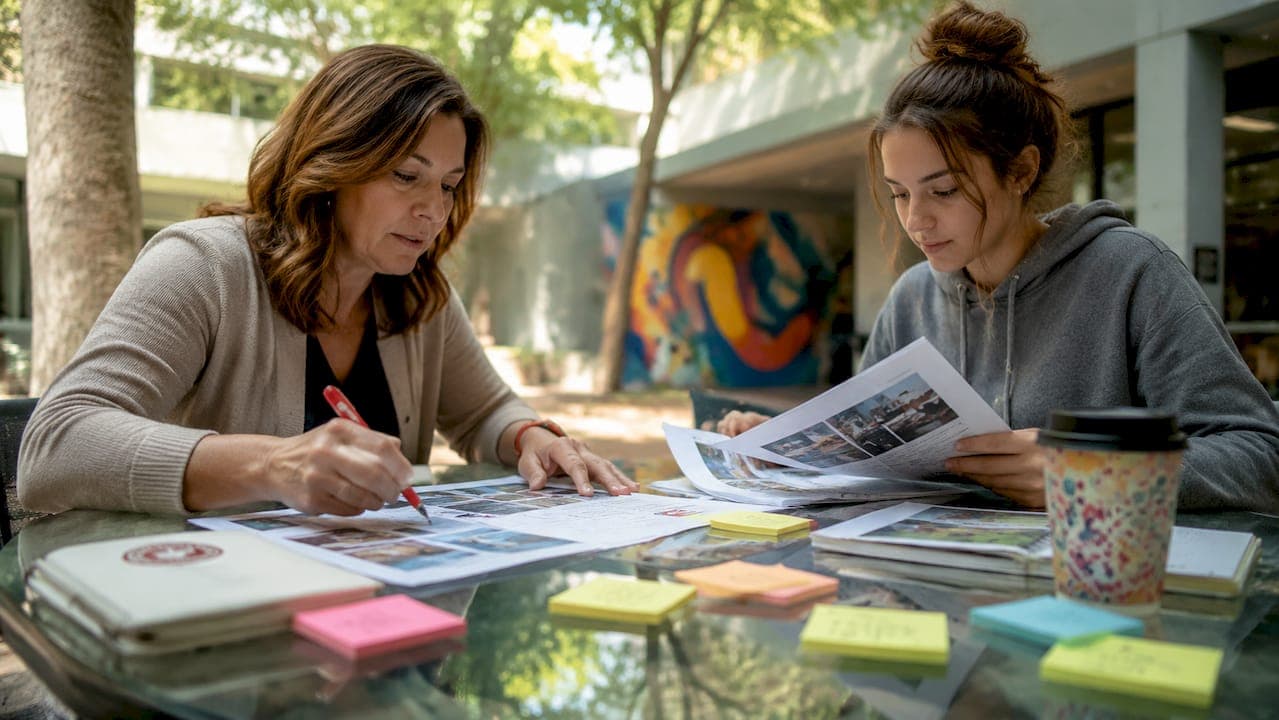
The yearbook revision round is the structured, multi-step review process where advisers and student contributors check every page for accuracy, design consistency, and print readiness before the book goes to press. This is not a casual scan. It is the final quality control gate between your team's work and a permanent printed record. The yearbook revision process typically concludes with a final team approval meeting held by early april, and skipping any stage of it is how names get misspelled and photos end up on the wrong page. Advisers who understand each step of the revision round produce better books with fewer last-minute emergencies.
What happens during a typical yearbook revision round?
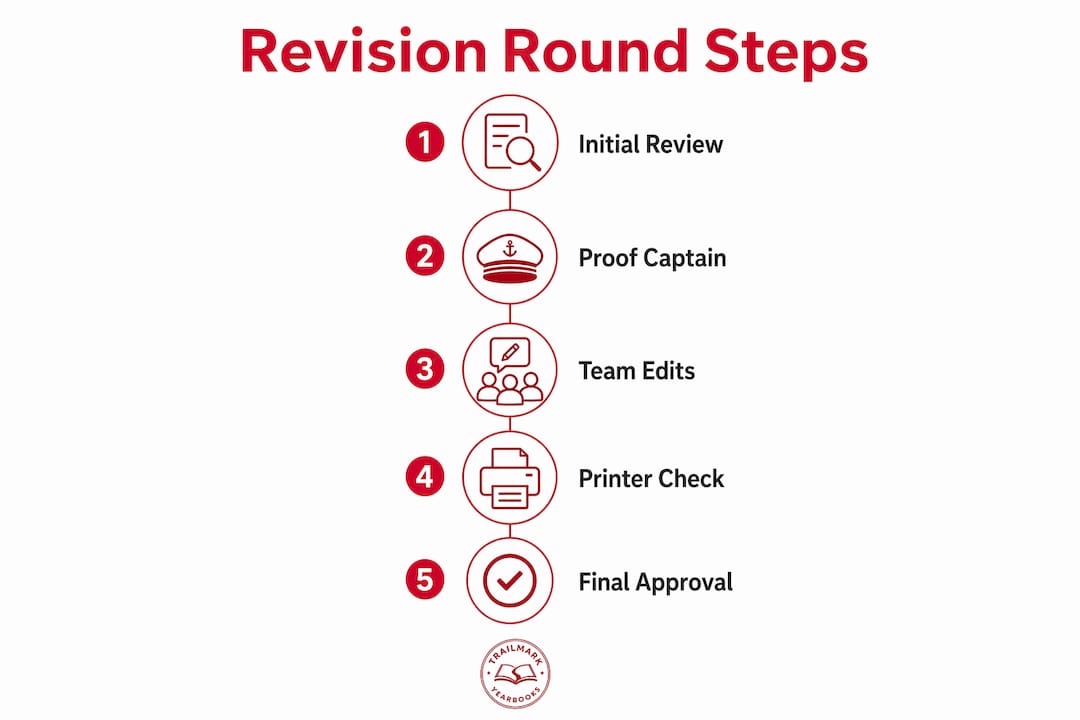
The yearbook revision round is a sequence of review stages, not a single meeting. Each stage has a specific purpose, and the order matters.
-
Final team review meeting. The adviser and senior student editors gather to approve the overall book. Every spread gets a final look for layout balance, consistent fonts, and accurate section organization. Industry standards recommend holding this meeting by early april to avoid late-production stress.
-
Detailed content check. The team reviews photos, captions, names, and facts line by line. A single transposed letter in a student's name can cause real distress. Assign specific editors to specific sections so no page gets skipped.
-
PDF submission to the printer. Once the team approves the content, you export a print-ready PDF and submit it to your printer. This file must meet the printer's exact specifications for resolution, bleed, and color mode.
-
Physical printer's proof review. The printer sends back a physical proof for your review. This is your last real chance to catch errors. Read it under good lighting and compare it page by page against your digital file.
-
Final sign-off. The adviser and any required school administrators sign off on the proof. No full print run begins until that approval is documented.
Pro Tip: Assign a dedicated "proof captain" from your senior staff. This person's only job during the proof review is to read every caption aloud while a second editor follows along on the digital file. Paired reading catches errors that silent reading misses every time.
Multiple editorial review rounds increase the chances of catching errors before printing. That is why the revision round is structured as a sequence rather than a single pass.
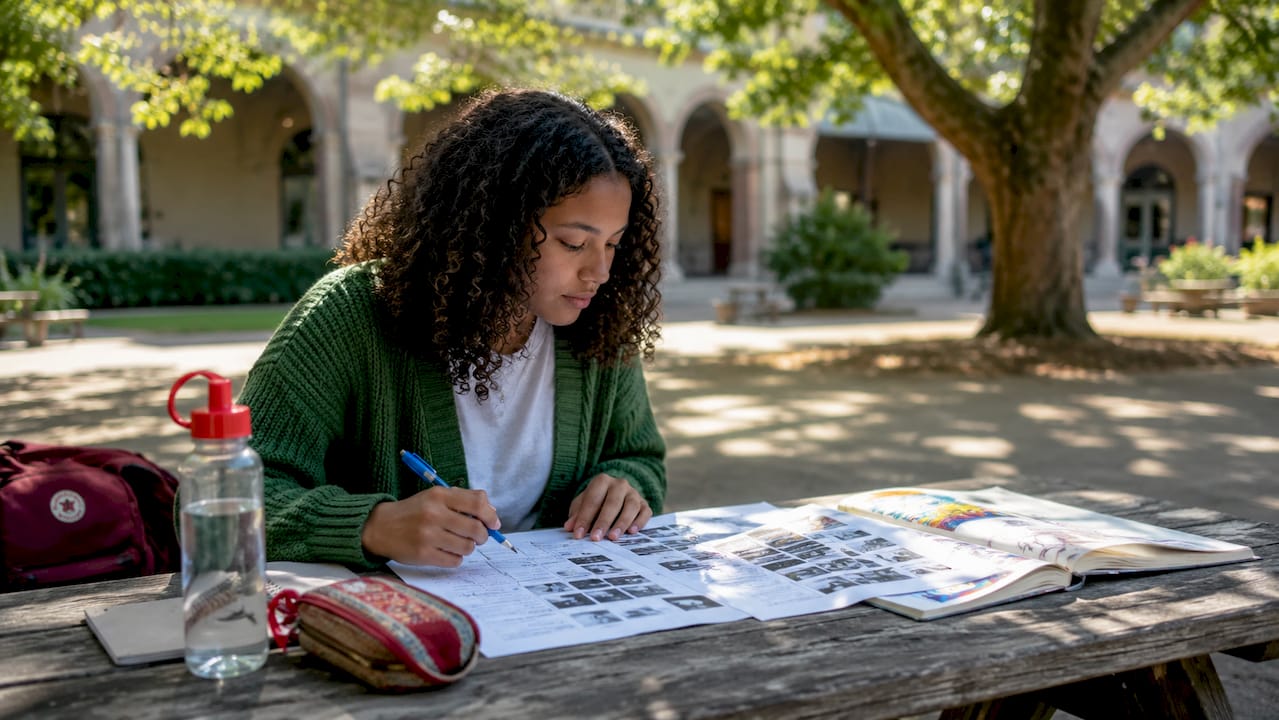
How does technology support the yearbook editing round?
Modern yearbook software has changed what advisers can realistically accomplish during a revision round. The right tools reduce manual work and prevent entire categories of errors.
-
Automatic indexing. Automated continuous indexing updates the index every time a name or photo changes, removing the need for manual reconciliation at the end. This alone eliminates one of the most error-prone tasks in the final production stage.
-
Auto-layout reflows. When a portrait page shifts or a caption changes length, auto-reflow adjusts surrounding elements automatically. Advisers no longer need to manually nudge every text box after a late content change.
-
Role-based permissions. Distributed permission levels let contributors edit only their assigned sections. This prevents accidental overwrites and keeps quality control in the hands of senior editors and the adviser.
-
Shared drives and submission forms. Centralized content folders with structured submission forms give the revision team a single source of truth. No more hunting through email threads for the final version of a photo.
-
Verification of automated outputs. Software automation is reliable but not infallible. Manual reconciliation errors remain a leading cause of stress in final production despite advances in automation. Advisers must verify that automated index entries and layout reflows are correct, not just assume the software handled it.
Pro Tip: After every automated reflow, print a single test page from the affected section and compare it to the previous version. A two-minute check prevents a two-week reprint.
What are the most common pitfalls in the revision round?
Understanding yearbook revisions means knowing where teams consistently go wrong. These are the failure points that show up year after year.
Rushed final approvals. When the deadline feels close, teams approve pages too quickly. A page that looks right at a glance can still have a wrong graduation year in a caption or a duplicated photo credit. Phased deadlines and structured checklists are the most reliable defense against this pattern. Set internal deadlines at least one week before the printer's actual deadline.
Over-reliance on automation. Automated indexing and layout tools are powerful, but advisers who trust them completely without verification create a false sense of security. The software does not know that a student transferred schools in march or that a club photo was taken at the wrong event. Human judgment fills those gaps.
Incomplete fact-checking. Captions are the most frequently wrong element in school yearbooks. Dates, grade levels, club names, and teacher titles all change during the school year. Assign a dedicated fact-checker whose only job is to verify every data point against the school's current records.
Poor communication among contributors. When student editors work in silos, one section's late changes can create conflicts in another section's layout. Regular check-ins during the revision round keep everyone aligned. A brief daily status message in a shared channel takes five minutes and prevents hours of confusion.
Skipping the physical proof review. Some teams approve the digital file and skip the physical proof to save time. This is a mistake. Colors render differently on screen than in print, and page alignment issues only appear on paper. The physical proof review is not optional.
How do you prepare your team for an effective revision round?
The revision round does not start when the deadline arrives. It starts months earlier with deliberate team preparation.
-
Schedule revision meetings early. Block your final revision meeting on the calendar in january or february. Early april is the industry standard for final print-ready approval, which means your internal review needs to finish before that date. Work backward from the printer's deadline to set every internal milestone.
-
Train student staff on proofing skills. Skill-building workshops held early in the school year increase review quality and reduce revision errors significantly. Teach students how to read a proof, how to mark corrections clearly, and how to cross-reference captions against source photos.
-
Build and use a revision checklist. A written checklist is not optional. It should cover photos, captions, names, page numbers, section headers, the index, and the cover. Every item gets checked and initialed by a named editor. Checklists create accountability and prevent the "I thought someone else checked that" problem.
-
Assign clear roles before the revision round begins. Every editor should know their specific section and their specific responsibilities before the first revision meeting. Ambiguous ownership is how pages fall through the cracks. Post the role assignments somewhere the whole team can see them.
-
Celebrate milestones. The revision round is stressful. Acknowledging when a section clears review or when the proof comes back clean keeps morale high. A team that feels recognized works harder on the next stage. Small gestures, like a group lunch after the proof sign-off, matter more than advisers expect.
Key Takeaways
The yearbook revision round is a structured, multi-stage process that requires early planning, clear role assignments, and both technology verification and human judgment to produce an accurate, print-ready book.
| Point | Details |
|---|---|
| Revision round is a sequence | Complete five distinct stages from team review to final sign-off, in order. |
| Early april is the target | Schedule your final approval meeting to align with industry production timelines. |
| Verify automated tools | Check automated indexing and layout reflows manually to catch software blind spots. |
| Checklists prevent errors | Assign named editors to each checklist item so every page has a clear owner. |
| Physical proof is non-negotiable | Review the printer's physical proof before approving the full print run. |
What I've learned from watching revision rounds go wrong
Every adviser I've talked to has a revision round horror story. A student's name spelled wrong on the senior spread. A club photo credited to the wrong organization. A page number sequence that skips 47 entirely. These are not random accidents. They are predictable failures that happen when teams treat the revision round as a formality rather than a discipline.
The single biggest mistake I see is treating the revision round as one event instead of a process. Advisers schedule one big meeting, everyone looks at the pages for an hour, and the book goes to print. That approach guarantees errors. The revision round works when it is broken into stages with different people responsible for different checks. No single editor catches everything. The system catches everything when it is designed correctly.
Technology has genuinely improved the revision workflow. Automatic indexing alone has saved countless hours of manual cross-referencing. But I've also watched advisers approve a book because the software said it was done, only to find the automated index had pulled a student's name from a deleted spread. The tool did exactly what it was programmed to do. The adviser needed to verify the output. That verification step is where experience matters most.
The teams that handle revision rounds best are the ones that build a culture of shared ownership early in the year. When every student editor understands that their section reflects on the whole book, they bring more care to the review. That culture does not appear in october. It gets built in september, through training, clear expectations, and consistent feedback. By the time the revision round arrives, the team already knows how to work together under pressure.
— Jace
How Trailmarkyearbooks supports your revision round
Trailmarkyearbooks works with elementary, middle, and high school advisers who want production support that matches the care they put into their revision process. The team behind Trailmarkyearbooks brings more than 50 years of combined experience to every project, which means advisers get guidance that reflects real production knowledge, not a generic checklist.

Before you commit to a full print run, you can request a physical sample to verify paper quality, color accuracy, and binding before your final sign-off. Trailmarkyearbooks also offers yearbook production services with transparent, all-inclusive pricing and a 2–3 week turnaround. No hidden fees, no order deadlines, and free design assistance are included. When your revision round is complete and your file is ready, Trailmarkyearbooks makes the next step straightforward.
FAQ
What is the yearbook revision round?
The yearbook revision round is the structured review and editing phase where advisers and student editors check all content, layouts, and facts before submitting the book to print. It typically concludes with a physical proof review and a formal sign-off.
When should the final revision meeting happen?
The industry standard recommends holding the final print-ready approval meeting by early april. Working backward from that date sets your internal revision milestones.
How do you handle the printer's proof during the revision round?
Review the physical printer's proof page by page against your digital file under good lighting. Do not approve the full print run until every discrepancy is resolved and documented.
Why does automated indexing still cause errors?
Automated indexing updates based on the content present in the file at the time of indexing. If a spread was deleted or a name was changed after the last automated update, the index may reflect outdated information. Always verify the index manually before final submission.
How many review stages should a revision round include?
A complete revision round includes at least five stages: team content review, detailed caption and name check, PDF submission, physical proof review, and formal sign-off. Multiple editorial rounds consistently reduce the number of errors that reach the final print.