
A yearbook sales pitch is a focused, persuasive message designed to motivate students, parents, or the broader school community to buy a yearbook. It is not aimed at administrators ordering in bulk. The pitch typically combines pricing incentives, emotional appeals about preserving school memories, and urgency tactics like deadlines or limited availability. School administrators who understand how these pitches work are better positioned to separate the purchasing decision from the sales pressure entirely.
Common elements you will recognize in a yearbook sales pitch include:
- Tiered pricing: Early bird pricing structures with escalating rates create urgency by rewarding buyers who commit sooner.
- Promotional materials: Posters, PA announcements, email blasts, and social media campaigns keep the yearbook visible throughout the school year.
- Incentives and packages: Contests, photo submissions, and tiered package options (good, better, best) encourage higher spend and earlier commitment.
- Hype building: Social media accounts, sneak peek content, and delivery parties generate excitement that drives purchases.
Administrators purchasing complete yearbooks for their school do not need to run these campaigns themselves. Knowing what a sales pitch involves, though, helps you recognize when a vendor's process is designed around student selling rather than straightforward institutional ordering.
How yearbook sales pitching actually works in schools
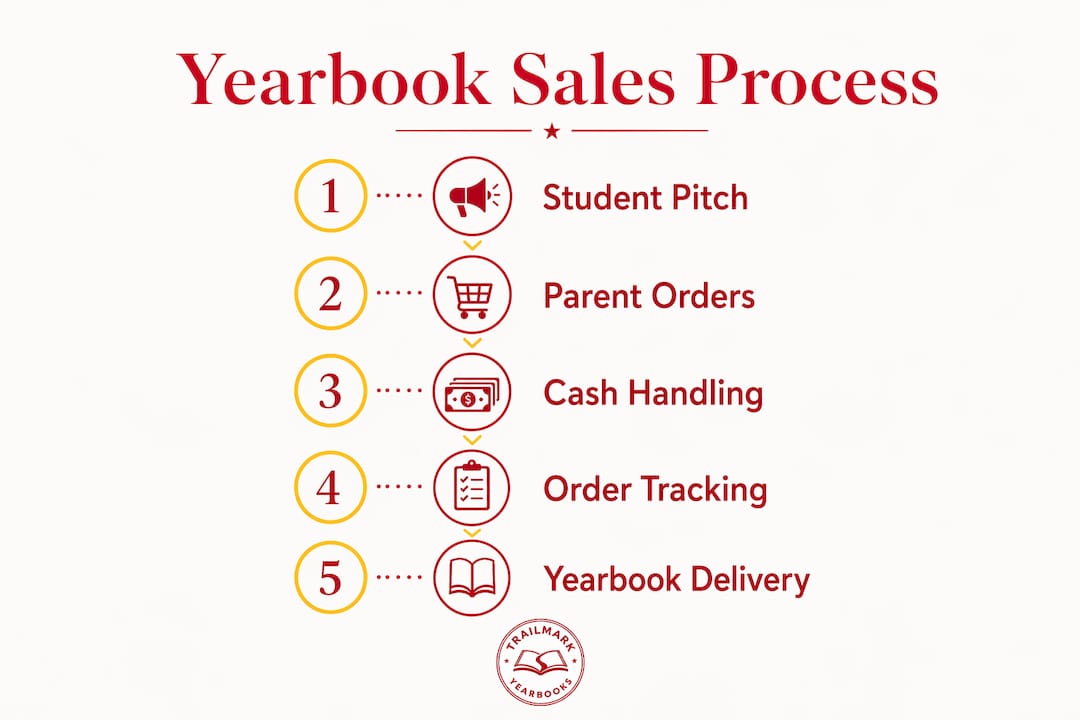
The mechanics of a yearbook sales pitch are built around one goal: getting students and parents to buy before they forget or decide it is not worth it. Vendors and yearbook advisers use a layered approach that combines marketing channels, pricing psychology, and community events.
Typical pitching techniques include:
- Deadline-driven pricing tiers that reward early buyers and penalize late ones
- Social media campaigns using school Facebook pages, Instagram posts, and contests to build demand
- PA announcements and principal emails that keep the sale top of mind
- Delivery parties exclusive to buyers, which create social pressure among students
A standard tiered pricing rollout looks like this:
- Open sales in early fall with the lowest price and an online ordering link
- Raise the price after the first deadline passes
- Issue a final "last chance" price increase close to the print deadline
- Close sales and lock in the order quantity
The online ordering option has grown in popularity because it lets parents buy directly without sending cash to school with their child, and it generates automatic sales reports that reduce tracking errors.
Pro Tip: If your school's yearbook vendor requires you to run a student sales campaign before they will finalize your order, that is a sign the vendor's model depends on retail-style selling rather than institutional purchasing. Ask upfront whether you can place a fixed quantity order without a sales campaign.

Aggressive selling tactics can create real friction for administrators. Managing cash collection, tracking orders across homerooms, and fielding parent questions about payment all add workload that has nothing to do with the yearbook itself. The pitch is built for student buyers, not for the office.
How administrators can purchase yearbooks without the sales pressure
The cleanest path to a yearbook purchase is working with a vendor whose process starts with a price, not a pitch. That means requesting all-inclusive pricing upfront, before any sales campaign is designed or launched.
Practical steps for a pitch-free purchasing process:
- Request a fixed per-unit price that includes printing, shipping, and any design support, with no hidden fees
- Base your order quantity on enrollment data and prior-year sales history rather than a sales campaign outcome
- Use an online ordering platform that lets you place and track orders without cash handling or paper forms
- Confirm with your vendor that no student-facing sales campaign is required to finalize your order
- Review your yearbook budget early in the year so pricing decisions are made before any urgency is manufactured
Pro Tip: Pull last year's final order number and compare it to enrollment. Most schools find that ordering 50–60% of enrollment covers demand without leaving a surplus. Use that figure as your baseline when requesting a quote.
When you communicate yearbook availability to parents and staff, keep it factual. A simple note in the school newsletter with the price, the order link, and the delivery date does the job without any urgency tactics. Parents appreciate the straightforward approach, and it keeps the school out of the business of running a retail campaign.
Getting staff buy-in for the yearbook is easier when the purchasing process is already settled. Staff are more likely to mention the yearbook to students and families when they are not being asked to sell it.
What you actually gain from a transparent yearbook provider
Working with a vendor who leads with clear pricing rather than a sales campaign changes the entire administrative experience. The benefits are practical, not just philosophical.
What transparent purchasing looks like in practice:
- No hidden fees: The price you see covers printing, shipping, and design support. No surprises at invoice time.
- Budget accuracy: Fixed pricing lets you plan the yearbook line item in your school budget without guessing at final costs.
- Reduced workload: No cash collection, no sales tracking, no parent complaints about missed deadlines.
- Faster turnaround: Vendors focused on institutional ordering rather than retail campaigns tend to move faster once the order is placed.
- Flexible design options: Tools like Canva, Adobe InDesign, or a vendor's own online creator let your adviser or staff build the book without a steep learning curve.
Transparent pricing eliminates the back-and-forth that comes with tiered sales models. You know the cost, you place the order, and you get the books. Trailmarkyearbooks, which brings 50+ years of combined industry experience to school partnerships, is built around exactly this model. No order deadlines, free design assistance, and a 2–3 week turnaround mean the yearbook gets done without the school running a marketing campaign to justify the print run.
How presentation matters for school recognition programs applies here too. When the process is clean and the product arrives on time, the yearbook lands as a genuine keepsake rather than the outcome of a stressful sales push.
Trailmarkyearbooks makes yearbook ordering simple for administrators
Administrators who want a yearbook without the sales campaign have a direct option in Trailmarkyearbooks. The model is built for schools, not for student retail: instant all-inclusive pricing online, no signup required, no hidden fees, and shipping included in the quote.
Trailmarkyearbooks offers a 2–3 week turnaround, no order deadlines, and free design assistance for every school. Design tools include Canva, Adobe InDesign, and Trailmarkyearbooks's own online creator, so your adviser works in whatever format fits the school. With 50+ years of combined experience behind the team, the support is real and the process is straightforward. No sales pitch required on your end or theirs.
Request a sample to see the product quality before you commit. That is the whole pitch.
Key Takeaways
A yearbook sales pitch targets students and parents, not administrators. Purchasing directly from a transparent provider removes the sales campaign from the equation entirely.
| Point | Details |
|---|---|
| What a sales pitch is | A persuasive message using pricing tiers, urgency, and hype to drive student and parent purchases. |
| Tiered pricing example | Early bird pricing, followed by regular and last chance rates, create urgency through escalating deadlines. |
| Administrator's best move | Request fixed all-inclusive pricing and base order quantity on enrollment and prior-year data. |
| Transparent provider benefits | Clear pricing, no hidden fees, and no required sales campaign reduce administrative workload significantly. |
| Trailmarkyearbooks | Offers instant all-inclusive pricing, 2–3 week turnaround, and 50+ years of combined experience with no sales pitch required. |