

Many school administrators and yearbook advisers assume that moving yearbook production online means wrestling with complicated software, scattered logins, and a steep learning curve for student contributors. That assumption is wrong, and it costs schools time they don't have. A yearbook online design platform is built specifically to replace the chaos of spreadsheets, email chains, and manual photo sorting with a single, browser-based workspace where designing, managing, and selling yearbooks all happen in one place. This guide breaks down exactly what these platforms are, what they do, and how to use them effectively.
Table of Contents
- What is a yearbook online design platform?
- Key features and benefits of online yearbook design platforms
- Comparing popular yearbook online design platforms
- How to implement an online yearbook design platform at your school
- Common challenges and how online platforms solve them
- Why embracing online yearbook design platforms is a game changer for schools
- Discover streamlined yearbook solutions with TrailMark Yearbooks
- Frequently asked questions
Key Takeaways
| Point | Details |
|---|---|
| Comprehensive platforms | Yearbook online design platforms combine editing, management, and sales tools in one system to simplify yearbook creation. |
| Reduced workload | Automation of photo assignments and indexing greatly lowers administrative tasks for advisers. |
| Enhanced collaboration | Students can actively contribute and manage content, improving team participation and efficiency. |
| Sales integration | Online storefronts enable seamless yearbook ordering and personalization with real-time tracking. |
| Strategic adoption | Implementing platforms early with training maximizes creative output and smooths production workflows. |
What is a yearbook online design platform?
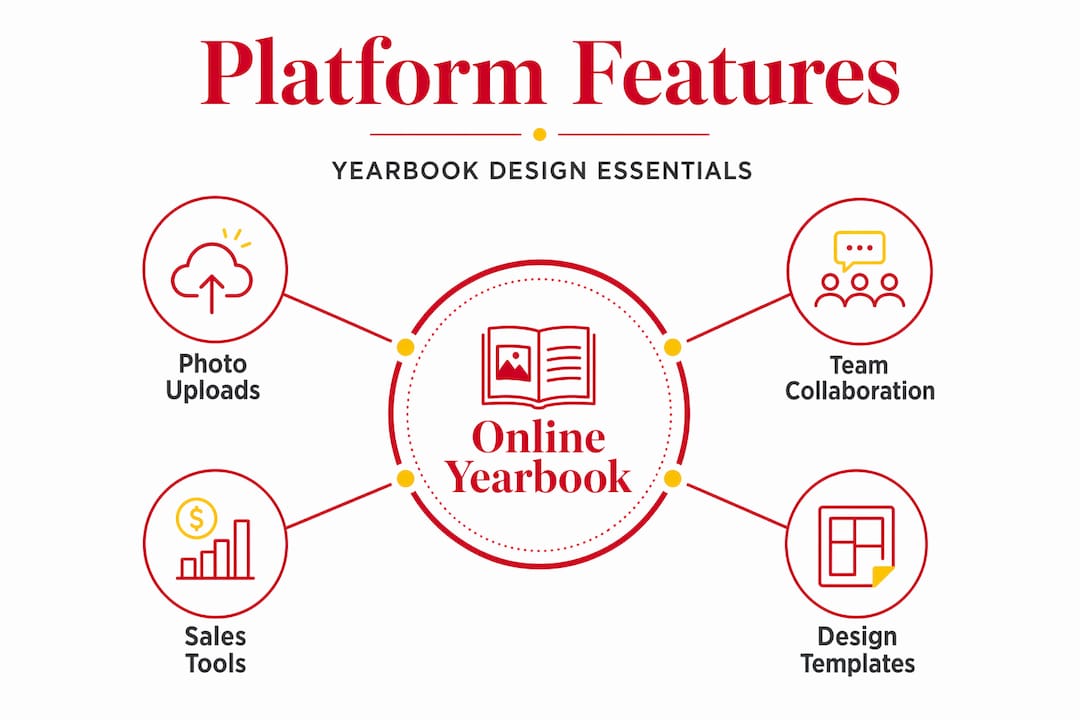
At its core, a yearbook online design platform is a web-based tool that combines a layout editor, photo management system, and team collaboration features into one environment. Instead of passing InDesign files back and forth or chasing students for their photo contributions, everyone works inside the same platform simultaneously. Advisers assign tasks, students upload content, and the design takes shape in real time.
These platforms typically include:
- A drag-and-drop or template-based design editor for building page layouts
- Photo upload and management tools that organize images by event, section, or contributor
- Access controls that let advisers assign specific pages or sections to individual students
- Deadline tracking and automated reminders to keep the production schedule on track
- Collaboration tools such as comments, approvals, and version history
What makes these platforms especially useful for schools is the sales integration. Many school yearbook platforms also integrate ordering and sales so families can purchase yearbooks and add personalization such as ads or student pages through an online storefront. That means the same system handling your design is also handling your revenue, which eliminates a whole separate layer of administrative work.
Platforms like YearbookLife, Treering, and Lifetouch offer these integrated experiences. If you want to see how finished products from various platforms look before committing, browsing yearbook platform samples gives you a concrete sense of what's achievable in print quality and design variety.
Key features and benefits of online yearbook design platforms
Understanding what these platforms are is one thing. Knowing which features actually solve your biggest headaches is where the real value shows up.
Photo assignment management is one of the most underrated features. Without it, advisers spend the final weeks before a deadline manually reconciling who photographed what, which images are missing, and which events were never covered. Yearbookadmin enables students to manage photo assignments and index photos on pages online, removing manual list aggregation and allowing advisers to focus on creative content. That shift alone can recover hours of work per week in the final stretch.
Automatic index generation is another feature that sounds minor until you've spent a full weekend manually building an alphabetical student index. Online platforms pull names and page numbers from the layout as it's built, generating a draft index automatically. Errors near the deadline drop significantly.
Key benefits for your yearbook team include:
- Advisers can delegate page sections to students without losing oversight
- Students contribute remotely, which matters for schools with hybrid schedules
- Real-time visibility into which sections are complete, in progress, or untouched
- Fewer version conflicts because everyone edits within the same file, not separate copies
- Integrated sales data means you always know how many books have been ordered
"The biggest shift online platforms create isn't in design quality — it's in who can participate. When students can log in from home, upload photos, and work on their assigned pages without waiting for a lab computer, the whole team becomes more productive."
Pro Tip: Set up access roles before your first team meeting. Defining who can edit, who can view, and who can approve content takes ten minutes upfront and prevents weeks of confusion later.
For schools exploring online yearbook design for schools, the right platform can genuinely transform how much the yearbook adviser enjoys the process rather than just surviving it.

Comparing popular yearbook online design platforms
Not every platform fits every school. A small elementary school with a single adviser and no dedicated student staff has very different needs than a high school with a 20-person yearbook class. Here's how several leading platforms compare across the features that matter most.
| Platform | Design editor | Student collaboration | Online sales | Index automation | Best for |
|---|---|---|---|---|---|
| YearbookLife | Template-based | Yes | Yes, real-time tracking | Partial | Mid-size schools |
| Treering | Drag-and-drop | Yes | Full ordering flow | No | Schools wanting print flexibility |
| Memento Yearbook | Advanced tools | Team management | Yes, with email marketing | Yes | High schools with larger teams |
| Lifetouch | Guided templates | Limited | Integrated ordering | No | Elementary and middle schools |
Memento Yearbook offers powerful portrait tools, team management, and an online sales store including email marketing and cover personalization. That makes it a strong option for high schools where the yearbook class functions more like a production team with multiple moving parts.
When comparing platforms, focus on these factors:
- Template depth: Does the platform offer enough layout variety for your school's style, or will everything look the same?
- Learning curve: Can a student with no design experience produce a usable page within one class period?
- Sales tools: Does the storefront handle personalization options like student ads, or does that require a separate system?
- Print quality: Some platforms are design-first with printing handled by a third party; others are end-to-end
The best online yearbook platform for your school is the one your team will actually use consistently, not the one with the longest feature list.
How to implement an online yearbook design platform at your school
Choosing a platform is the easy part. Getting your team to use it well is where most schools stumble. Here's a practical six-step approach.
- Evaluate and select. List your school's specific needs first: team size, design experience level, budget, and whether you need integrated sales. Then request demos or trials from two or three platforms before deciding.
- Train your staff and students. Don't assume students will figure it out on their own. Run a 30-minute onboarding session at the start of the year covering roles, page assignments, and upload standards.
- Set deadlines inside the platform. Every platform worth using has deadline and reminder features. Build your production calendar directly into the system so reminders go out automatically rather than relying on you to chase people.
- Launch your online storefront early. The earlier families can order, the more accurate your print run estimate. Use the platform's sales tools to open ordering within the first month of school.
- Monitor progress weekly. Most platforms include a dashboard showing section completion status. Check it every week, not just when a deadline is approaching.
- Finalize collaboratively. Use the platform's approval workflow to review pages as a team before submitting for print. Two sets of eyes on every spread catches errors that one person misses.
Pro Tip: Before you commit to a platform for the full year, request a yearbook sample from your shortlisted providers. Seeing the finished print quality in your hands is more informative than any feature comparison chart.
Common challenges and how online platforms solve them
Even experienced yearbook advisers run into the same recurring problems every year. Online platforms are specifically designed to address them.
Manual data consolidation is the biggest time drain in traditional yearbook production. When photo assignments are tracked in a spreadsheet and contributions come in via email or a shared drive, reconciling everything near the deadline is exhausting. Advisers often spend excessive time reconciling student and photo lists near deadlines; online photo assignments and automatic index generation reduce this bottleneck directly.
Disorganized contributions lead to missing coverage. If a student forgets to submit homecoming photos and there's no system tracking that assignment, you might not notice until the layout is nearly done. Online platforms flag incomplete assignments before they become a problem.
Common challenges and their platform-based solutions:
- Duplicate edits: Collaborative editing with version control prevents two students from overwriting each other's work
- Inaccurate indexes: Automatic generation from live layout data removes manual entry errors
- Late sales data: Real-time order tracking means you know your print quantity with confidence, not guesswork
- Communication gaps: In-platform comments and notifications replace scattered email threads
"The schools that struggle most with yearbook production aren't the ones with the least talent. They're the ones still managing everything outside a dedicated platform."
For a closer look at how these solutions apply to specific school sizes and structures, the yearbook production challenges facing high schools differ meaningfully from those at the elementary level, and the right platform accounts for that.
Why embracing online yearbook design platforms is a game changer for schools
Here's an opinion worth sitting with: the reason so many yearbook advisers burn out isn't the creative work. It's the administrative weight that never lets them get to the creative work. Traditional production methods pile manual tasks onto the person least able to absorb them, which is usually a teacher doing this on top of a full class load.
Online platforms don't just make yearbook production faster. They redistribute the work. When students can log in, claim assignments, upload photos, and build pages without the adviser as a bottleneck, the whole dynamic changes. The adviser becomes an editor and creative director rather than a project manager chasing deliverables.
There's also a broader educational argument here. Yearbook class is supposed to teach journalism, design, and teamwork. When advisers spend their energy on spreadsheet reconciliation, those learning outcomes suffer. Digital yearbook designing tools give that time back and let the class function the way it was intended.
Schools that delay adopting these platforms often cite concerns about the learning curve or cost. Both are real considerations, but they're almost always smaller than the cost of another year of manual production. The yearbook team empowerment that comes from a well-implemented platform is measurable in adviser satisfaction, student engagement, and final product quality.
The schools getting the most from these platforms share one habit: they start early. They choose a platform before summer ends, train in the first two weeks of school, and open their sales storefront before families forget yearbooks exist. That head start compounds across the entire production cycle.
Discover streamlined yearbook solutions with TrailMark Yearbooks
Ready to make yearbook production easier? TrailMark Yearbooks supports everything discussed in this guide, from flexible design options to fast, affordable printing with no hidden fees.
Whether your team designs in Canva, InDesign, or prefers a guided online creator, TrailMark works with your workflow rather than forcing you into one. Schools get instant all-inclusive pricing with no signup required, free design assistance, and a 2 to 3 week turnaround backed by 50+ years of combined experience. Explore yearbook services for high schools, request a yearbook sample to see print quality firsthand, or connect with a TrailMark representative to find the right solution for your school's size and budget.
Frequently asked questions
What exactly is a yearbook online design platform?
It is a digital tool that combines yearbook layout design, photo management, collaboration, and online sales features, all accessible through a browser to simplify production. Many platforms integrate ordering so families can purchase yearbooks and add personalization directly through an online storefront.
Can students contribute to the yearbook using these platforms?
Yes, most platforms allow students to upload photos, claim assignments, and collaborate remotely, which reduces the adviser's workload while increasing student involvement. Yearbookadmin lets students manage photo assignments and index photos online, removing manual list aggregation entirely.
Do online design platforms help with yearbook sales?
Most platforms include integrated online storefronts that handle ordering, personalization options, and real-time sales tracking. YearbookLife tracks sales in real time, while Treering offers a complete platform with a full ordering flow built in.
How do these platforms reduce administrative work for advisers?
They automate photo list reconciliation, index generation, and deadline reminders, freeing advisers to focus on content quality rather than logistics. Yearbookadmin's automatic index generation reduces administrative bottlenecks so teams can spend their time on the actual yearbook.
Are these online platforms suitable for all school levels?
Yes, platforms scale to fit elementary, middle, and high schools by offering adjustable team sizes, simplified templates for younger contributors, and more advanced tools for experienced yearbook classes.